The coming El Niño of 2026
Impacting plantations, agricultural commodity prices, CPG companies, coal miners and sellers of air conditioners


Hi! I'm Michael Fritzell. Welcome to another free-to-read edition of Asian Century Stocks – a newsletter about Asian value stocks. First time reading? Sign up here. For a complete list of all previous posts, check out the Table of Contents.
A person called Investor X told me on Twitter that we'll likely see an El Niño in 2026. After going through the data, I've concluded that he's right.
An El Niño will have broad ramifications for asset prices in Asia. Beneficiaries include home appliances companies and coal miners. Meanwhile, plantation companies are going to have a tough year.
But first, let me explain what El Niño is. It's essentially a climate pattern that drives global temperatures to rise, leading to droughts across Asia and Africa.
In normal years, winds blow from the eastern Pacific Ocean near South America to the western Pacific Ocean near Asia. These winds push warm water towards Asia. In normal years, this warm water causes clouds to form and rain to fall in Asia.
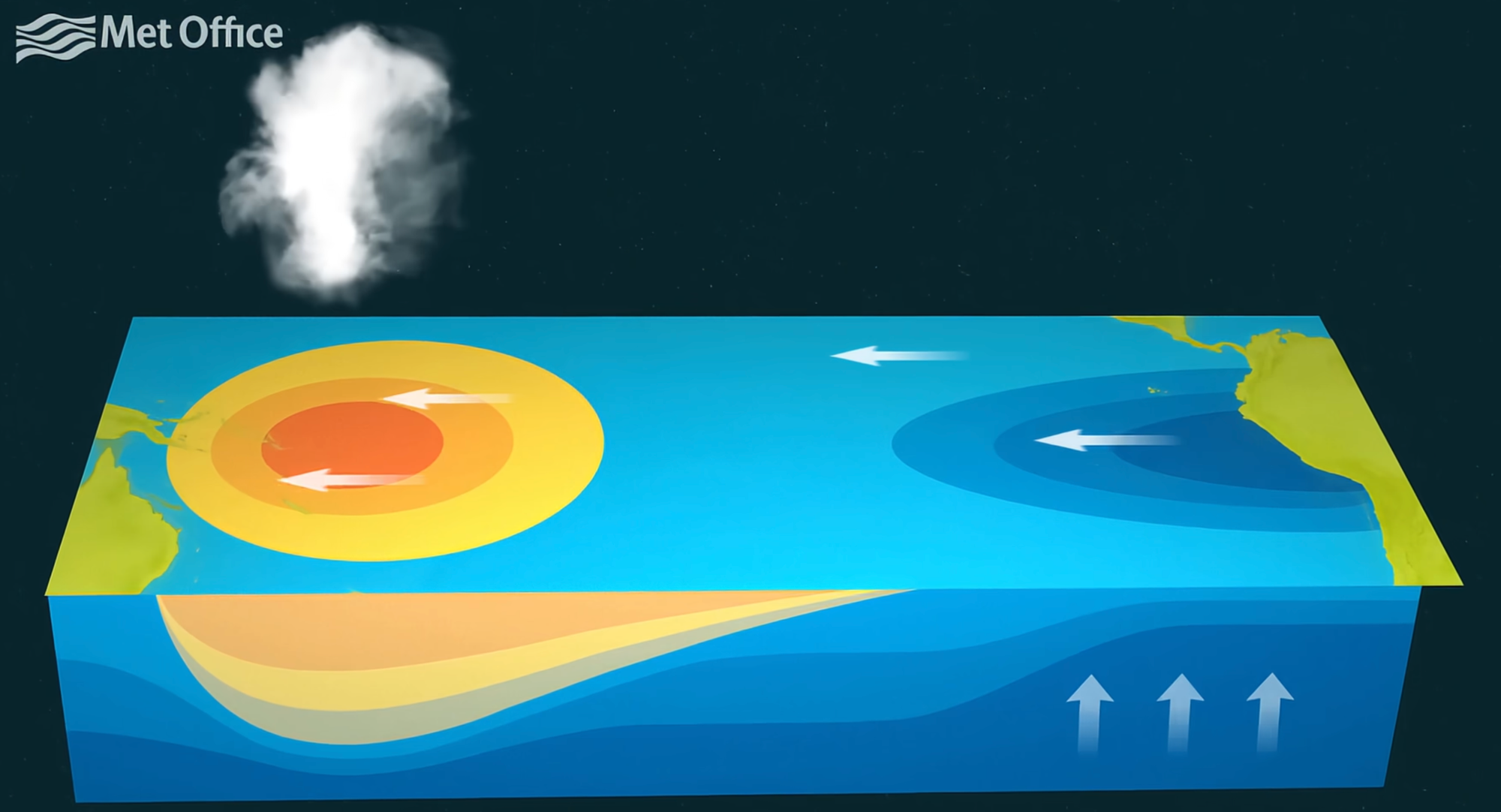
And since the warm water moves away from South America, the remaining water close to South America tends to be cool.
The so-called El Niño weather cycle disrupts this pattern. Instead of winds moving west, the warm water stays in the middle of the Pacific, or even moves east.
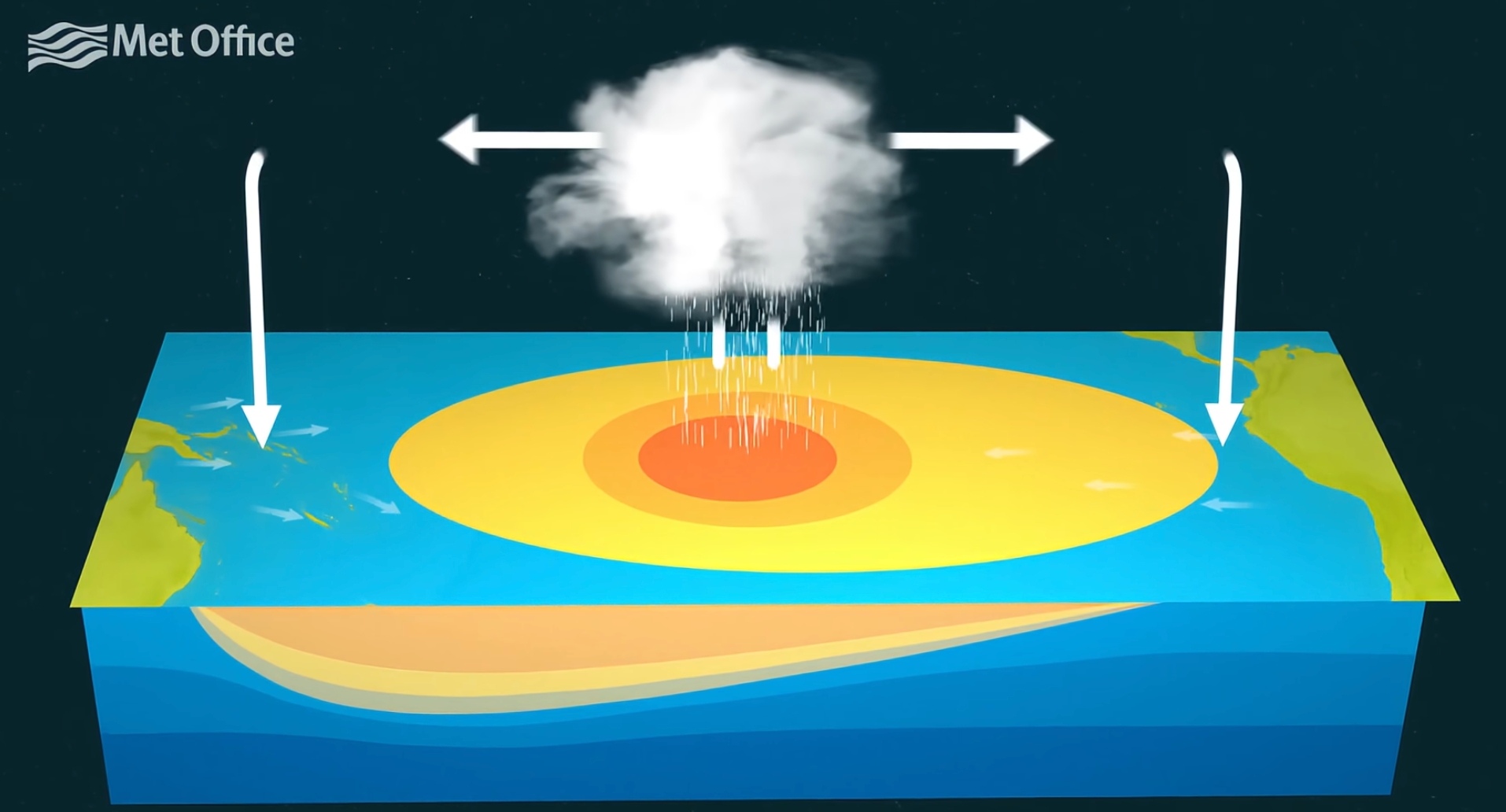
This causes:
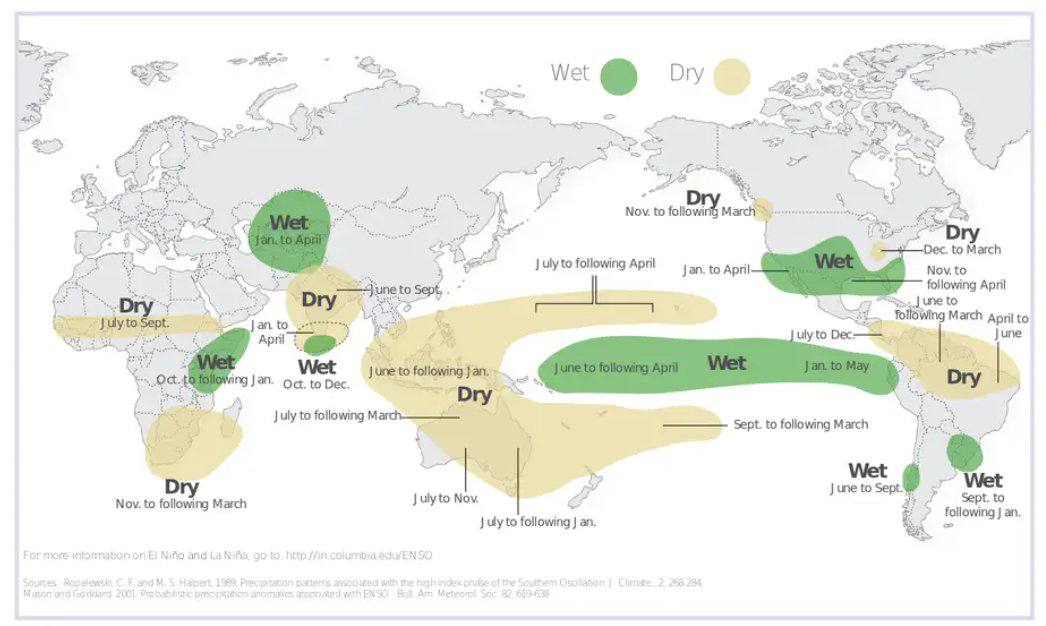
- Less rainfall in Asia, leading to droughts in Australia, Southeast Asia and even parts of Africa
- More rainfall in the Southern United States and South America, leading to flooding in those regions
Here are the regions that experience wet vs dry weather during El Niño years:
In addition, since a large part of the entire Pacific Ocean heats up, huge amounts of energy are released into the atmosphere. This causes global temperatures to rise during El Niño years.
Investor X's point is that 2026 is shaping up to be an unusually strong El Niño year:
- The US National Oceanic and Atmospheric Administration gives a 61% chance of El Niño emerging by July 2026.
- Roughly half of the team at the European Centre for Medium-Range Weather Forecasts expect temperatures in the main El Niño region in the Pacific Ocean to exceed 2.5 degrees Celsius above the seasonal average by October 2026. Making it one of the most intense El Niños of the past century.
Global temperatures are already rising to an extreme, with sea surface temperatures in March 2026 hitting near-record levels:
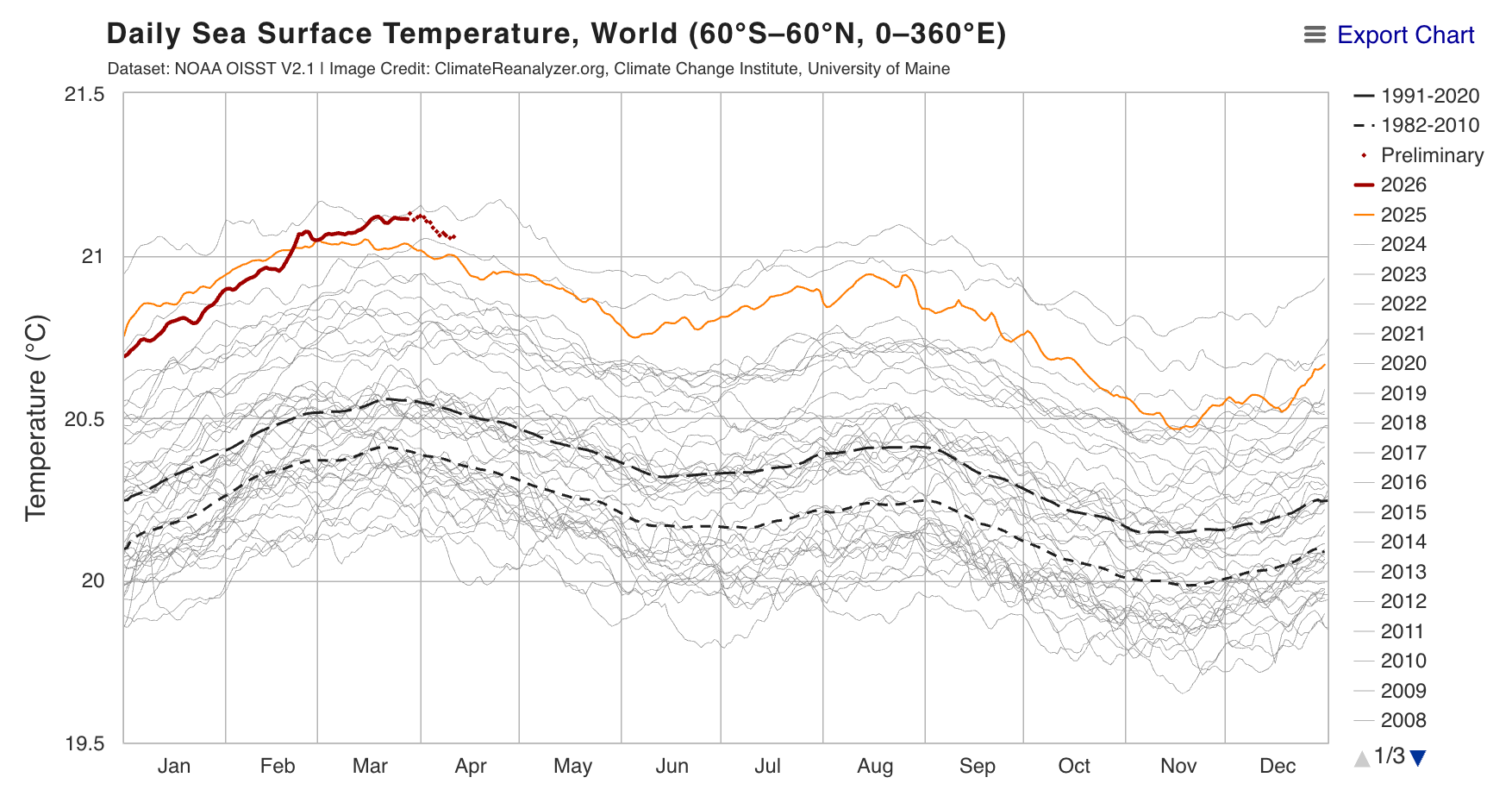
Meteorologists expect temperatures in the middle of the Pacific Ocean to rise by anywhere from +0.2 to +3.3 degrees Celsius.
Importantly for us, this will have broad ramifications for asset prices across various sectors.
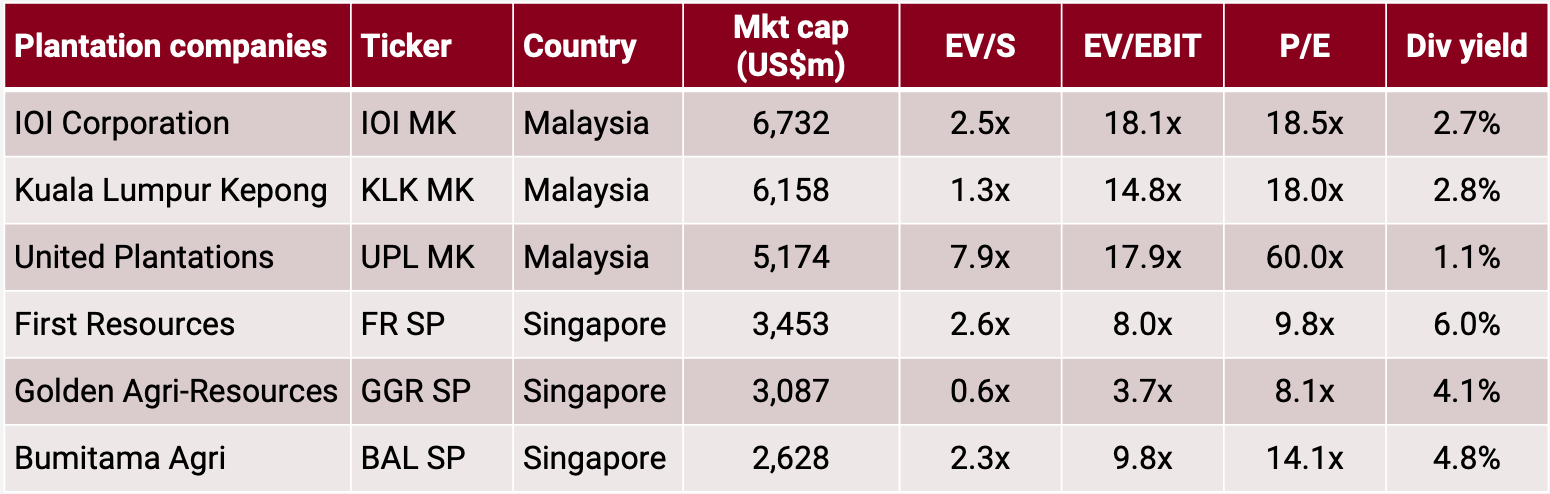
First, droughts will negatively impact palm oil yields for Malaysian and Indonesian plantation companies, perhaps by as much as 10-20%. That's how much output was impacted by the unusually strong El Niño of 1997. Spot crude palm oil prices are likely to rise due to a temporary supply shortage. These are some of the companies that will be affected:
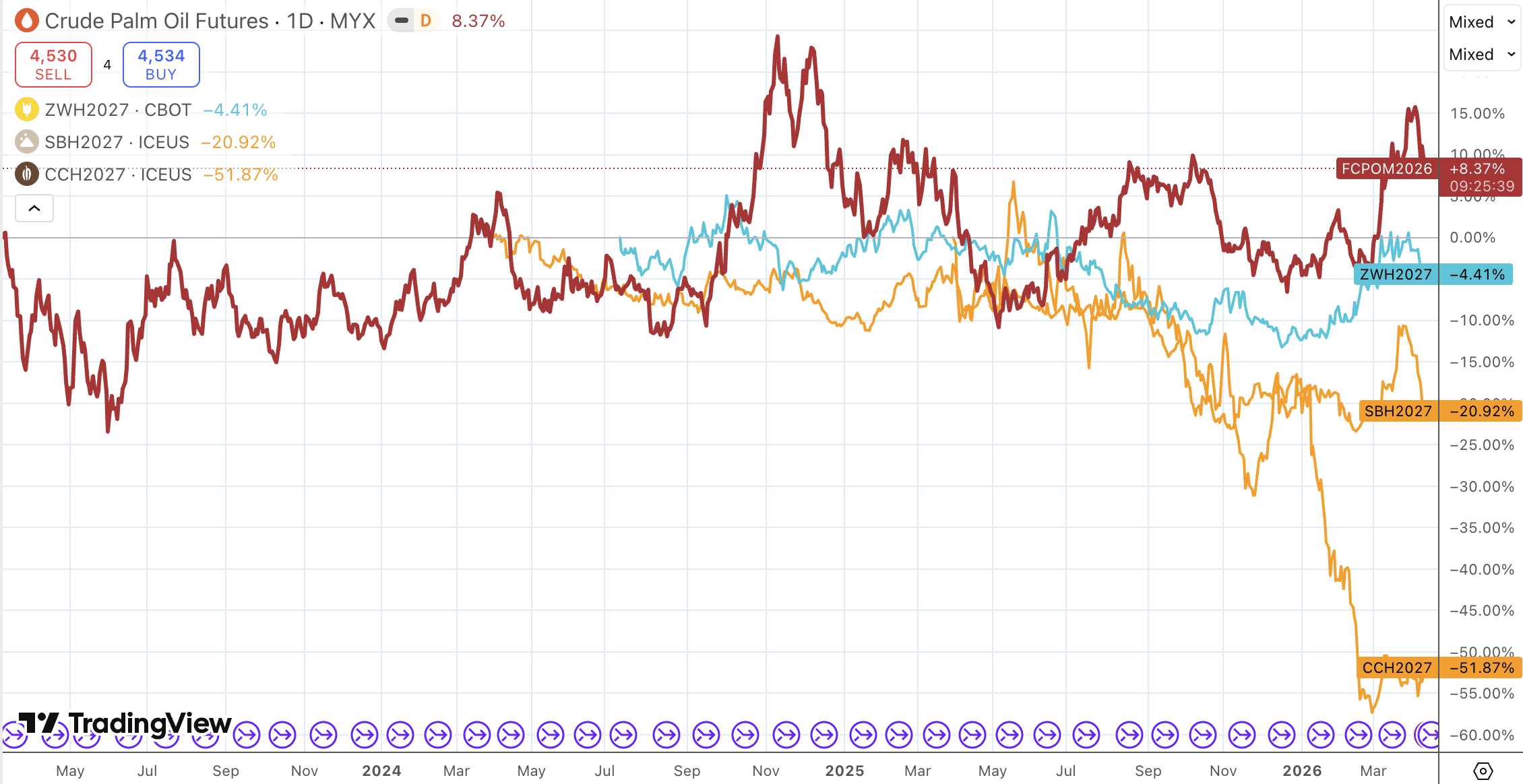
Droughts will also push up the prices of other agricultural commodities such as sugar, wheat, vegetable oil and cocoa. It doesn't look like futures have priced in much of an El Niño event yet:
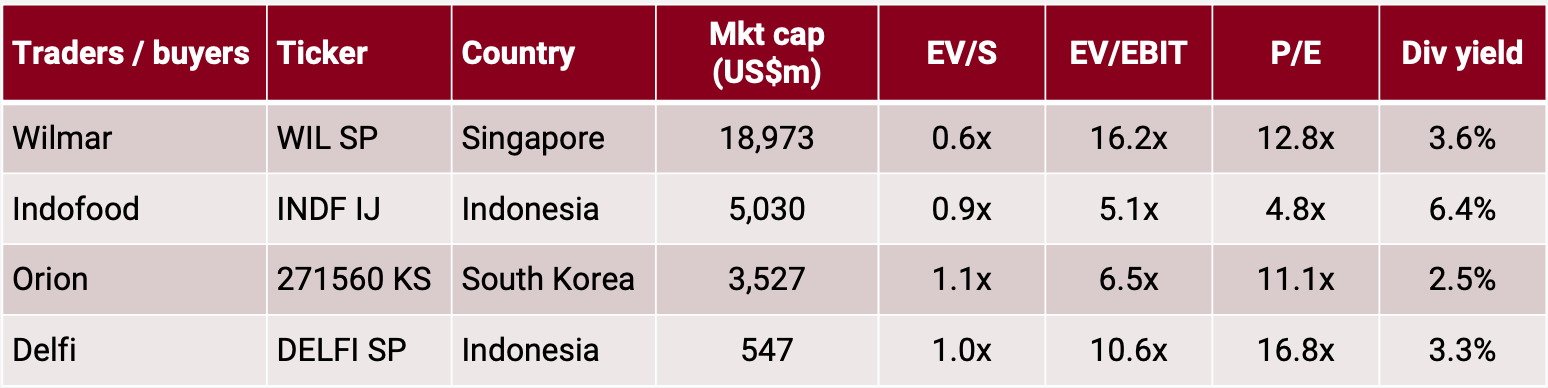
Higher prices for agricultural commodities will likely hit consumer packaged goods companies. With higher cocoa prices, chocolate makers like Delfi and Orion are likely to get hit. With higher wheat prices, Indofood's and Tingyi's margins are likely to suffer. It's also plausible that energy drink makers like Carabao and ice cream sellers like RFM Corporation will benefit.
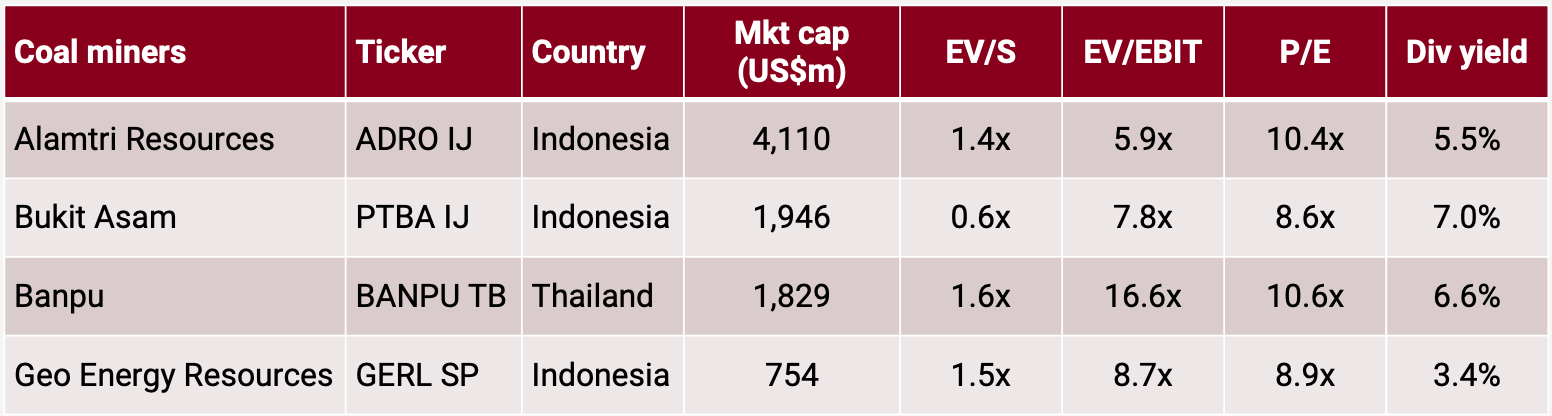
Droughts in Asia tend to reduce hydroelectric output, boosting the demand for coal in India and Indonesia. So coal prices could be heading higher, all else equal. And Indonesian coal miners stand to benefit.
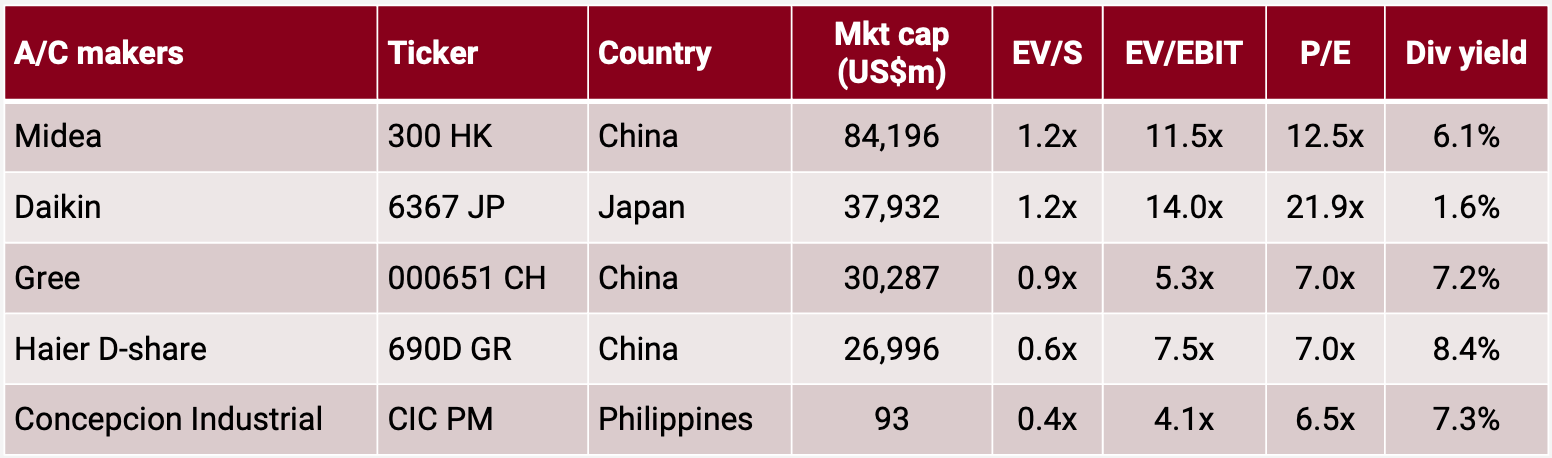
Finally, I suspect that warmer weather will boost the sales of air conditioners. Such companies include Daikin in Japan, Midea and Gree in China, and Concepcion Industrial in the Philippines.
There have been a few instances, such as 2017, when key weather agencies forecasted an El Niño, yet none materialised.
However, I think there's an asymmetry here, given that investors are not yet prepared for the potential of a super-El Niño, which could rival the one we saw in 1997.
So things could get rocky, especially for buyers of agricultural commodities. And warm weather should be bullish for air conditioner sellers in Asia and beyond.