Portfolio update May 2026
DRAM bull market, Japanese SaaS, Korean small caps, Indonesia going down the drain

Hi! Welcome to a subscriber-only edition of Asian Century Stocks – a newsletter about Asian value stocks. For a complete list of all previous posts, check out the Table of Contents.
Disclaimer: This article constitutes the author’s personal views and is for entertainment and educational purposes only. It is not to be construed as financial advice in any shape or form. Please do your own research and seek your own advice from a qualified financial advisor. From time to time, the author holds positions in the stocks mentioned below consistent with the views and opinions expressed in this article. This is a disclosure, not a recommendation to buy or sell stocks.
Market commentary
MSCI All Country Asia-Pacific rose to an all-time high in late May 2026:

So it's been a strong market. Then again, indices have become highly skewed. In the MSCI Emerging Markets Index, Taiwan now has a greater weight than China. And the memory chip names Samsung Electronics and SK Hynix now have greater weight than India.

So we're living in unusual times. The outperformance has almost entirely come from beneficiaries of AI capex, including South Korea, Taiwan, Japan, and, to some extent, Singapore. Otherwise, Asia has been a mostly dead market.

I try to stay away from overly popular themes. But I am researching stocks previously hurt by rising memory prices, including Nintendo and Getac. On that note, I saw that memory chip maker Micron just hit a US$1 trillion market cap and is projected to make US$113 billion in net profit in FY2027:

UBS analysts are now slapping on a 15x P/E multiple to peak FY2027 earnings to reach their target price of US$1,652.
Obviously, memory is a cyclical market. And if there's something Chinese companies are good at, it's scaling up production. Both Yangtze River Memory and Changxin will be ramping up capacity in early 2027.
According to smart people like DaBao and Gavin Baker, TSMC's capex is more sustainable and will continue to grow. So perhaps all those speculators in Taiwan are not entirely wrong in trying to find the next "bottleneck stock".
So perhaps the speculators in Taiwan are not completely wrong in trying to find the next bottleneck stock.
I continue to pay attention to Japanese SaaS companies. I see them as almost the inverse of the hardware names, with the prevailing narrative being that generative AI tools will commoditize all software.
I believe investors will eventually realize the limitations of probabilistic computing. And that enterprise software is best developed- and run with deterministic tools.
Japanese SaaS companies trade at low multiples. A friend suggested I take a look at the Japanese SaaS company TeamSpirit. I was surprised by its EV/EBIT: low single digits a few years out.
In May, I wrote a guest post in KEDM about Korea's equity market reforms. I argued that the reforms are real and that the governance in individual companies will improve materially over the next few years. Now that Interactive Brokers offers full market access, I also expect price discovery to occur. So I spent part of last month writing about golf equipment maker Misto and credit bureau NICE Information Service.
And Korean small caps trade at low multiples. Just check out the companies recently mentioned on Twitter: T&L Co, Total Soft Bank & Tovis.
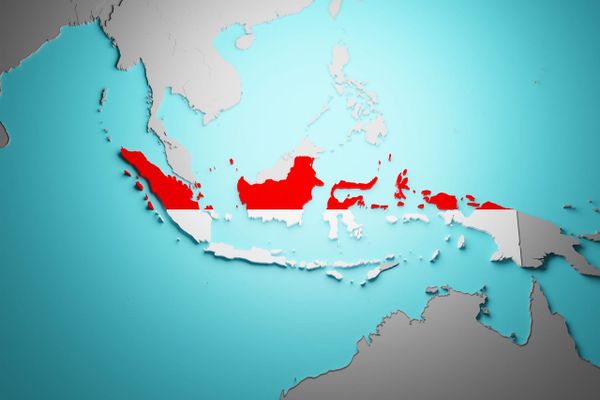
On Twitter, I've been voicing my frustrations about Indonesia's new resources monopsony. The state will now become the sole buyer of all commodities for exports – at whatever price it deems fair.
The market responded negatively, with the broad index down -29% year-to-date. Policy-wise, Indonesia seems to be reverting to the old Suharto-era days of crony capitalism. Prabowo was a military official under Suharto, so I guess we shouldn't be surprised.
I don't dabble in Indonesian resources stocks. But I imagine that a monopsony of this scale will eventually cause distortions, leading to higher international commodity prices, especially for nickel, coal, and crude palm oil. I also picture the Indonesian Rupiah heading even lower than today.
On the other hand, my sole Indonesian holding, Multi Bintang, just reported a fantastic first-quarter result, suggesting that the Indonesian consumer is stronger than generally recognized. Multi Bintang trades at 10.5x P/E and has a 9.0% dividend yield.
Portfolio update
My portfolio recovered further in May, rising +2.9% month-on-month thanks to blowout earnings at Mercari and peace talks between Thailand and Cambodia. Since the portfolio's inception in October 2021, the portfolio's value has increased by +76.3%, equivalent to a +13.1% compound annual growth rate:

Here's what my Asia-focused portfolio looked like as of 25 May 2026: