Interview: Ryan Albert
A hedge fund manager view on South Korea's corporate governance reforms

Hi! I'm Michael. This is a free-to-read edition of Asian Century Stocks – a newsletter about Asian value stocks. New to the publication? Sign up here.
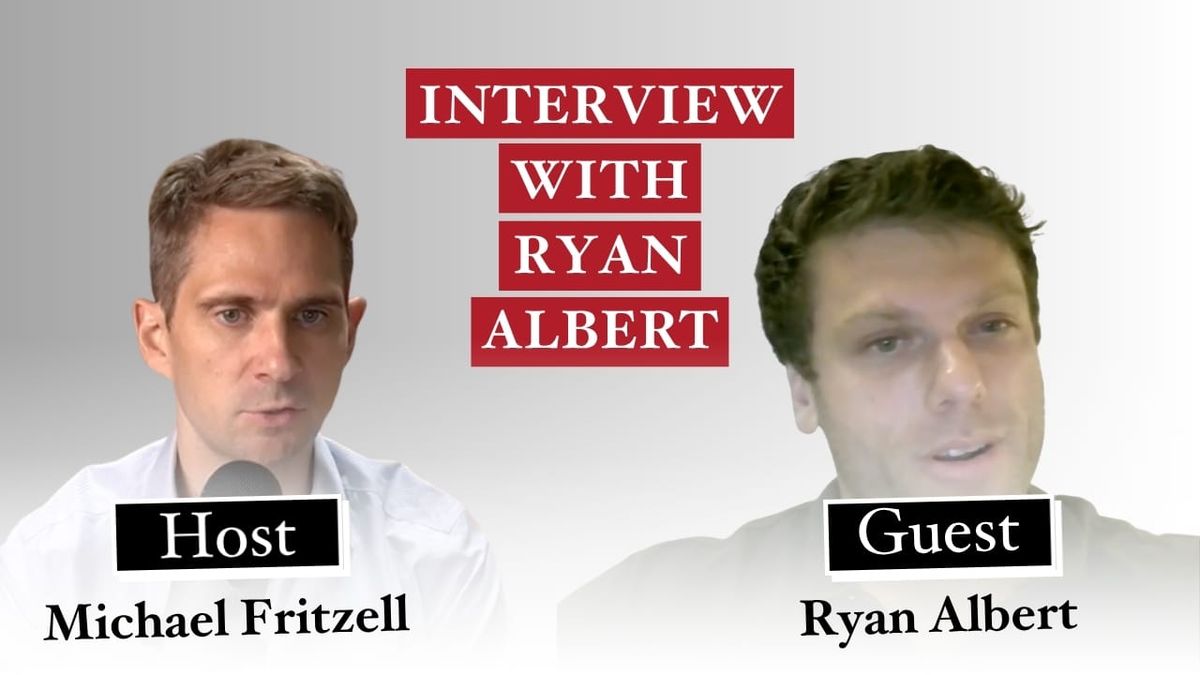
Today, I'm speaking with Ryan Albert, the founder of Asia-focused hedge fund Terton Capital.
In this discussion, Ryan talks about his background, what he learned from Todd Combs, how he identifies new ideas, shareholder activism in South Korea and his recent engagement with Golfzon Holdings.
Here's a quick summary of the video:
1. The background story
Ryan was born and raised in Newport Beach, California. After studying economics at Princeton, he worked in investment banking in New York, followed by venture capital in both the United States and Mexico City.
He then went to Columbia Business School's Value Investing program. And after that, he worked with both Ben Isaac at Brizo Capital and Todd Combs at Berkshire Hathaway.
What did he learn from Todd? Identifying what actually matters in a case. In other words, distilling a thesis to its simplest form. He'd project earnings a few years out, thinking about the long-term addressable market for the product and the competitive landscape. So he performed deep analysis, but it was eventually distilled into a simple thesis.
2. Investing at Terton Capital
His new hedge fund Terton Capital was launched a few months ago. The focus is on bottom-up fundamental analysis, with a focus on the Asia-Pacific.

The idea is to target companies with fixable overhangs, for example: a lazy balance sheet, suboptimal capital allocation, poor governance, etc. He thinks that's a better use of his time, rather than trying to fix a broken business model.
He likes to participate in markets that are in the early innings of a governance reform cycle, where new regulation creates leverage for minorities.
3. How he identifies new ideas
Ryan's style is to read through every company report from A to Z in a given country. He starts with the latest quarterly and annual reports, plus recent news and their individual websites.
He pays attention to the little details: whether there's a presentation, who discloses what, whether the website works, whether there's press coverage, etc. This process often helps surface hidden assets and under-appreciated segments. He'll end up with a force-ranking of what it's worth spending more time on.

Unlike Todd, he doesn't read on paper, but rather digitally. And he reads continuously between active projects. Finally, he looks at comparable businesses in other markets, to check whether an idea is genuinely unique, in terms of its business model, the valuation or the setup of any fixable issue.
4. Shareholder activism in Korea
In Ryan's view, Korea is by far the most exciting market globally for shareholder activism. There are a large number of companies needing change, and not many investors doing the actual work. Plus, we're at a very early stage of the current reform cycle.
KOSPI's growth has rested on two pillars: 1) governance reforms, and 2) a strong semiconductor industry. He argues that the governance pillar has been drowned out in the recent media coverage, even though that's where the sustainable non-cyclical growth will have to come from.
There are certainly cheap markets elsewhere, like Indonesia. But South Korea fits his style of execution better. Eventually, other markets may be forced to run their own "value-up" playbooks to attract Western capital, following Japan in 2023 and South Korea today.
The valuation multiples in Korea are incredibly low. When identical businesses trade at a fifth of US or European companies' trading multiples, the market is telling you something.
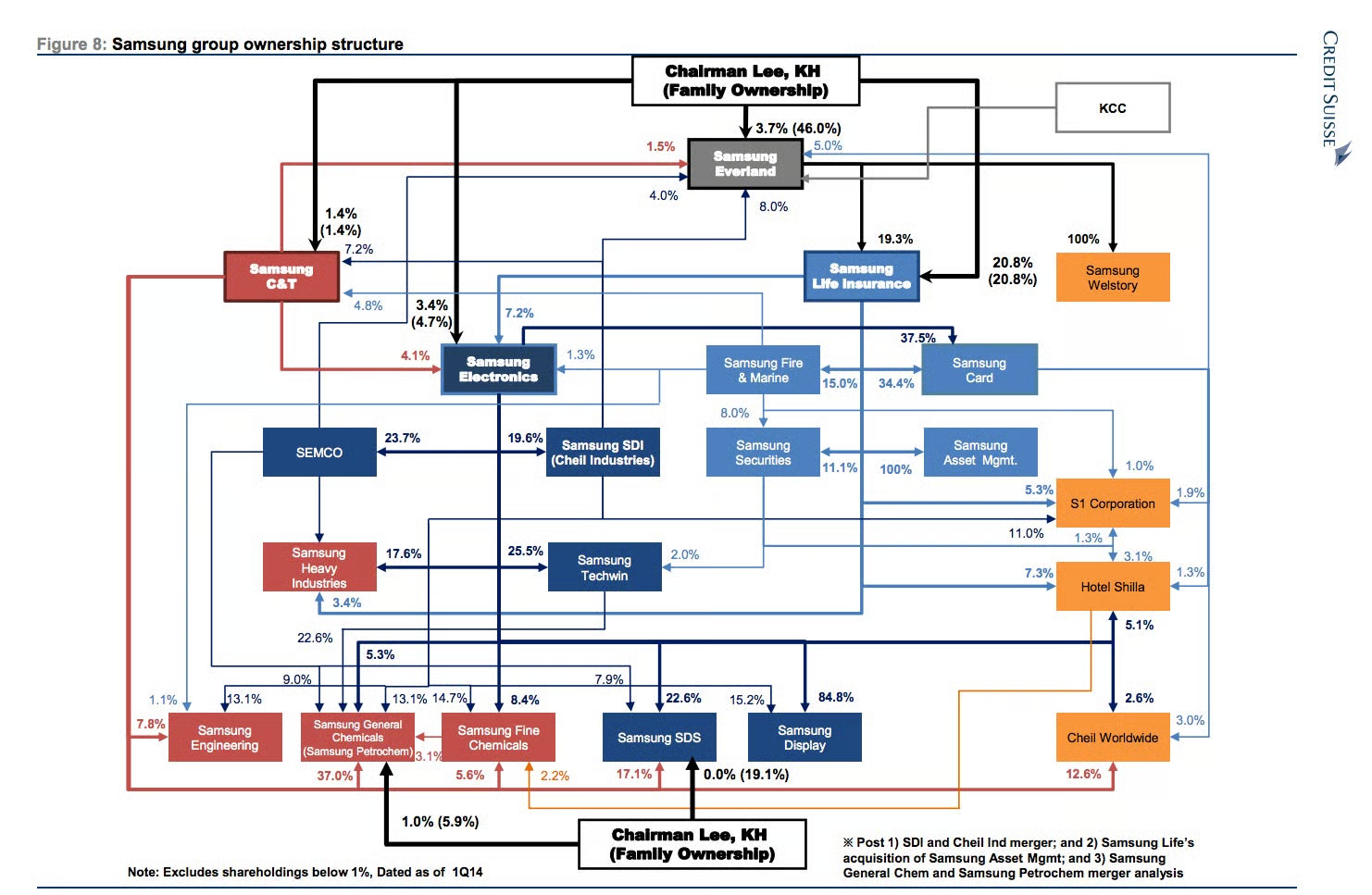
The problem is usually that cross-shareholdings and OpCo/HoldCo structures let owners control assets with very low economic ownership, and minorities can't reach the underlying assets. The result is that as a minority, you can't reliably project your future return.
Last year's amendments to the Commercial Act might help, since they now require directors to take all shareholders' interests into account. It's too early to tell whether this will have an impact on real-world outcomes. The 2027 AGM season could be the real litmus test: it will put boards under the microscope and give independent directors freedom to dissent.
One major distortion in Korea's capital markets is the inheritance tax. The rates are up to 50%, and assessed based on the market value of each publicly listed company 2 months before and two months after the transfer date. This removes any incentive to maximize share price prior to any succession. In July, there was a proposal to put a floor on the valuation used in the tax assessment at 0.8x book. But it's a sensitive issue politically, and whether the floor will be implemented remains to be seen.
Another positive change is the 3% rule. From 10 September 2026, minorities will be able to separately propose and elect two audit committee members, with the controlling family and related parties' voting power capped at 3%, regardless of economic ownership. In Ryan's view, this delivers real power over inspecting the books, reviewing transactions and shaping strategy. Mandatory cumulative voting for large listed companies will help minorities of those companies as well.
Many investors like to draw a parallel between Japan and South Korea. And Japan is probably the best available parallel. But Korean ownership structures are different: companies are typically controlled by a family owning 20-50%, with stakes held over generations. Pressuring professional managers who didn't build the business and don't hold a stake in the company is a different exercise from confronting a family whose identity and livelihood are bound up in the company. So as a shareholder activist, your approach in South Korea has to be different.
Ryan thinks that DART (the repository of corporate filings) is unappreciated. What many investors don't realize is that even unlisted companies above a the external-audit thresholds have to file to DART, so you can actually check the financials of large privately held subsidiaries. This has helped him to understand the valuation of subsidiaries and their balance sheets. Also note that succession events have to be filed with DART, making it easy to screen for companies with recent shifts from one generation to the next.
5. The Golfzon Holdings story

Ryan has been involved in Golfzon Holdings (121440 KS – US$183 million), the parent company of golf simulator business Golfzon Co (215000 KS – US$160 million). His summary of the situation is as follows: Golfzon Holdings owns a broad portfolio of assets:
- A 31.6% stake in Golfzon County, Korea's largest golf course operator, together with private equity company MBK Partners
- A portfolio of golf courses, headquarters and buildings
- A 22.8% stake in publicly listed Golfzon Co, the golf simulator business
He points to the Golfzon County sale process, which he says targets an enterprise value of KRW 2 trillion. He also points to the appraised real estate value of KRW 567 billion disclosed in the 2025 annual report. On his ifigures, these components exceed the company's current market cap of approximately KRW 259 billion. (I have not verified these figures or performed by own valuation, and I express no view on whether the shares are mispriced.)
Ryan notes that on 29 June, with the Golfzon County sale live, a controlling shareholder vehicle launched a tender offer for the minority shares at KRW 6,700, and that the company's book value is above KRW 19,000 per share. (Of course, book value is an accounting measures and may not represent realizable or intrinsic value.)
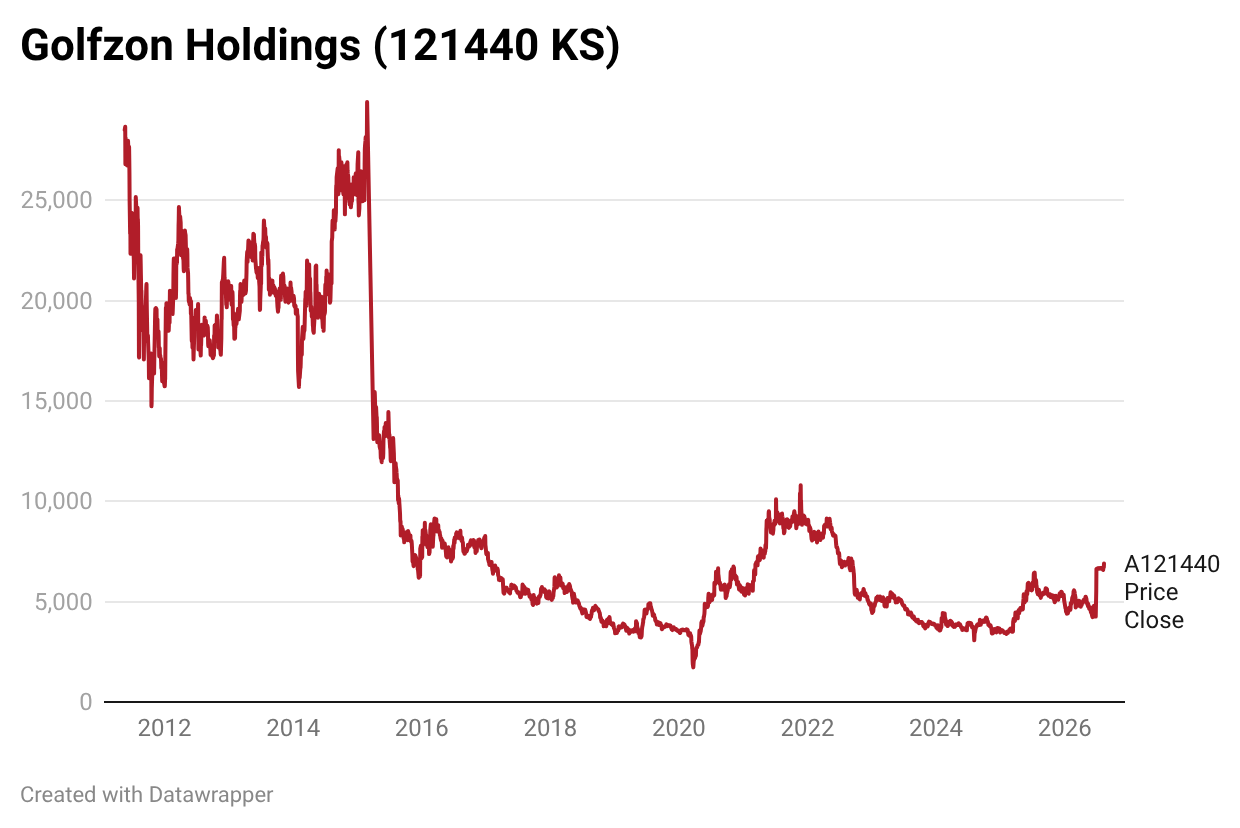
Ryan wrote an open letter to the board of directors on 22 July requesting a response by 27 July. According to a new 2026 Ministry of Justice guideline, a board should convene promptly, form a special committee independent of the controlling shareholder and commission an independent outside valuation, and review the follow-on price. As well as consider an Article 138 opinion on price and fairness. But these best practices were not upheld. Ryan also asked them to disclose what they knew about the Golfzon County sale process, and to confirm no future acquisition of the remaining shares below KRW 6,700.
There was still no response. He then filed a complaint with the Financial Supervisory Service. A pre-notification of a disclosure violation subsequently appeared on DART. The company then finally issued a clarification on 3 August, 35 days after the tender decision and two days before the offer closed — confirming the KRW 6,700 floor and assessing fairness through a sum-of-the-parts valuation and a discounted cash flow analysis. But they never disclosed any assumptions, or asset values or which discount rate they used in the DCF. (There's of course no guarantee that the Golfzon County sale closes at the targeted enterprise value, or that Golfzon Holdings sells its stake.)
But Ryan is keeping his legal options open.
Update as of 13 August 2026: The first tender closed having secured 77% of total issued shares, short of the 90% threshold required for a voluntary delisting. A second tender offer opened on 10 August 2026 for the remaining 13% of the shares at the same KRW 6,700 price, running to 2 September 2026. (I express no view on the offer price and no view on whether any shareholder should tender or decline to tender.)
6. Where can we learn more?
Ryan writes publicly about Korean markets. You can find his letters at https://www.tertoncapital.com/letters-and-materials, his X accounts at @terton_capital and his email is ralbert@tertoncapital.com.