Update: China Tower (788 HK)
China's telecom tower monopoly

Table of contents:
1. A quick background
2. My 2026 update
3. An updated valuation model
4. Conclusion
1. A quick background
In 2023, I wrote a deep dive on Chinese monopoly tower operator China Tower (788 HK — US$21 billion):
 Michael Fritzell
The business was created in 2015 when China's three biggest telecom operators – China Mobile, China Telecom and China Unicom – injected their tower assets into a single entity together with a pile of debt.
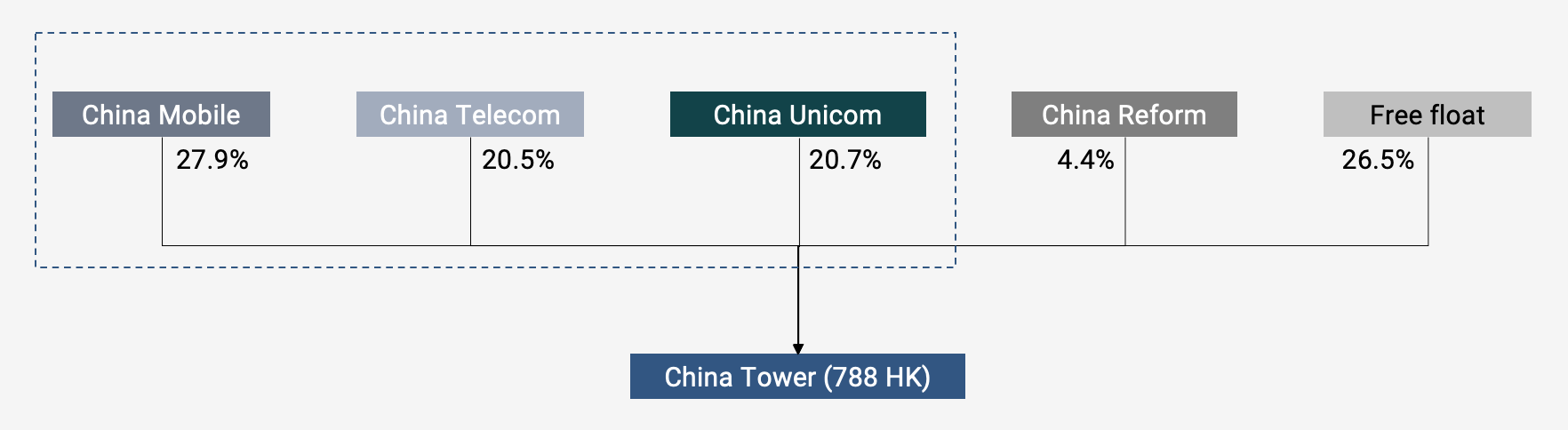
The rationale was to reduce the duplication of resources, and thereby improve the efficiency in China's telecom industry.
Since practically all tower assets in the country had been injected into the entity, it ended up with an almost complete monopoly, with a 97% market share. In addition, China Tower became the world's largest tower company in terms of the number of towers and total revenue.
So what does a tower company do? It builds and operates cell towers, which are then used by telecom operators to house their antennas and other network equipment.
Such equipment includes:
- Antennas, used to handle the main radio signals transmitted to and from mobile devices
- Radio units, placed near antennas to convert digital data into radio frequency signals and amplify them
- Base stations, used to process call/data traffic and connect to the main network via fiber or microwaves
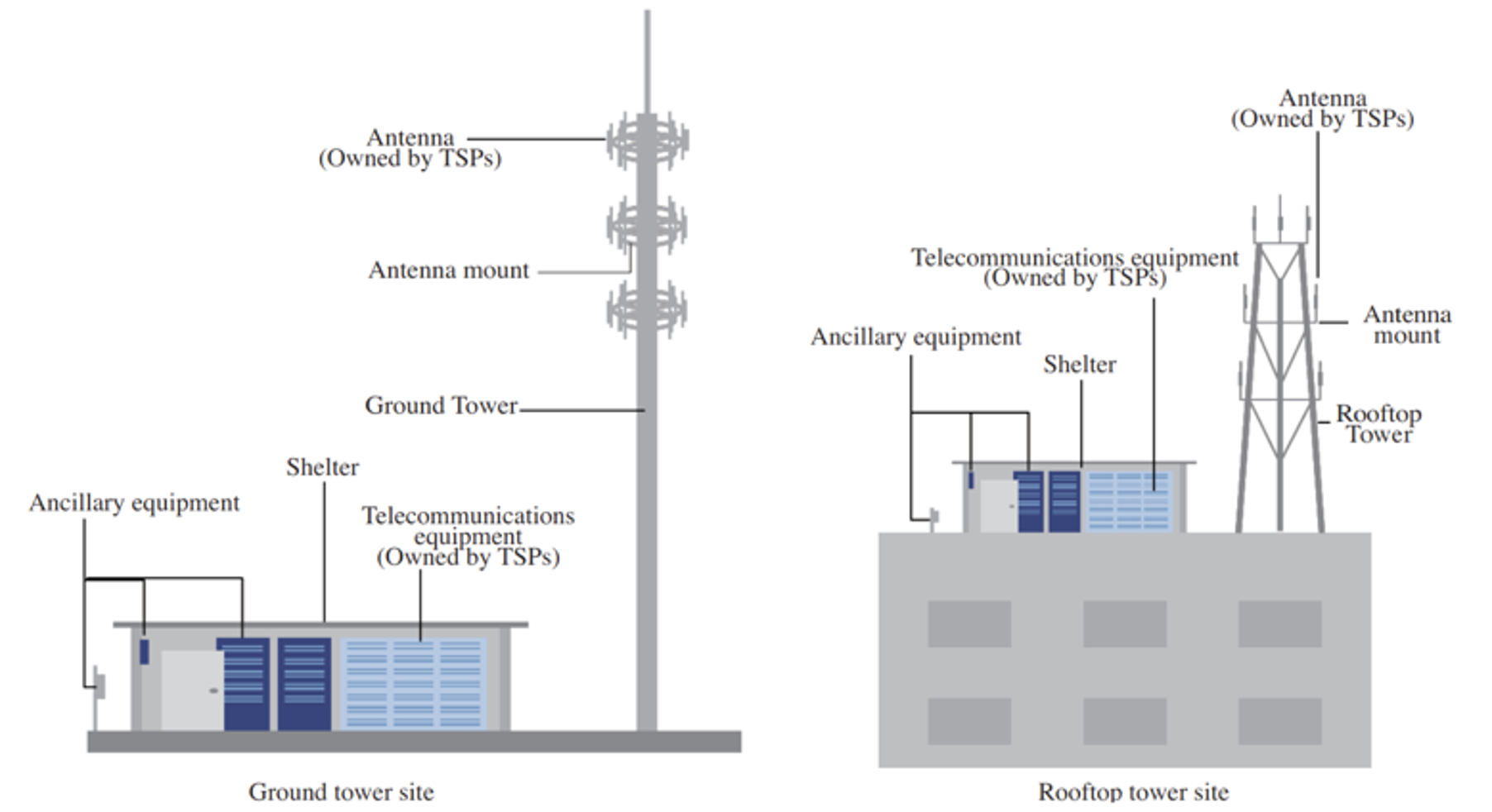
Below each tower, you'll also have shelters, power systems, backup generators and air conditioning systems to keep the equipment cool.
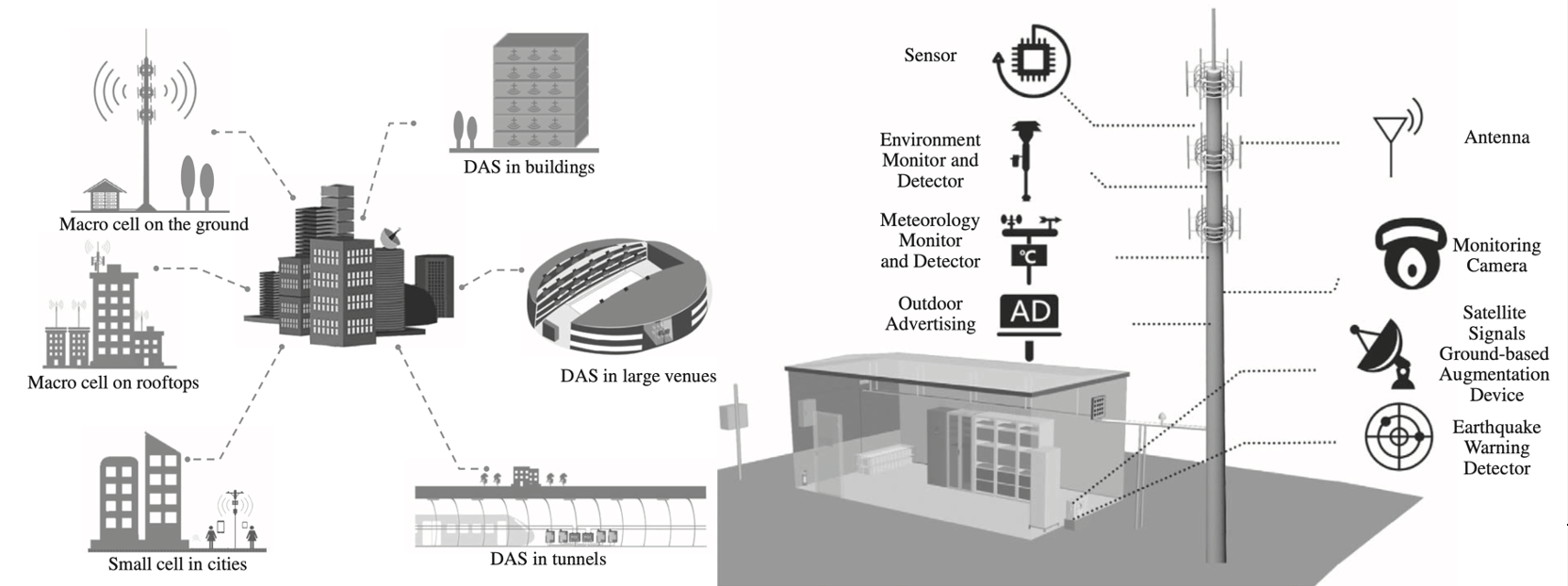
In areas with high population density, there's not enough space for regular towers. Instead, networks will rely on small cell equipment on rooftops, poles, cabinets or other structures in urban areas. And indoors, networks will rely on distributed antenna systems to build coverage.
Another source of income for tower operators is placing non-telecom equipment on the sites, for example surveillance cameras, billboards for advertising, weather systems, etc.
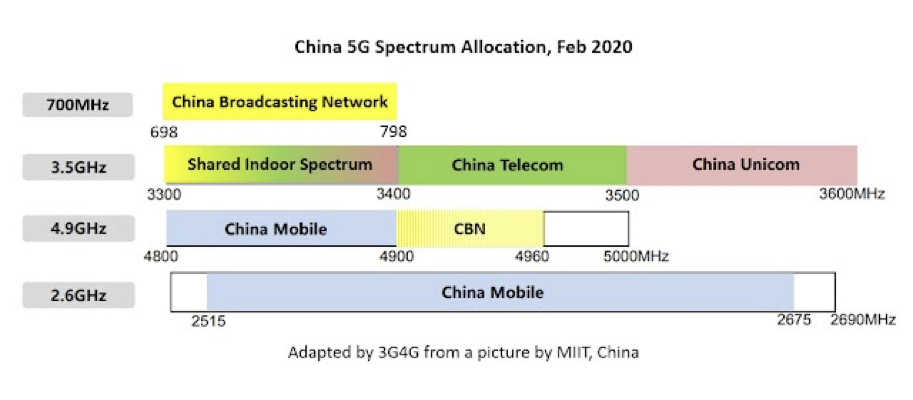
The beauty of the tower infrastructure model is that the contracts are long-term in nature, renegotiated every five years. So there's decent visibility into earnings. And in theory, as telecom networks move to higher frequency spectrums through 5G and later 6G, the cell density will keep increasing. In other words, the demand for towers should go up over time.
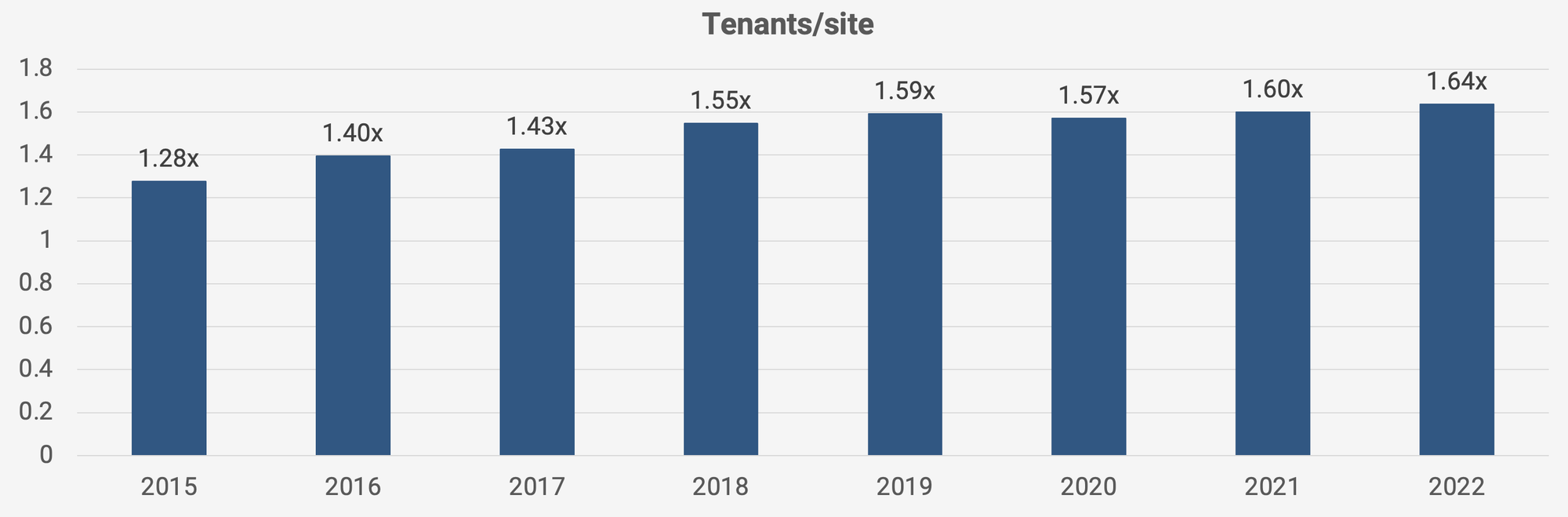
Back in 2023, China Tower had 2.1 million towers across the country, housing 3.7 million tenants, leading to an average of 1.79 tenants per tower. There had been a consistent increase in the number of towers as well as the revenue per tower.
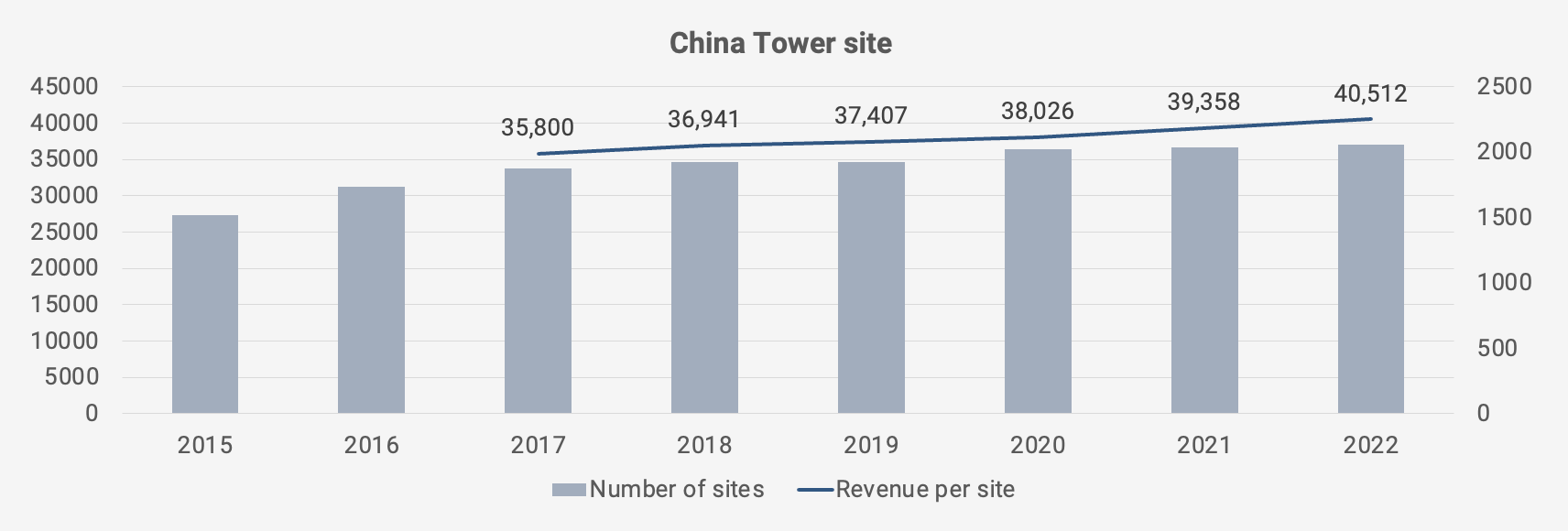
The primary driver behind the higher revenue per tower is so-called "co-location", where a tower has two or more tenants. Since land is becoming more scarce in China's urban environments, a single tower can be used by two or more telecom operators simultaneously. And as you add another tenant, revenues go up with very high incremental margins.
On the other hand, the master agreement with the telecom operators forced China Tower to offer discounts to second and third tenants, causing the incremental margins to be weaker than what they might have been in, say, the United States or India. Here's what the discounts looked like:
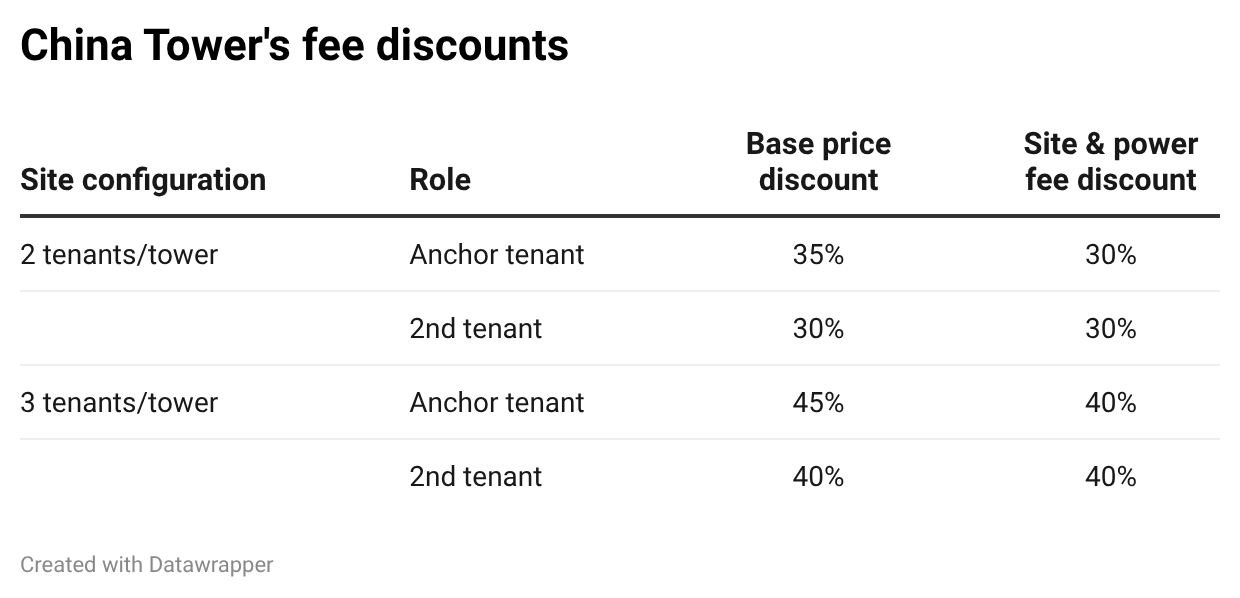
With the discounts, the economics of a tower with two tenants became around 140% of the single-tenant economics. A tower with three tenants gets closer to 180%. So the economics still looked pretty favorable, especially as the tenants/site kept going up, year after year:
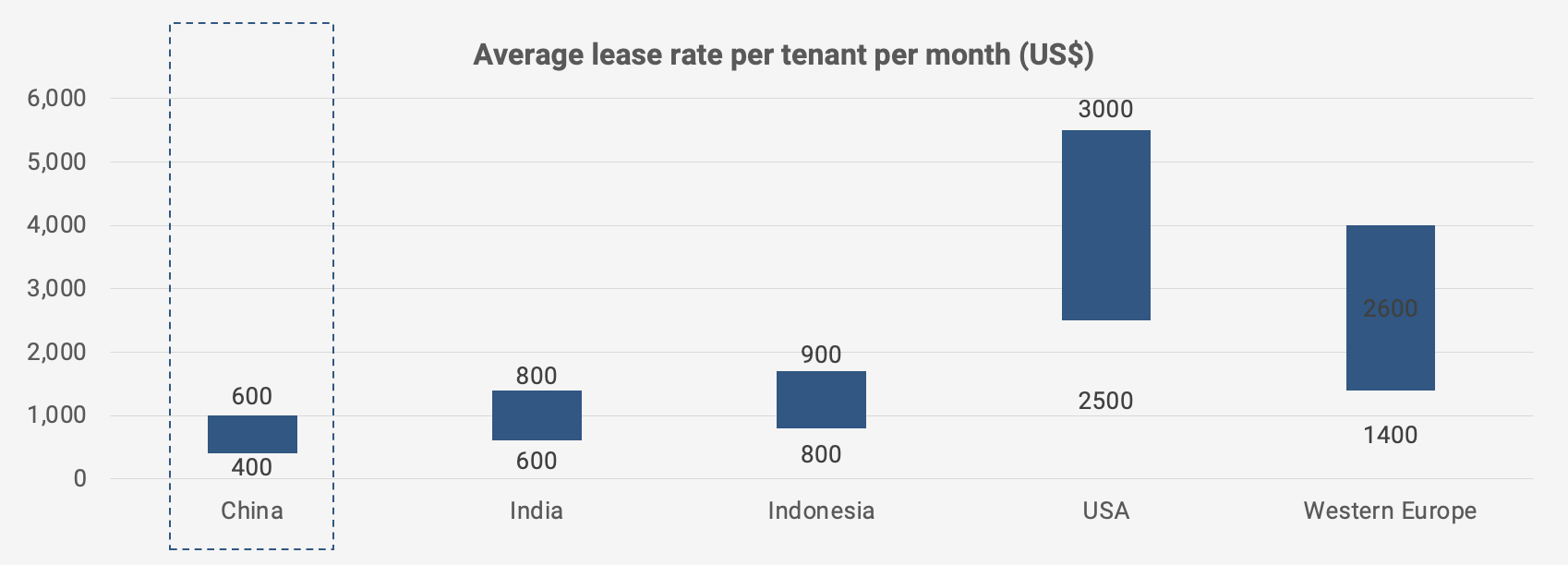
I also noted that China Tower's average lease rate per tenant was low in a regional context. Perhaps there could be longer-term upside in how much it charged?
When I wrote my initial deep dive, China Tower's EBITDA margins were a massive 68%, compared to an operating margin of just 15%. The difference between the two numbers was due to the depreciation charge from the initial injection of towers back in 2015, when the company was set up. The capex/depreciation ratio was well below 100% at just 58%, suggesting that free cash flows were stronger than reported net profit.
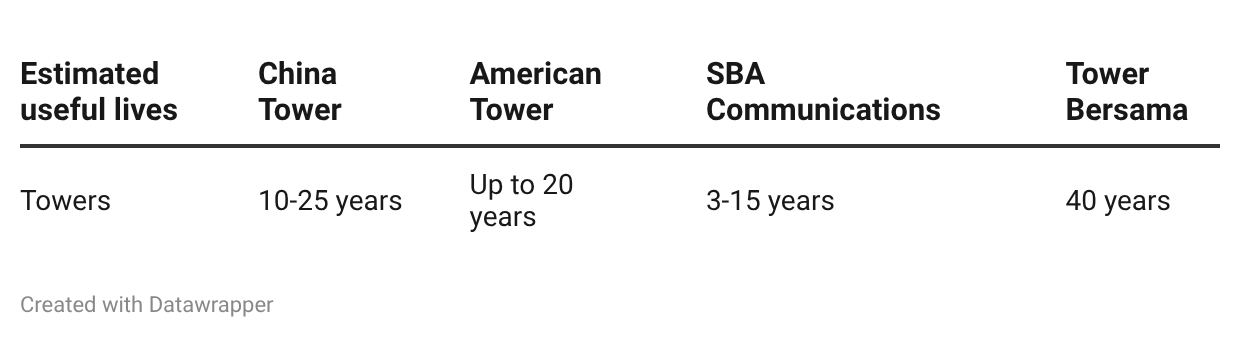
The towers were depreciated using 6-10-year schedules, much shorter than their useful lives of 10-25 years. So that explained the disparity between free cash flow and net profit. Most of China Tower's global peers used depreciation schedules longer than 6-10 years:
Once the injected towers had been fully depreciated by October 2025, I predicted that China Tower's depreciation & amortization would drop by CNY 10-15 billion.
For that reason, I saw the potential for China Tower's earnings to go up. At the time of writing in 2023, I expected the P/E to fall to 6x by 2026. I also projected a dividend yield of 10.6%, assuming that the payout ratio of 60% would be maintained. It turned out to be overly optimistic.
One of the problems I pointed out was that there were conflicts of interests between China Tower and its three major shareholders. They were simultaneously controlling shareholders as well as major customers. So they had strong incentives to keep China Tower's prices low. And the government didn't care about its profitability either, since most of its dividends came from the telecom companies — not the China Tower ListCo.
Finally, even back in 2023, there was a trend of Mainland Chinese companies not getting paid by their customers in time. China Tower's receivables collection had deteriorated over time, with the receivable days hitting 148 by 2022, compared to American Tower's 34 days. It was an early sign of things going astray.
2. My 2026 update
After my write-up, China Tower's share price recovered somewhat, before eventually declining through most of 2026: