Interview with Roderick van Zuylen
CIO of Night Watch Investment Management and contributor to KEDM

Hi! I'm Michael. This is a free-to-read edition of Asian Century Stocks – a newsletter about Asian value stocks. New to the publication? Sign up here.
Today, I'm speaking with Roderick van Zuylen, the Chief Investment Officer of Night Watch Investment Management and the editor of research publication KEDM.
In the discussion, he talks about his background, how he got into investing, what he learned from the Value Investors Club and his previous jobs, and how he approaches portfolio management and screening. We then discuss several Asian equities, including Dream International, DPC Dash, Macau casinos, Futu, and Integral, several of which he currently owns. And then finally, how he recommends investors use KEDM to find new ideas.
Here's a quick summary of our discussion:
1. Roderick's background
Roderick grew up in the Netherlands and worked for 10-15 years at institutional long-only funds. This included a role in managing portfolios at Van Lanschot Kempen, one of the largest private bank in the Netherlands, managing large multi-billion portfolios. But the best learning experience was working for a smaller value shop with €400-500 million of assets under management. During those years, he had the opportunity to travel all across Europe to meet the best companies in each country.
Three years ago, he moved to the United States and eventually founded the hedge fund Night Watch Investment Management. Last year, he also took over the responsibility for the research publication KEDM.
He's also a long-time member of the Value Investors Club. It helped him broaden the universe of stocks he considered. Beyond the pitches, there's also a valuable comments section that allows you to discuss ideas with hundreds of smart buy-siders.
2. Current investment strategy
Night Watch is a value fund, but valuations aren't its only focus. The problem is that cheap stocks often stay cheap – something he's experienced over the past 15 years. Instead, he wants companies that will be better businesses in a few years' time.
His ideas usually belong to one of two buckets:
- Industries where earnings are about to inflect, hopefully with multi-year tailwinds. These ideas tend to be tax-efficient.
- Stock-specific change, for example, a new CEO, a spin-off, strategic alternatives or activist involvement.
An example of the former is the global aerospace aftermarket. The global airplane fleet is aging, and Airbus & Boeing can't meet production demand for many years to come. So in the meantime, maintenance & parts distribution companies should do well. He's also done work on the American home-building supply chain.
When it comes to position sizing, he usually relies on a subjective conviction rating. If he feels strongly about a stock, he might ramp it up to 6-7%. One of his current positions is near 15%, so he's had to trim it when it exceeded that level. One rule of thumb: if one worries too much, then the position is too large.
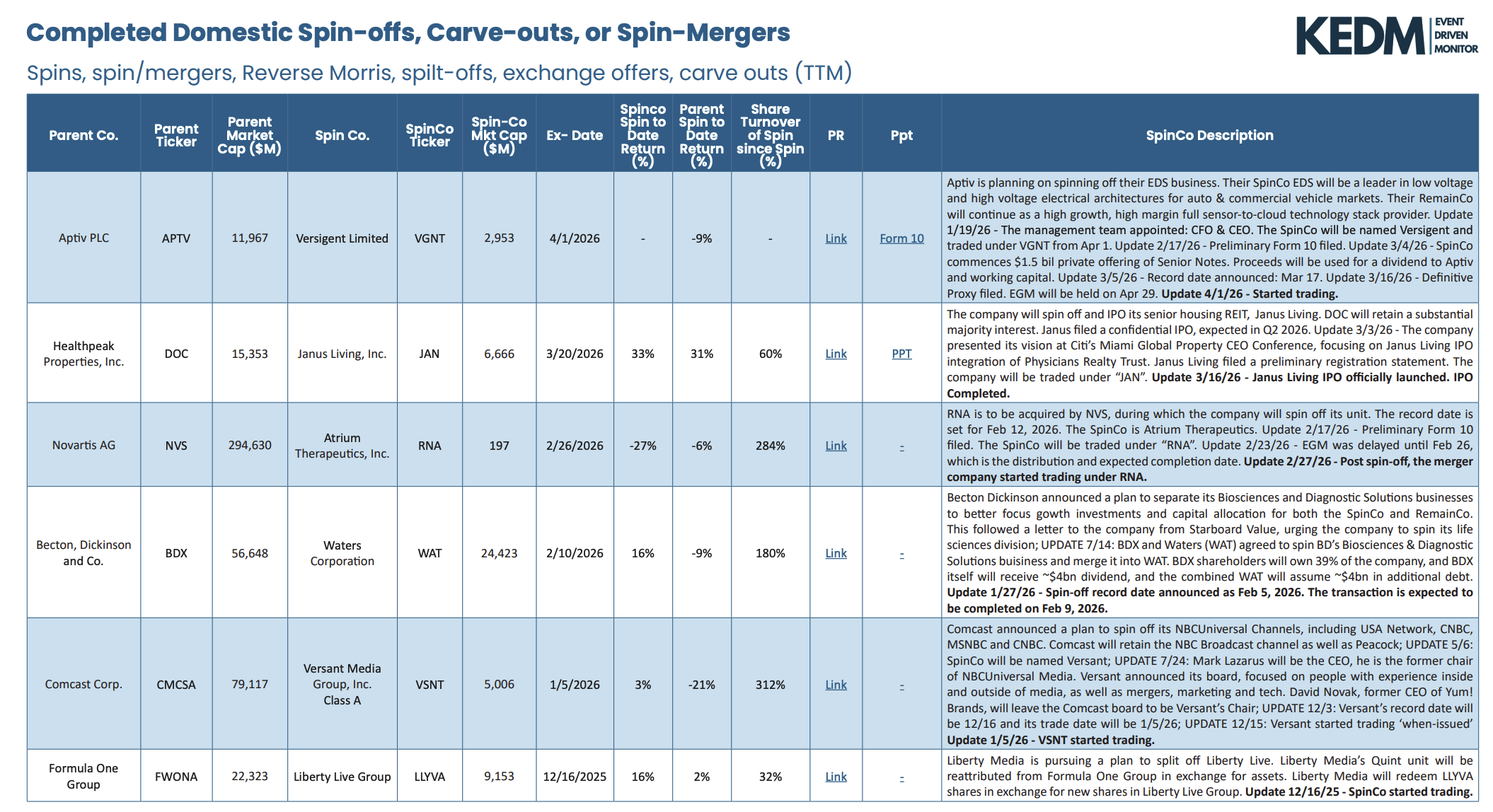
Stock screening is hard, however. There are too many names to choose from, so where should you start? He keeps Excel models for hundreds of companies, and some of these models he hasn't touched for years. Historically, ideas have come from people flagging changes to old names. KEDM now does the work for him, with a team of data analysts scanning the investable universe for new CEOs, spin-offs, strategic alternatives and new activist campaigns.
3. Dream International
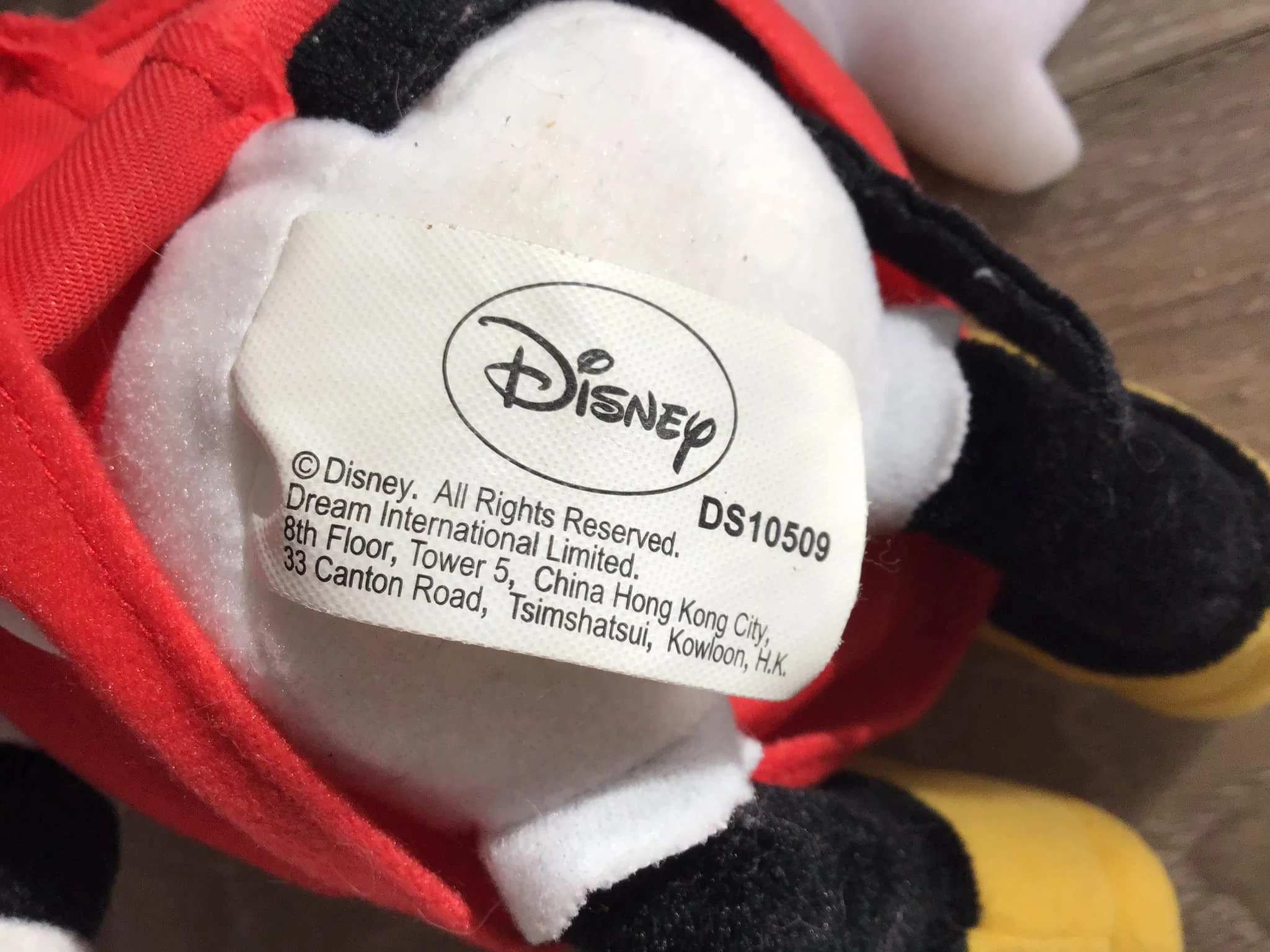
Long-time Asian Century Stocks readers will remember that I wrote about plush toy maker Dream International (1126 HK — US$601 million) back in 2022.
Roderick bought shares in Dream during COVID-19, back when Tokyo and Shanghai Disneyland were still closed. Dream makes Mickey Mouse plushes for Disney and other customers.
What made him bullish was that Tokyo Disneyland was about to reopen. At that time, the dividend yield was 13%, and while Hong Kong's free-float requirements made it difficult for Dream to buy back shares, he believed the dividend payout ratio would eventually rise from 30% to 40-50%. If correct, the dividend yield could eventually reach 20%.
However, he sold the stock during the 2025 Labubu craze. There was a rumor floating around that Dream was about to manufacture Labubu dolls, and the stock doubled in about a week. But as the actual revenue impact was at most a few per cent, he thought the market got ahead of itself.
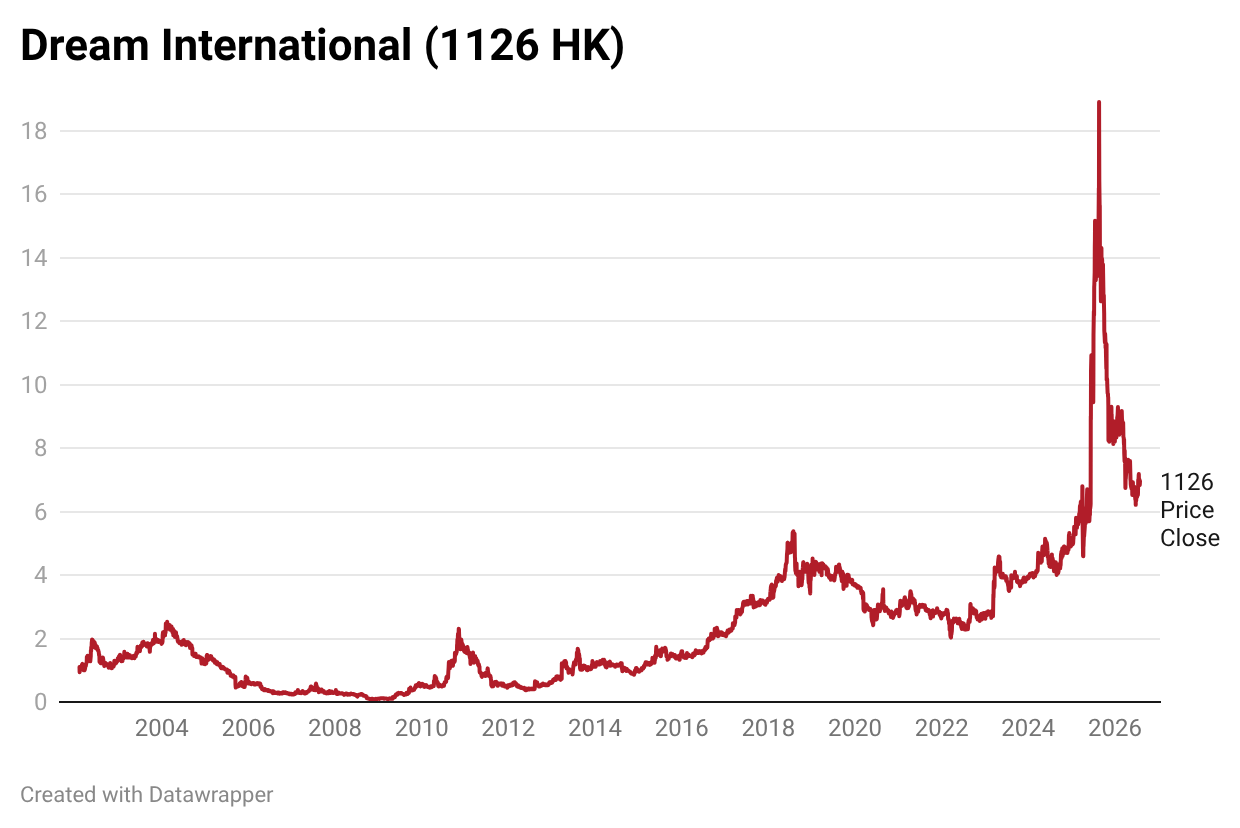
The stock is now well below where he sold it, and it has fallen sharply over the past year. So he may revisit it at some point.
4. DPC Dash
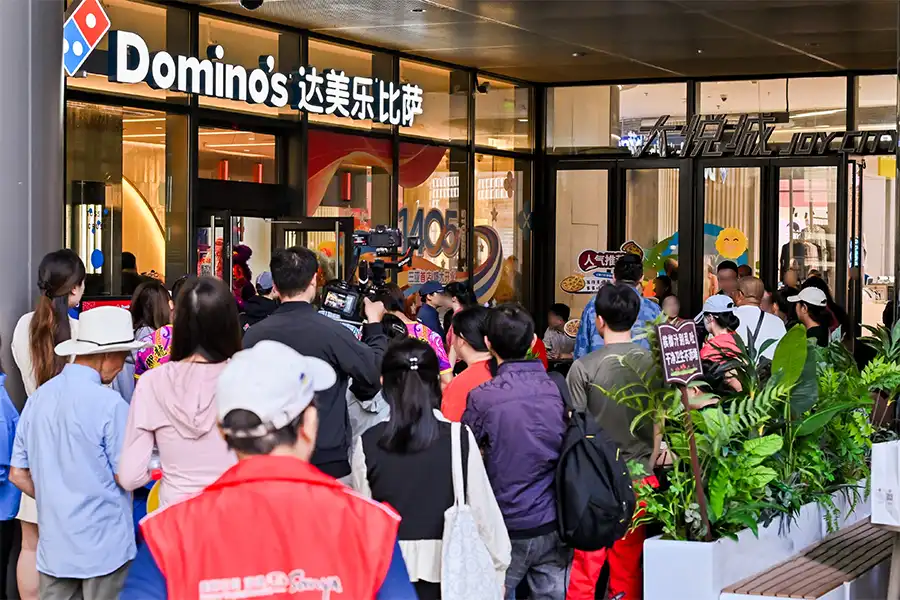
DPC Dash (1405 HK – US$667 million) is Domino's Pizza's master franchisee in China. It operates 1,500 stores and is one of a handful of listed Domino's entities globally.
Roderick lived in Beijing in 2008-2009 and remembers Pizza Hut as a place where students would sit for hours, eating chicken wings and studying. And Pizza Hut now has over 4,000 stores in China.
The bull case for Domino's is that it'll eventually reach a similar scale. In some ways, Domino's has an even better franchise: it's a high-volume pickup/delivery with high gross margins. He said unit economics seem great: DPC Dash spends US$200,000 to build a store that generates US$100,000 in annual operating profit, for a roughly 50% return on investment. And the store count has been growing 20-30% annually.
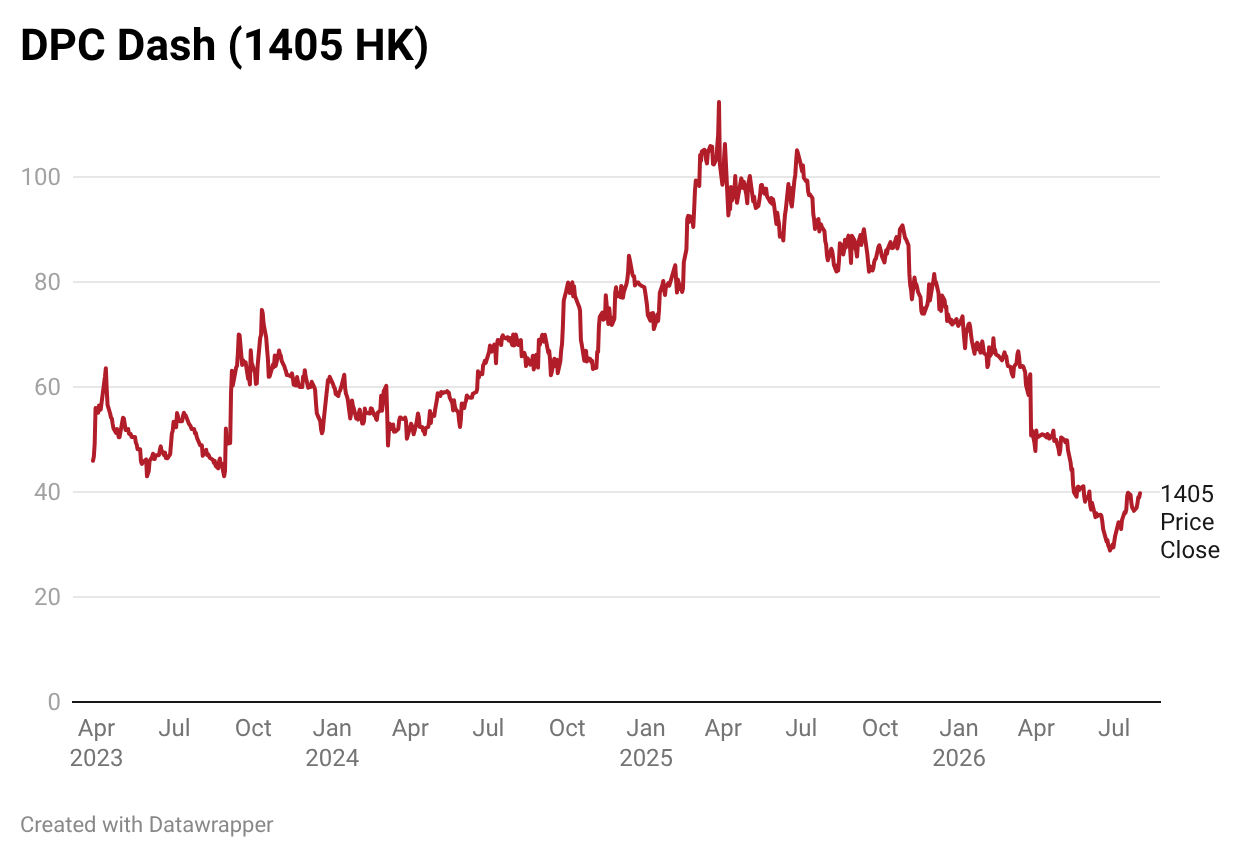
However, while he used to own shares in DPC Dash, he eventually sold them. Many Chinese industries are reliably oversupplied. For example, there are hundreds of EV makers. And the restaurant industry is no exception.
Management's explanation for declining same-store sales was reasonable – that newly opened stores experienced a honeymoon effect, with subsequent revenue declines. But then there might have been cannibalization as the store count density rose. In addition, margins were hit by wage inflation. A business with 4-5% group margins can't absorb a 200-basis-point decline. Especially when there are fixed costs, such as corporate overhead.
He noted that the current valuation of ~US$400,000 per store is low relative to the headline US$100k of store-level operating profit. But same-store sales may worsen before this year's cohort matures.
5. Macau casinos
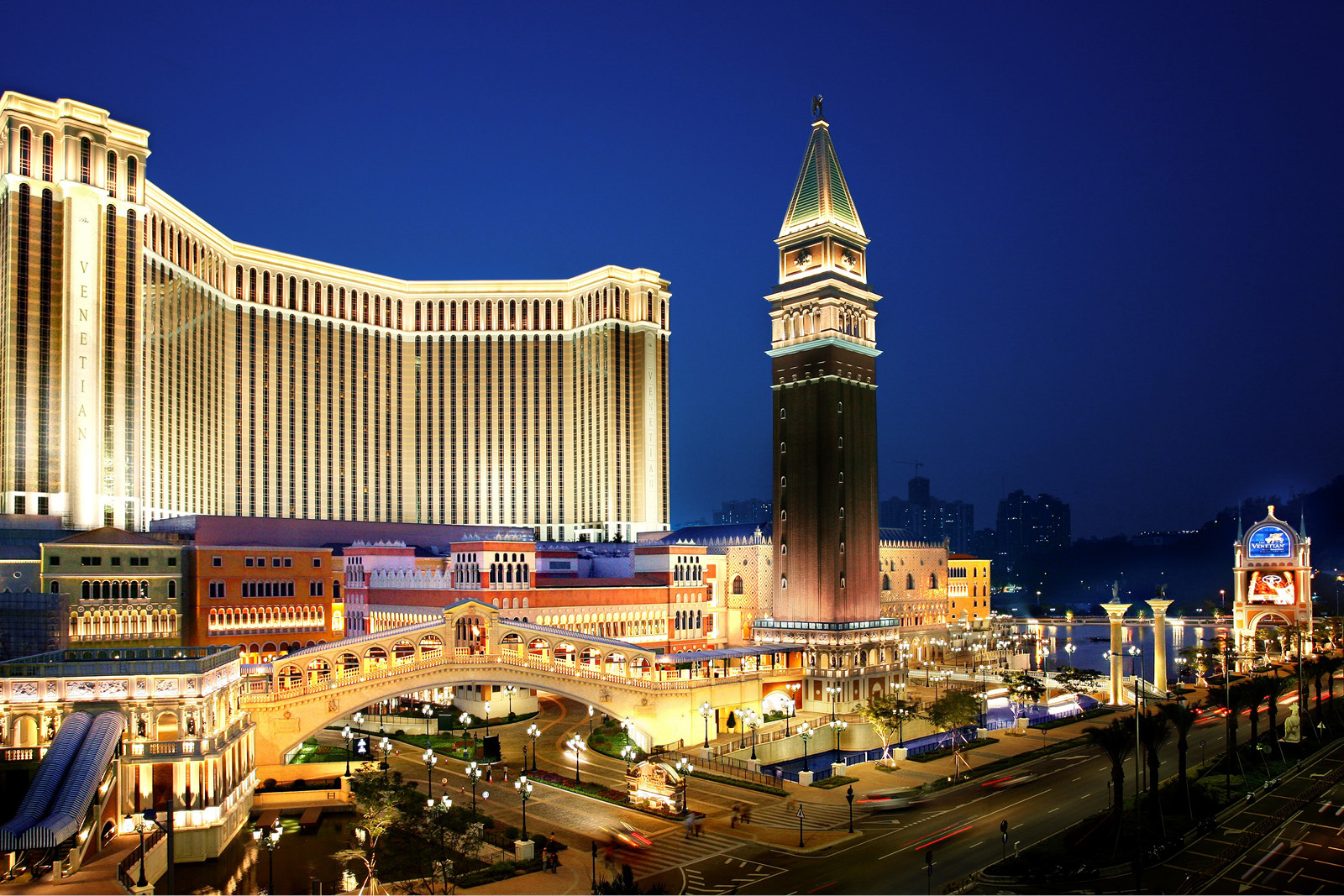
He argued that if there's one Chinese industry that isn't oversupplied, it's Macau's casino industry. There are only six licensed operators, and they cannot meaningfully grow their table count. His view is that if and when Chinese consumer incomes rise, some of the increase will leak into Macau.
There were regulatory crackdowns in the last 10-15 years because Macau casinos have served as a channel for capital to leave Mainland China. After both crackdowns, VIP revenues fell to 30-40% of their former levels. But the recovery is now in the mass market, which is now stronger than in 2018 and 2019. The mass market minimum bet is still HK$500.
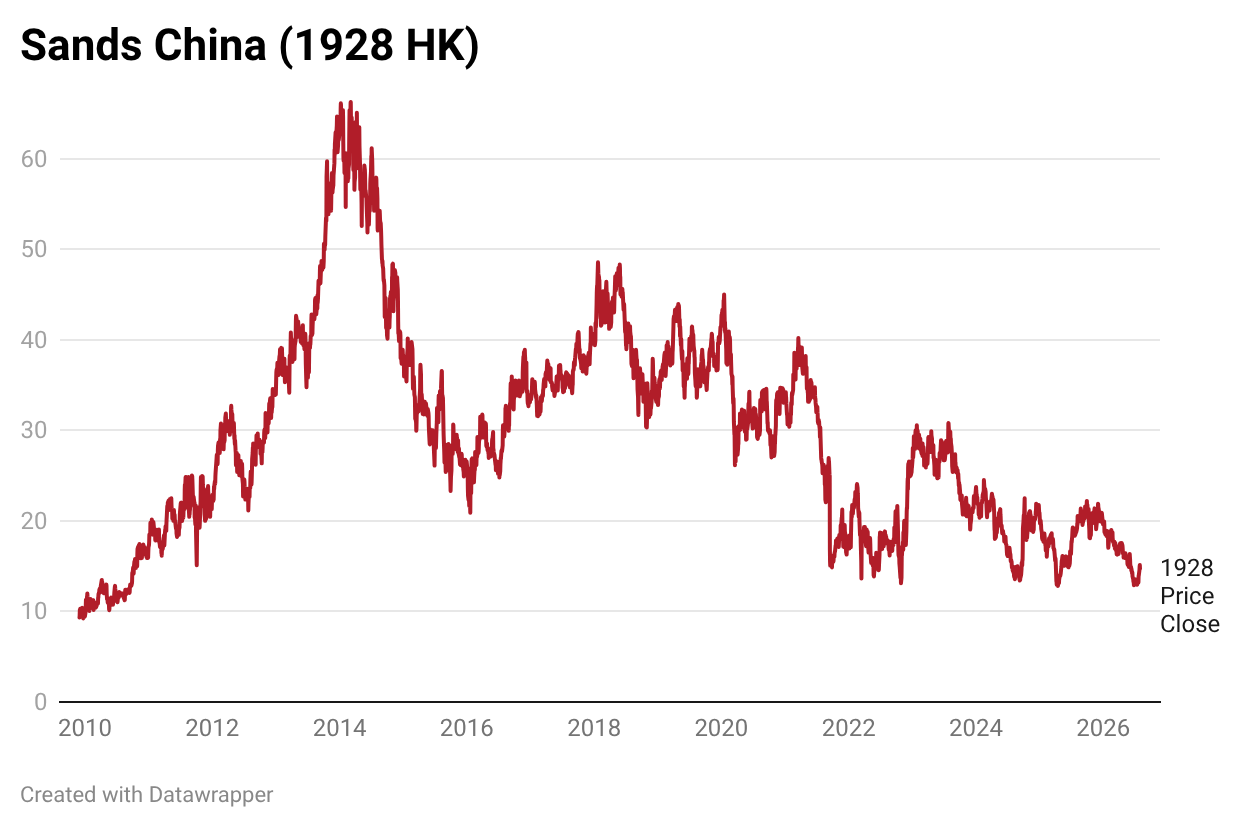
Roderick was given a tour of Sands China's (1928 HK – US$15 billion) casino, Sands Macau, where they explained the system. Mainland customers booked through a tour operator who organizes the trip and funds the betting money. Junkets have been severely restricted, but they seem to have emerged under the moniker "agents", which sounds like the exact same thing. Money already offshore can always be bet in Macau. On the other hand, further crackdowns are a real possibility, and the Chinese consumer is weak.
6. Futu
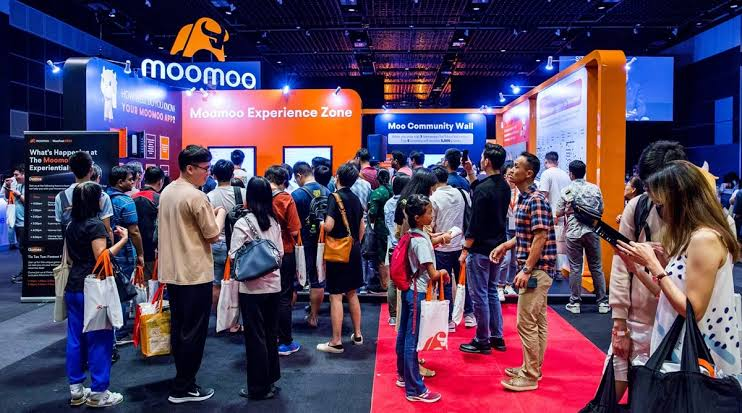
Roderick recently bought shares in the Chinese brokerage company Futu (FUTU US – US$15 billion).
This company used to be a Chinese broker allowing mainlanders to buy US and other foreign stocks, often with leverage. But Beijing cracked down in 2021 and 2022 to stem capital flight. Accounts would be funded with RMB and then converted by Futu.
But over the past five years, both Futu and competitor Tiger Brokers (UP Fintech; TIGR US – US$872 million) have built genuine non-China businesses. Hong Kong is the core market, and Singapore is another large market. Both of these firms now run pop-up displays in grocery stores to sign up new accounts. That makes them Hong Kong / Southeast Asian consumer businesses with less regulatory risk.
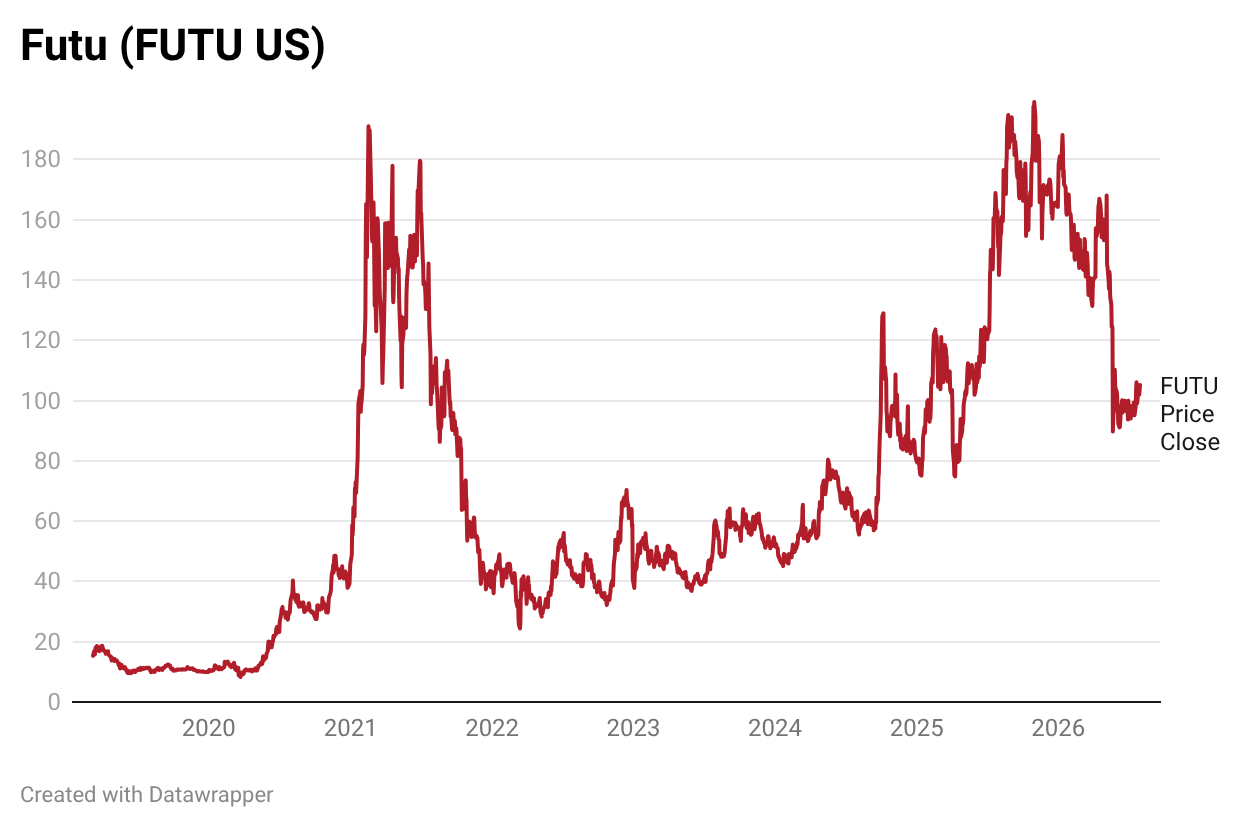
Earlier this year, the stock fell significantly. And it emerged that China had cracked down on them yet again. However, Mainland China accounts for 20% of revenues.
In the past, Mainland Chinese could open accounts by showing a Hong Kong ID or an existing foreign brokerage account. But today, verification is moving from IDs to being location-based. In other words, if you're physically in China, you can no longer trade.
So it looks like the China business could be a zero. But he thinks that the largest part of the business is now non-China, and that business is growing 30% per year. The stock trades at 8-9x P/E. It's a structural thesis that's very similar to those of Interactive Brokers (IBKR US – US$40 billion), Robinhood (HOOD US – US$78 billion), and flatexDEGIRO (FTK GR – US$3.9 billion). He expects low-cost brokerage firms to continue to take market share. The biggest worry is that Futu's customers like to gamble, so you could certainly get blow-ups like with Korean betting on levered SK Hynix ETFs.
7. Integral
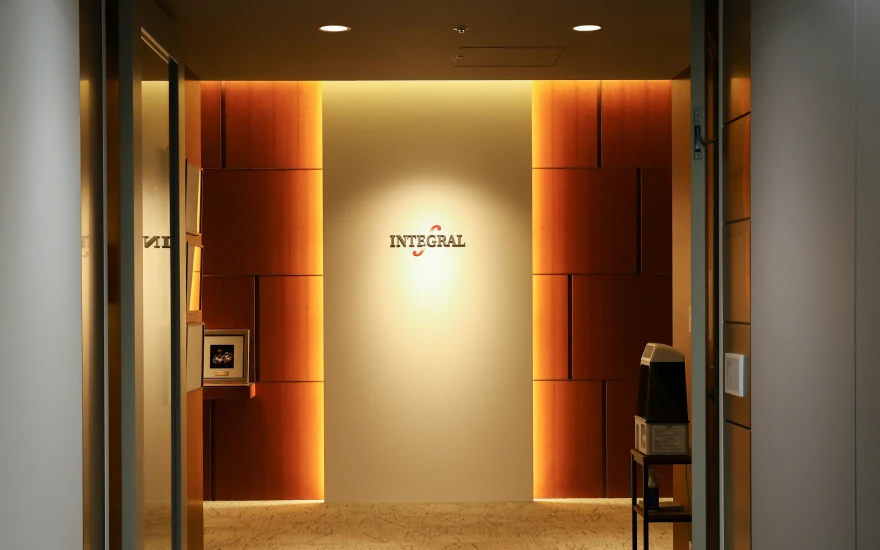
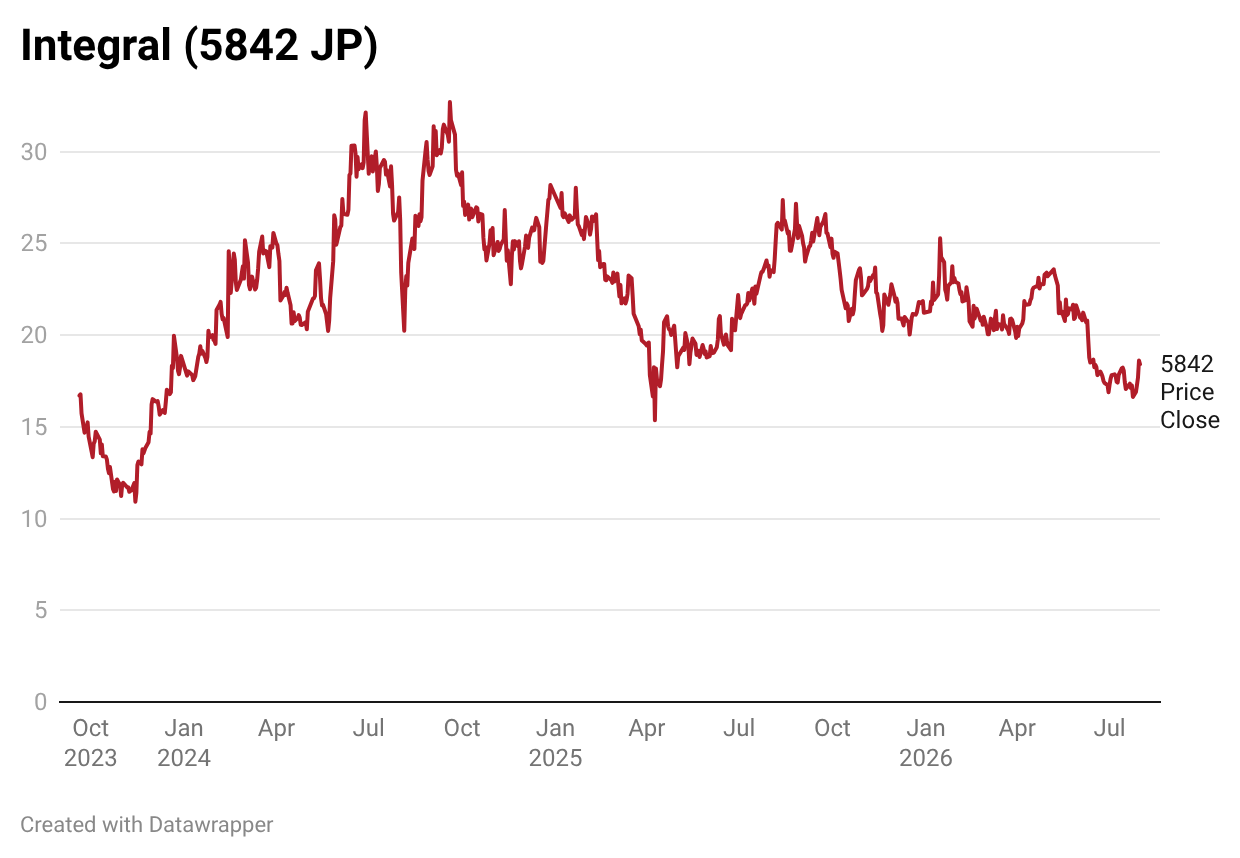
Integral (5842 JP — US$627 million) is a Japanese private equity firm. You can think of it as "KKR, but Japanese".
He believes Japan's corporate governance reforms are real and a long-term tailwind. However, there are far too many Japanese small caps to track individually, so he thought Integral was another way to bet on the trend. A private equity firm doing buyouts of undervalued listed companies is one way.
He rates Integral's deal record highly. For example, it purchased Shinoken at a great price and Tekscend Photomask, which eventually became a 5- to 10-bagger. Thanks to Integral's track record, it has grown from JPY 160 billion to JPY 400 billion in just a year.
However, the catch is that growth is very lumpy. A flagship fund comes every three or four years, and AUM steps down in between. The next flagship capital raise should begin at the end of 2027, with a total size of as much as JPY 500 billion.
What could happen to Integral is another portfolio IPO. Longer term, the private equity playbook could be extended into credit, real estate, and venture capital. And it has an edge versus foreign private equity companies – locals simply have more trust with Japanese firms.
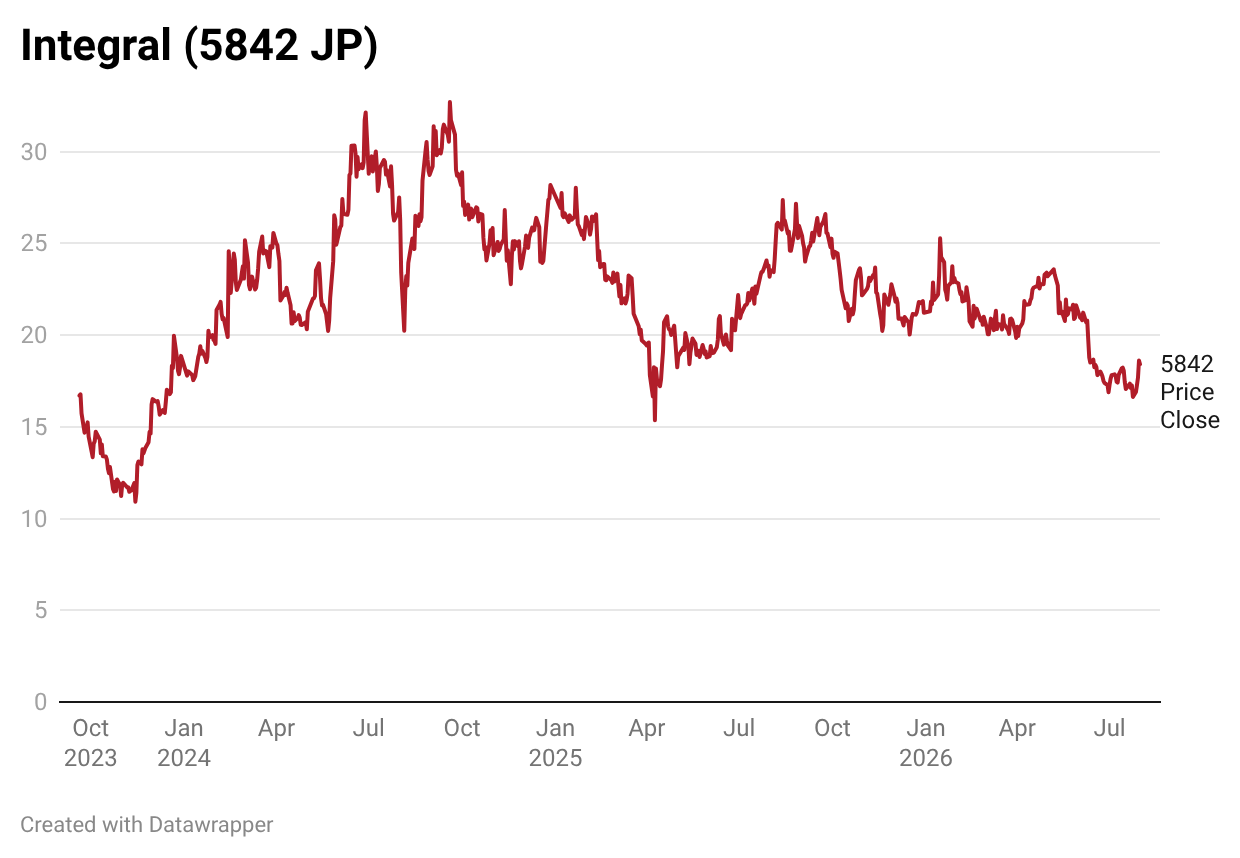
He sees the market valuation being 10-20% above net asset value, but with essentially no value assigned to the management business. He acknowledged he can't verify the marks on the underlying funds.
One problem is that it's listed on the lowest tier of the Tokyo Stock Exchange, largely due to a limited free float. But once insiders sell after their five-year lock-up, a higher float could eventually qualify it for a Prime listing.
There's not much transparency about which funds they've invested in and at what marks. Integral is probably conservative, but you never know.
8. How he uses KEDM
KEDM was founded 6-7 years ago by Harris Kupperman. The idea is to track spin-offs and other special situations early on, before investors catch on.
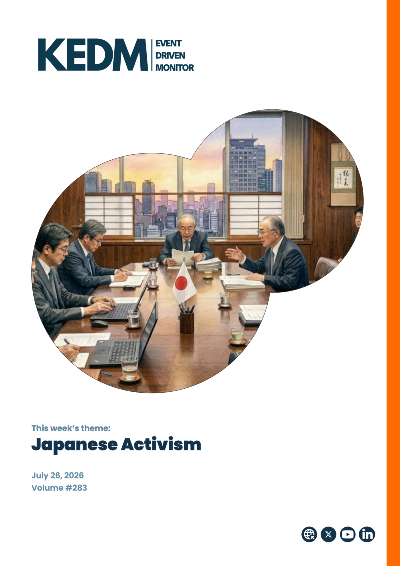
Roderick took over KEDM late last year when Harris shifted his attention to his fund. KEDM has now merged with ToffCap's Monday Monitor, and Roderick is working together with ToffCap to produce the product. An external data team helps develop the product.
The product has two sides to it: an event-driven monitor, plus a weekly thematic or a macro write-up. Harris Kupperman still contributes the macro ideas, but Roderick and ToffCap produce the rest. It's roughly 100 pages weekly, with screens.
For example, Roderick found Marex (MRX US – US$4.7 billion) via KEDM. It's a futures commission merchant that IPO'd in the United States over two years ago after a failed UK listing. It's been a multi-bagger, as the industry has consolidated with growing futures volumes. A short-seller wrote a report that pressured the stock, and was eventually proven wrong.
Other themes he's picked up from KEDM are aerospace names, nicotine pouches, European defense names, payment companies and for-profit prisons.
The newest theme featured on KEDM is US trade schools like Universal Technical Institute (UTI US – US$2.2 billion) and Lincoln Educational . (LINC US – US$1.3 billion). Roderick owned these stocks six years ago and might find it psychologically hard to pay up again. But the thesis is that there's a persistent shortage of welders, mechanics, nurses, dental hygienists, etc. Young people can attend community colleges, but trade schools let students finish in one year rather than two and don't require them to complete general-education requirements. Also, Roderick argued that if AI takes all our jobs, then welding may be the only job left :)
9. Where can we learn more?
Readers can visit KEDM.com – free trials are available for 4 weeks of content. There are two options:
- KEDM Pro, which helps institutional investors track corporate catalysts
- KEDM Lite, the publication formerly known as the ToffCap Monday Monitor
Roderick also writes quarterly letters for his hedge fund Night Watch Investment. Nothing here is an offer or invitation to invest in any fund. You can also find him on X here.