Hidden Champions of Indonesia
20 "hidden champions" identified

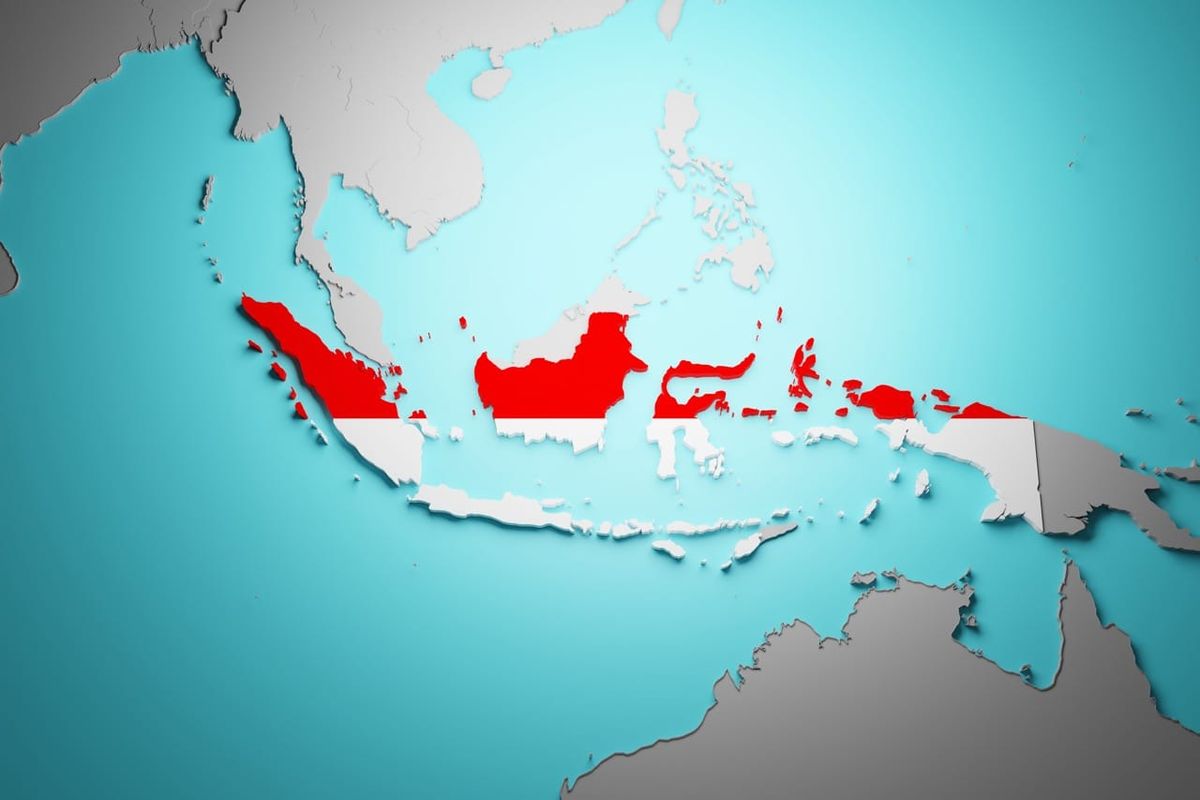
Indonesia has been among the most controversial global stock markets in 2026.
New President Prabowo Subianto has undertaken a series of reforms that don't exactly look market-friendly. Stock prices have now fallen sharply.
To help you make sense of the market, I've dug into the universe of publicly listed stocks and picked out 20 "hidden champions". I've borrowed the concept from Hermann Simon, referring to companies that dominate their niches and compound their capital at high returns on capital.
This post is part of a series of write-ups on hidden champions in Malaysia, Taiwan, Indian ADRs/GDRs, Chinese ADRs, Hong Kong, Singapore, Australia, Thailand and South Korea.
But just because a company might qualify as a hidden champion doesn't mean that it's worth buying. Do not take the following discussion as investment advice. I've paid zero attention to share price and instead focused on finding the best businesses in Indonesia.
Table of contents:
1. A top-down view
2. Screening for candidates
3. Hidden champions of Indonesia
4. Conclusion1. A top-down view
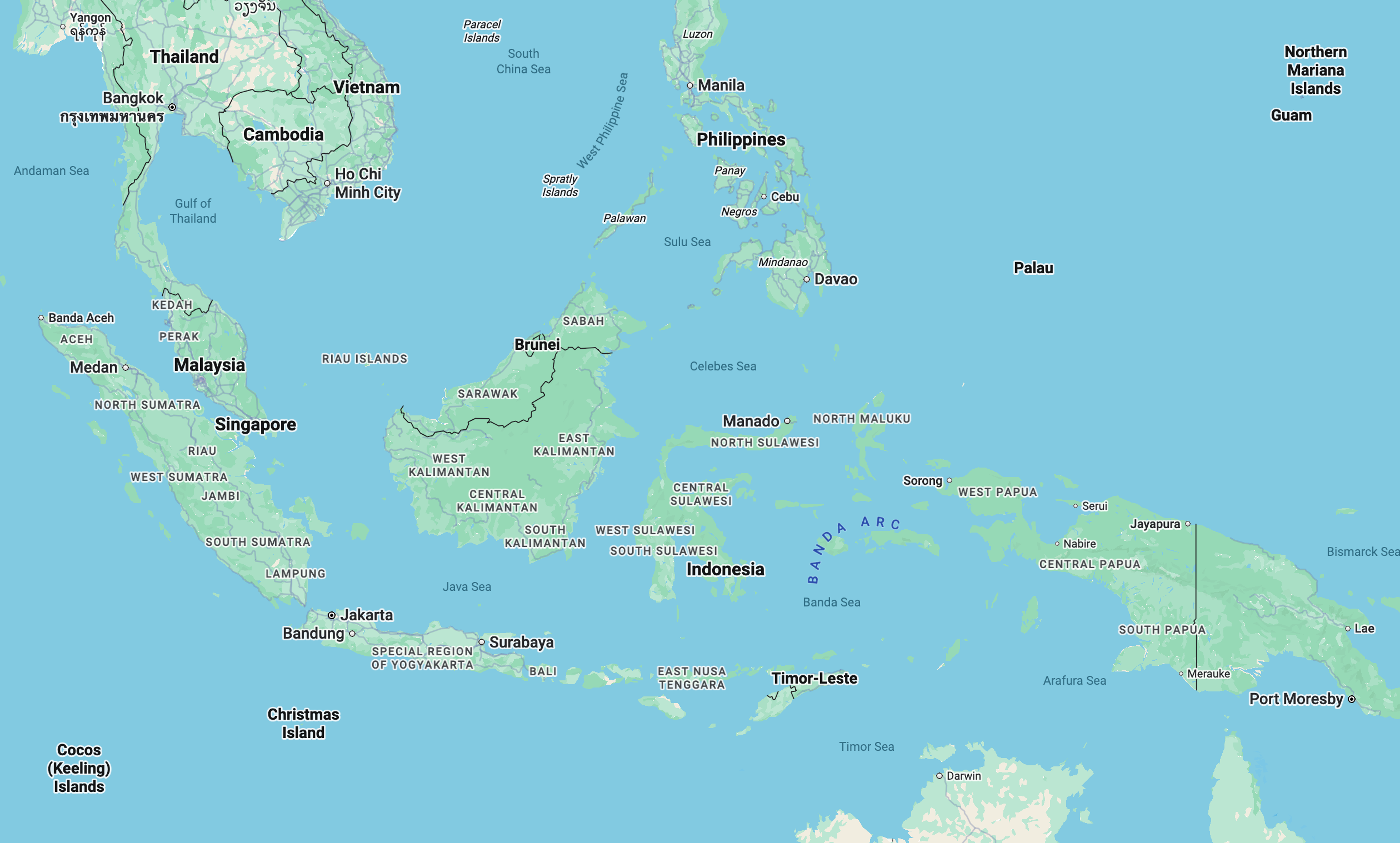
Indonesia is an island nation in Southeast Asia. 17,000 islands in total, including Java – the most densely populated island on earth.
First, some brief history. The country has been heavily affected by overseas trade. For example, Indian traders brought Buddhism and Hinduism in the first century. Middle Eastern traders spread Islam from the 13th century. And the Dutch East India Company outright colonized the country from the 17th century onwards.
After Indonesia's independence in 1949, Soviet back former President Sukarno took control through an authoritarian regime and nationalized Dutch businesses. But he lost power after a political crisis in 1965, the events depicted in the movie The Year of Living Dangerously.
Instead, US-backed dictator Suharto took control and ran the country with an iron fist, killing hundreds of thousands of people in anti-communist purges. The economic growth under Suharto improved, but it was a rent-seeking economy where he and allies such as Mohamad ("Bob") Hasan and Liem Sioe Liong sucked the economy dry.
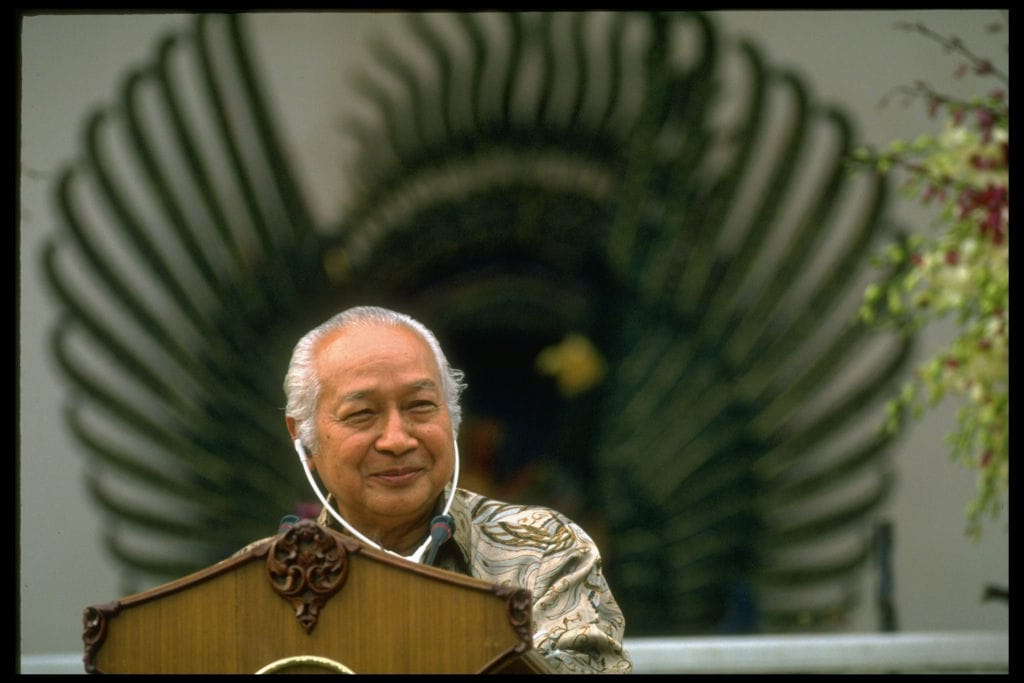
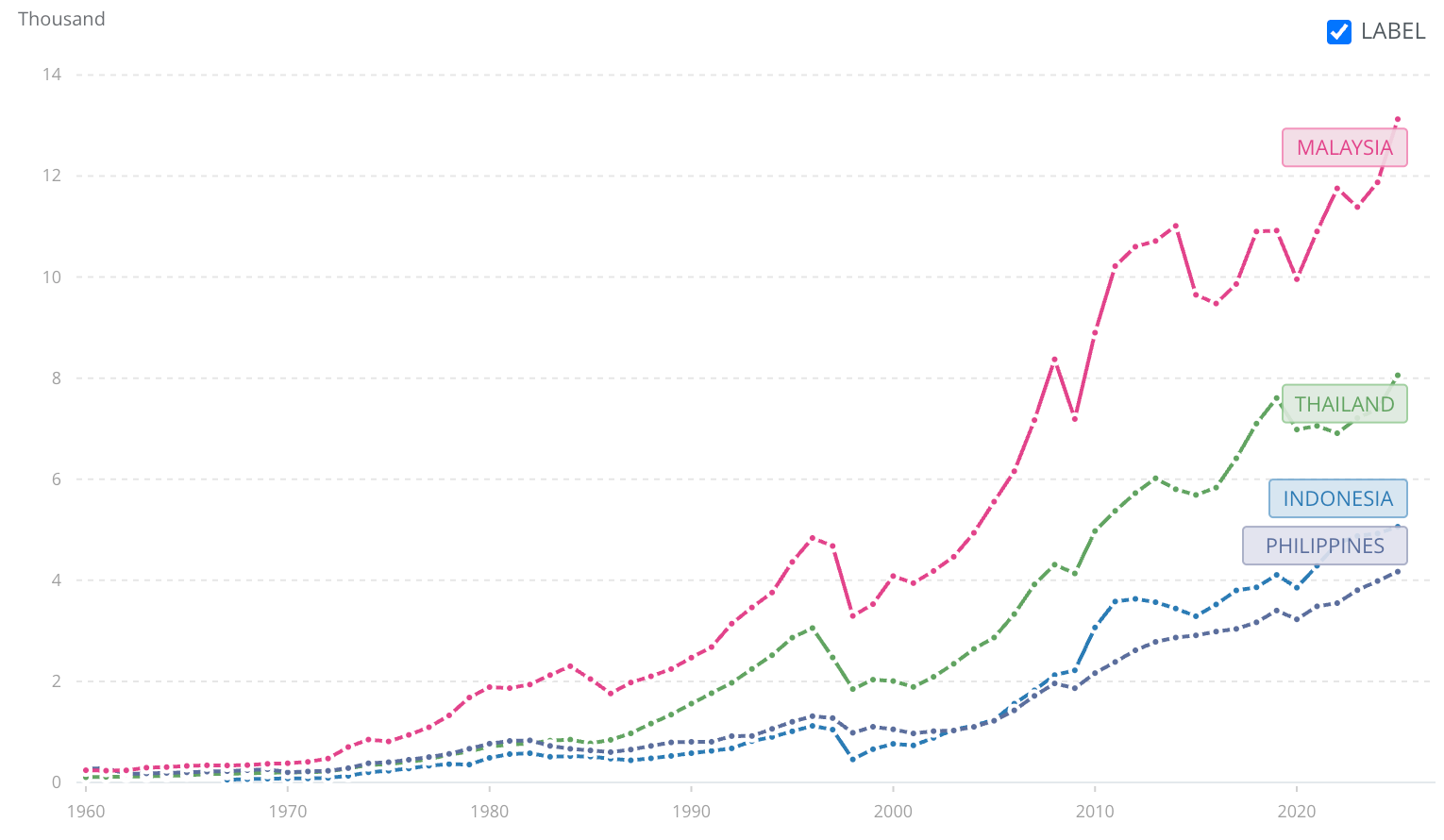
Suharto lost power after race riots during the Asian Financial Crisis in 1998. And Indonesia finally emerged as a decentralized, multi-party democracy. The military became less involved in politics. The media became free. And economic growth picked up significantly:
I was encouraged to see former President Jokowi's reforms between 2014 and 2024. Roads were built, red tape was cut, tax revenues rose, and new industries such as nickel processing emerged. His finance minister, Sri Mulyani, ran a tight ship with limited budget deficits most of the years between 2016 and 2025.
However, the centralization that allowed Jokowi to undertake his reforms also led to his successor, Prabowo Subianto, taking control of the bureaucracy. Prabowo was a general under former dictator Suharto and now enjoys full military support. In my view, Indonesia seems to be returning to its authoritarian past.
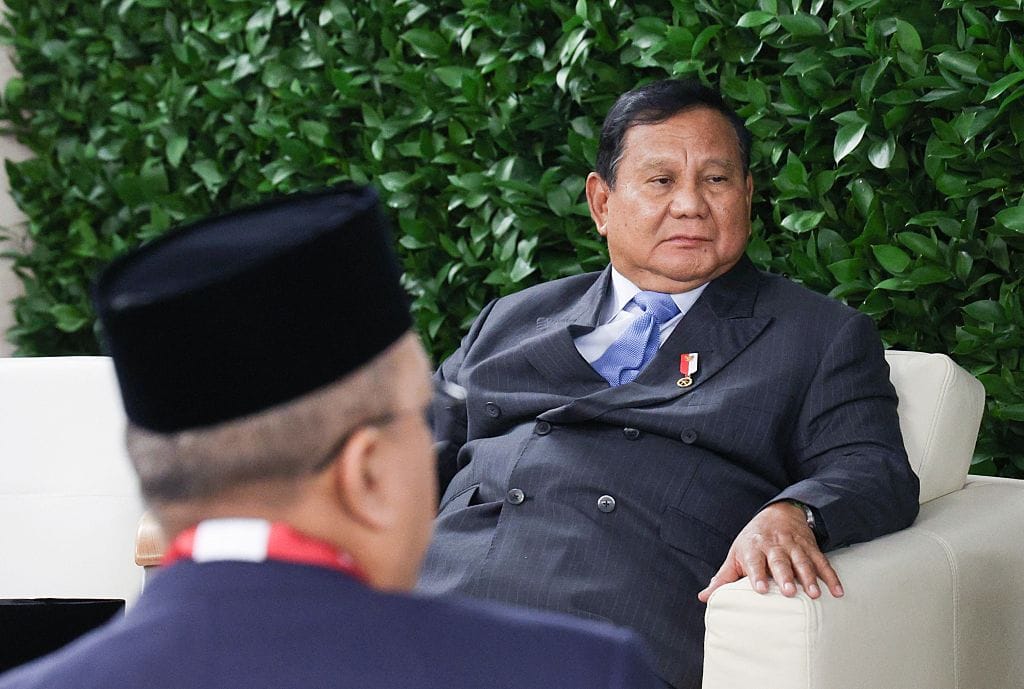
Early in Prabowo's presidency, he transferred all 889 state-owned enterprises (SOEs) to a "sovereign wealth fund" called Danantara, which reports directly to Prabowo. With state-owned enterprises transferred to Danantara, the finance ministry no longer receives dividends from them, potentially causing a gap in the government budget.
Indonesian businessmen are now complaining about government interference. A large part of the country's plantation land has been taken over by a government entity. Sovereign wealth fund Danantara has issued so-called "Patriot Bonds" priced at a minuscule 2% interest rate to a select number of tycoons, who will presumably gain favor from the government one way or another. Finally, Prabowo has set up a monopsony that will be the sole exporter of several commodities such as coal and palm oil. My fear is that the monopsony will buy them at fixed domestic prices, sell them at high international prices, and pocket the spread.
This development is obviously very concerning. But I personally think that the risk of expropriation is the biggest in sectors built on scarce licenses, for example, plantations and coal miners. I'm much less nervous about Indonesia's consumer names.
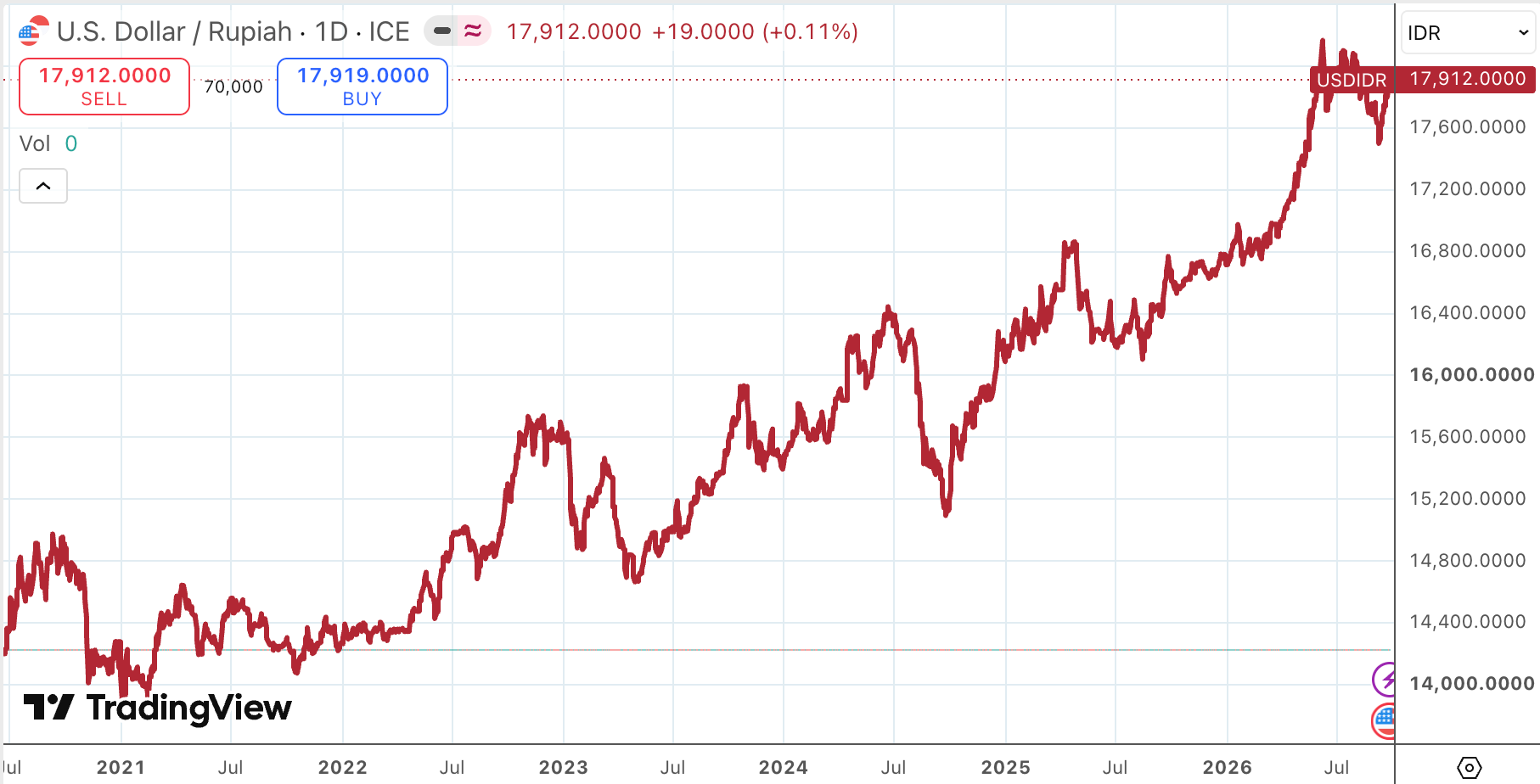
To fund Prabowo's election promises, such as free school lunches and village cooperatives, government spending will have to rise. In the first half of 2026, the central government's expenditures rose +29% year-on-year. Such spending growth will probably not be positive for the Indonesian Rupiah, which has already declined significantly:
On the other hand, government spending boosts nominal growth in the short term and could well lead to upgrades in analyst estimates.
Another major event in 2026 was MSCI threatening to downgrade Indonesia from an emerging to a frontier market. They criticized the Indonesia Stock Exchange (IDX) for opaque shareholder structures and artificial trading behaviour in certain stocks. So Indonesia might become a frontier market after MSCI's next review in November 2026.
Indonesia's Financial Services Authority OJK responded quickly by improving disclosures and raising the minimum free float to 15% over the next few years. This quick response led some investors, such as previously featured Chris Beselin, to express bullishness about Indonesian equities.
At the end of the day, Indonesia remains a force to be reckoned with. It's the world's fourth-largest country by population, with 280 million mostly Muslim citizens.
The GDP/capita is just about US$5,000, on par with Vietnam's but below China's.
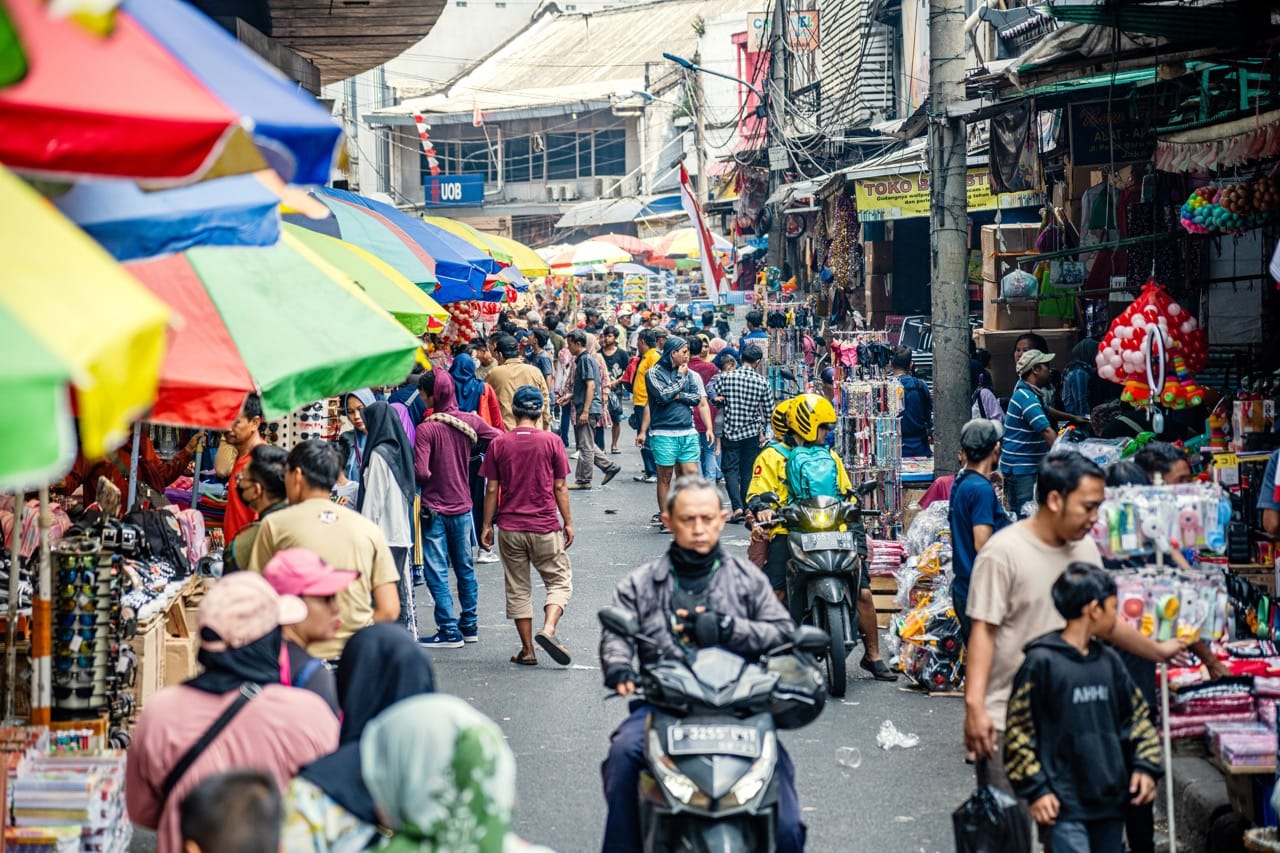
The problem seems to be a large informal economy, coupled with state dominance across many sectors, including banks, oil & gas, telecom, and even coal mining. Tough labor laws have led many to stay outside the formal economy, causing government tax revenues to be weak and inflation to be high. Because informal businesses struggle to access credit, they find it hard to grow. Finally, Indonesia has import quotas, making foreign trade difficult.
57% of GDP is from the densely populated island of Java, where the capital Jakarta is based:
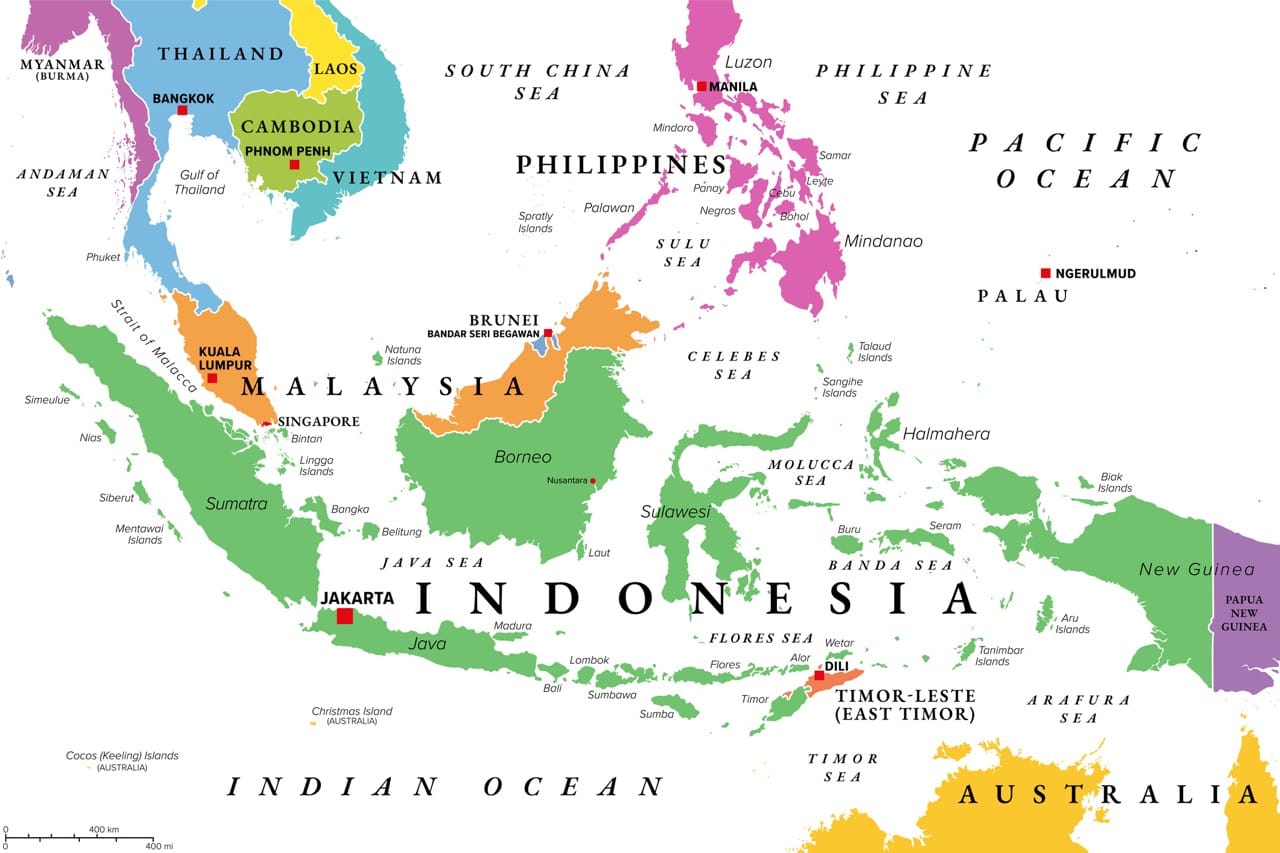
Java is the heartland of finance, trade, manufacturing and petrochemicals. Sumatra's economy is agricultural, with oil palm plantations, rubber plantations, etc. Kalimantan (the Indonesian part of Borneo) also focuses on plantations, along with coal mining and oil & gas. Sulawesi is home to Indonesia's nickel mining industry. Bali is focused on tourism. And the eastern island of Papua is sparsely populated, with little industry beyond mining.
The stock exchange was mostly dormant after Sukarno took over in 1949. But it was revived under dictator Suharto in 1977, and the number of listed companies exploded from the 1980s onwards.
The Asian Financial Crisis was traumatic, with many companies' share prices declining by more than 95% in US Dollar terms. Capital fled to other countries, such as Singapore.
As you can tell from the IDX Composite, the market performed well during the BRICS bubble from the mid-2000s to the 2010s but has been more flattish recently.
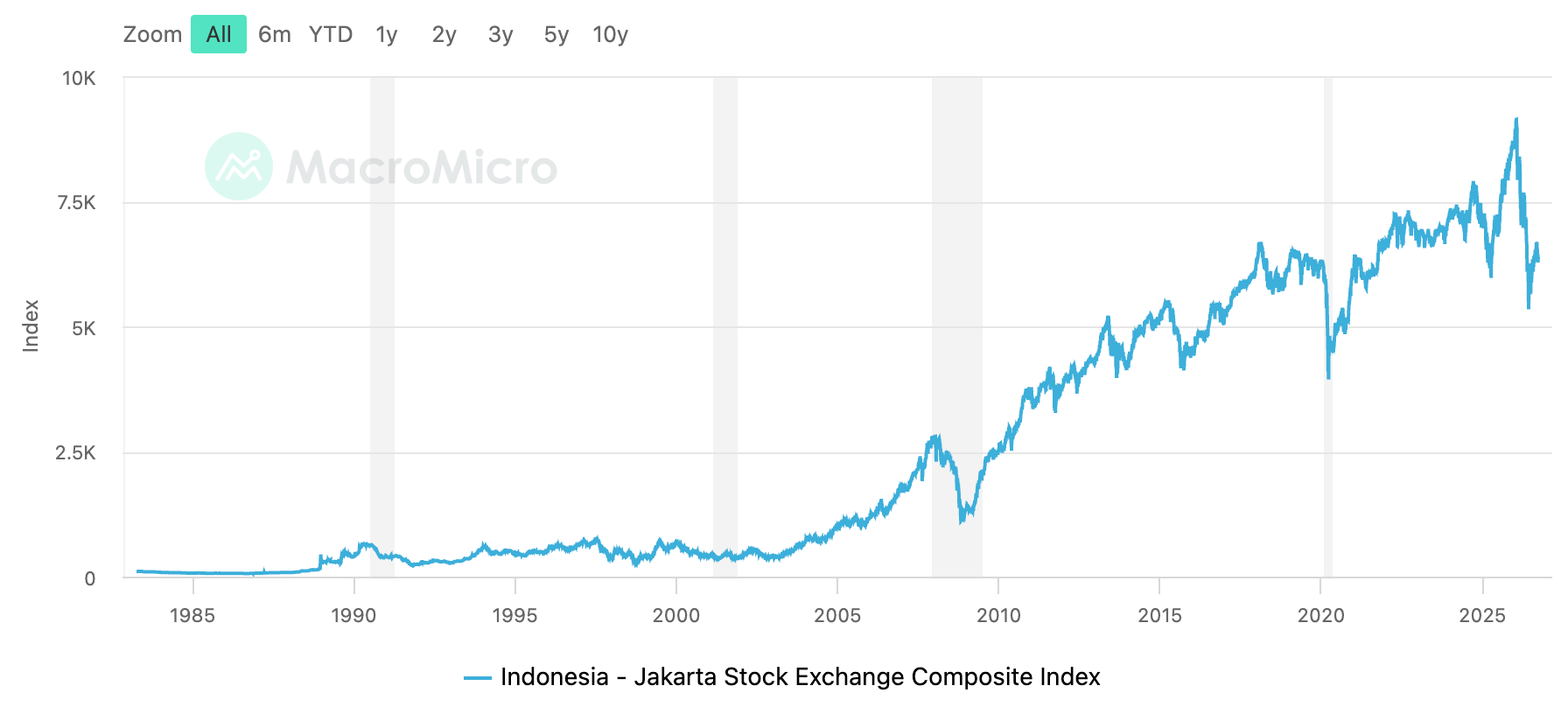
Over the past ten years, banks have performed reasonably well, but consumer stocks have seen their P/E ratios decline from around 30x to about 10x.
The aggregate market cap is only about US$600 billion, comparable to much smaller countries such as Malaysia and Thailand.
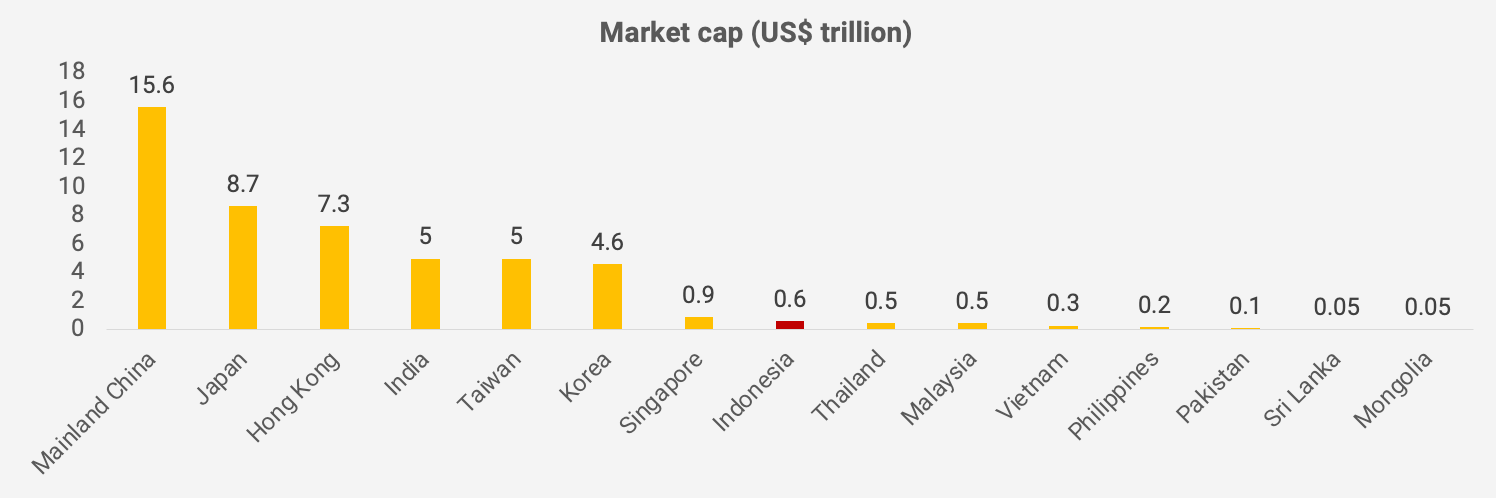
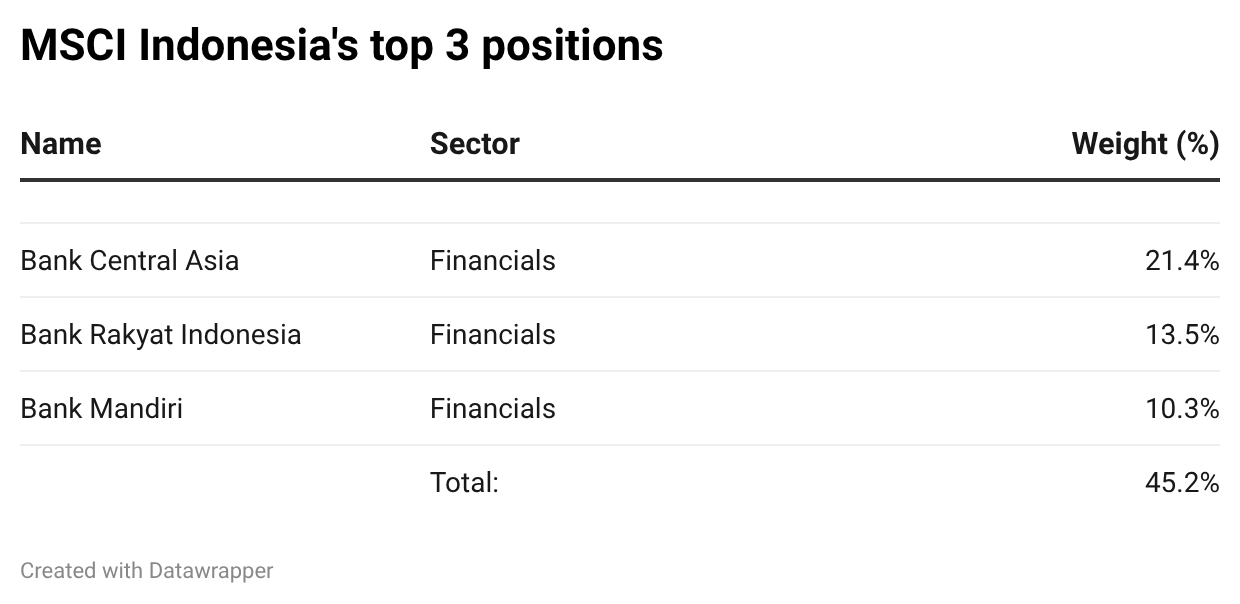
Due to long-term underperformance, the index now trades at 9.3x P/E, one of the lowest multiples in the world. The most popular ETF is currently the iShares MSCI Indonesia fund. However, MSCI Indonesia's top three positions are banks, which make up almost half the index. So the index's performance is more a function of interest rates and NPL formation than, say, a broad cross-section of the economy.
The recent underperformance in Indonesian equities seems to be revolving around macroeconomic and political concerns. Bank Indonesia has had to raise interest rates to protect its currency. And there are obvious political worries about Prabowo and his political ambitions.
There are currently close to 1,000 companies listed on the Indonesia Stock Exchange. Above a US$50 million market cap hurdle, there are currently 503. One third are financials, while other sectors such as materials (mining), energy (oil & gas), and consumer stocks make up a large portion of the index.
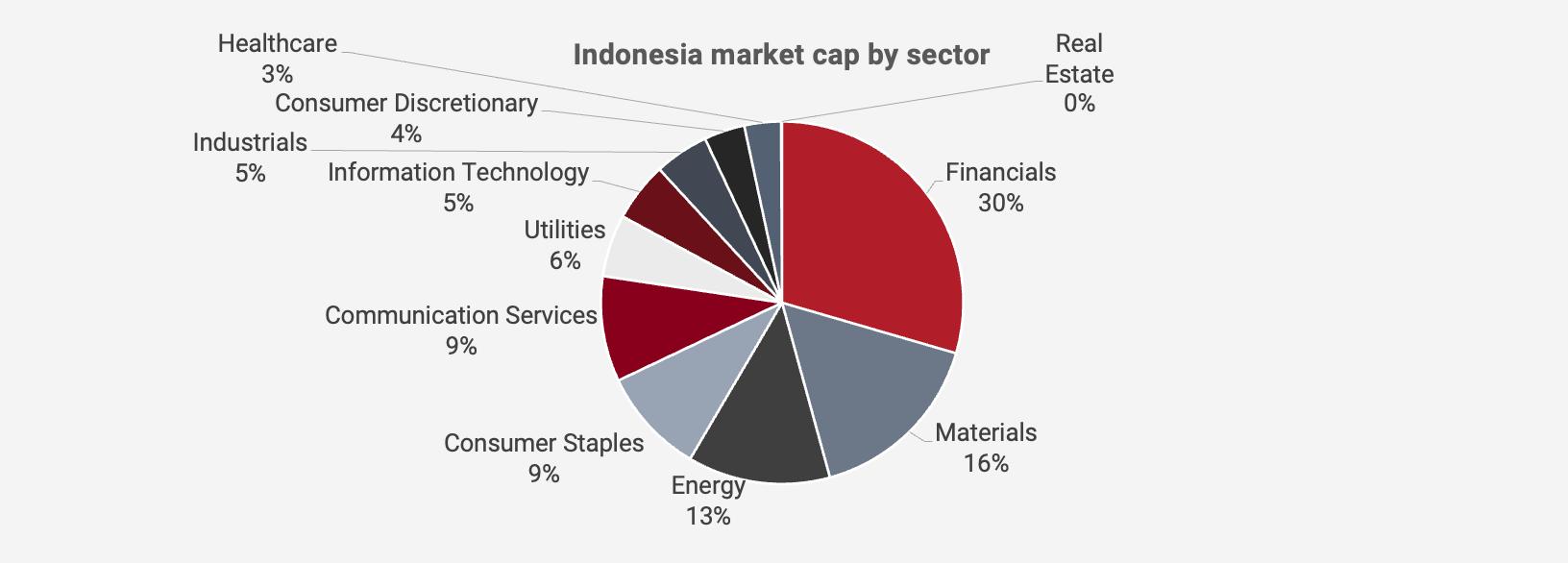
Here are the biggest companies by sector:
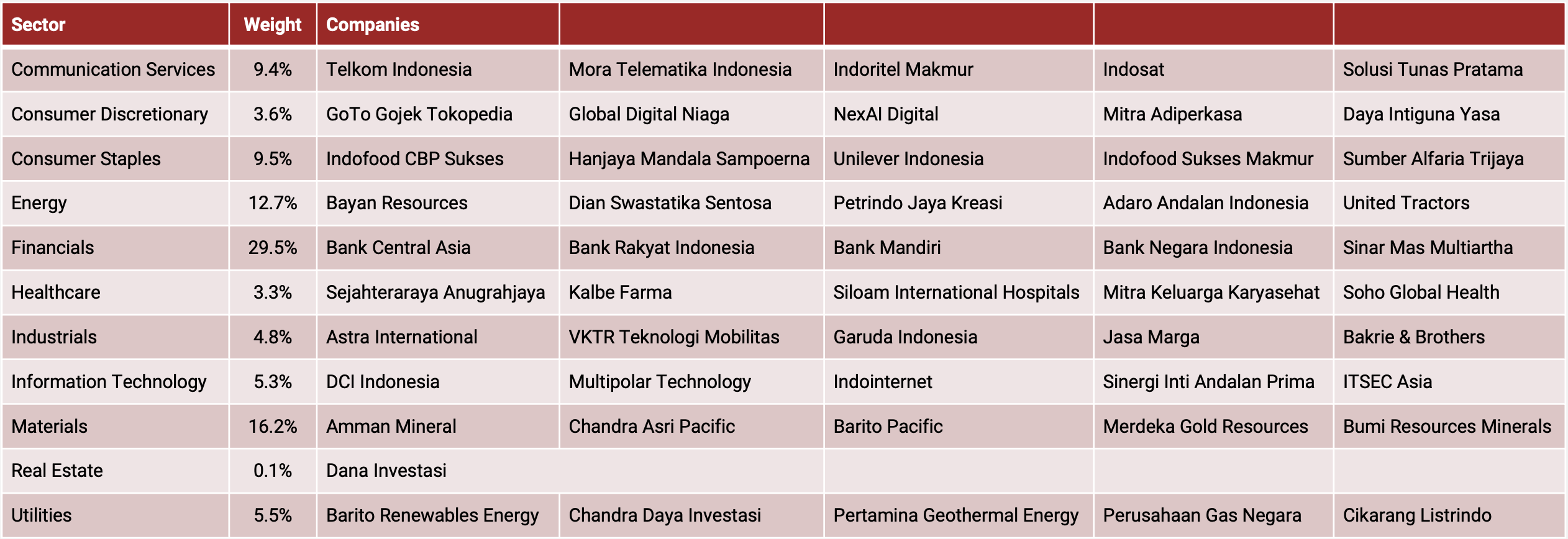
You might recognize some of the names. They include telecom operator Telkom Indonesia, ride-hailing company GoTo Gojek Tokopedia, noodles maker Indofood CBP Sukses, Toyota car distributor Astra, Bank Central Asia, coal miner Bayan Resources, toll road operator Jasa Marga and utility Perusahaan Gas Negara.
To summarize, Indonesia is a massively large country that has been growing steadily. But the political risks are real, and I'm personally very cautious about stock selection in Indonesia. I do think consumer companies will be left to their own devices, but the uncertainty is real.
Interactive Brokers does not offer trading access to IDX-listed equities. But Phillip Securities in Singapore and Boom Securities in Hong Kong do. So those are probably the best options for investors looking to get access to Indonesian equities. Read my 2021 guide on Asian retail brokers here.
2. Screening for candidates
Here are a few screens of the 503 companies above US$50 million market cap. I'll be looking for companies with "hidden champion-like" characteristics:
- A high historical average return on equity
- High revenue growth
- Strong share price performance
Here are the top ten companies in Indonesia in terms of a high return on equity:
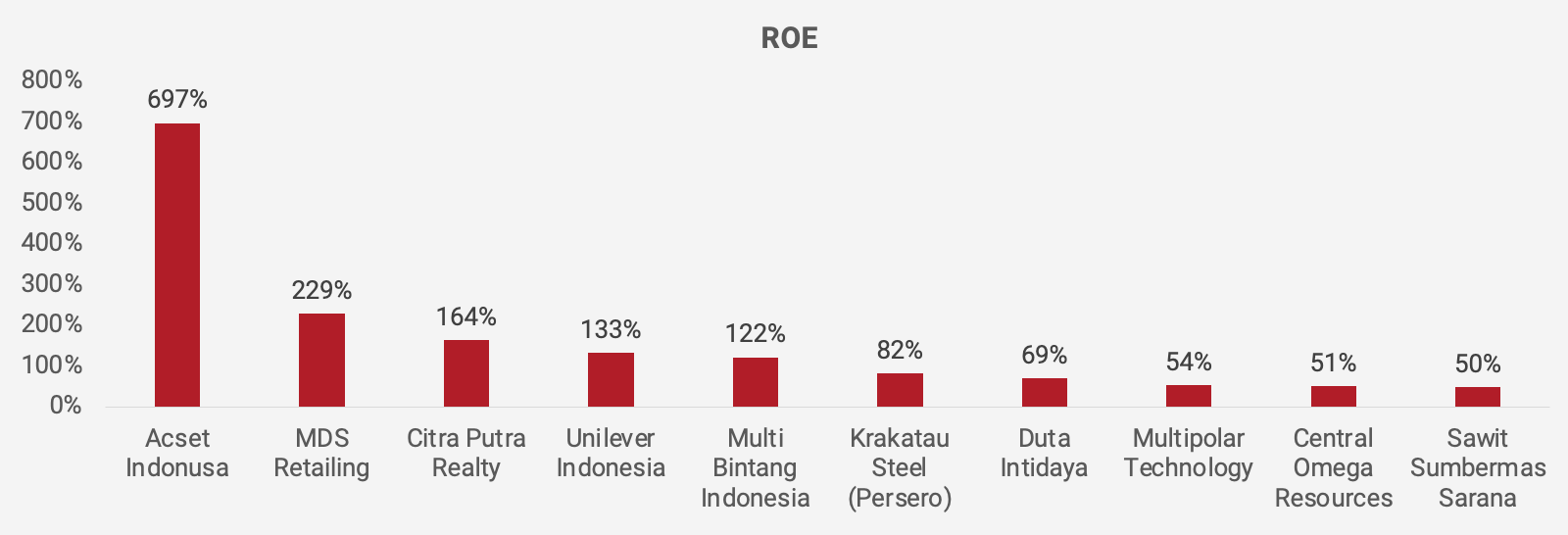
Of these, I believe FMCG company Unilever Indonesia and beer producer Multi Bintang are genuinely strong companies. But the former has been hurt badly by privately run competitor Wings. Multi Bintang has recovered nicely from the COVID-19 pandemic. System integrator Multipolar Technology also has a very impressive return on equity.
Next, here are the top ten companies in terms of their revenue CAGR:
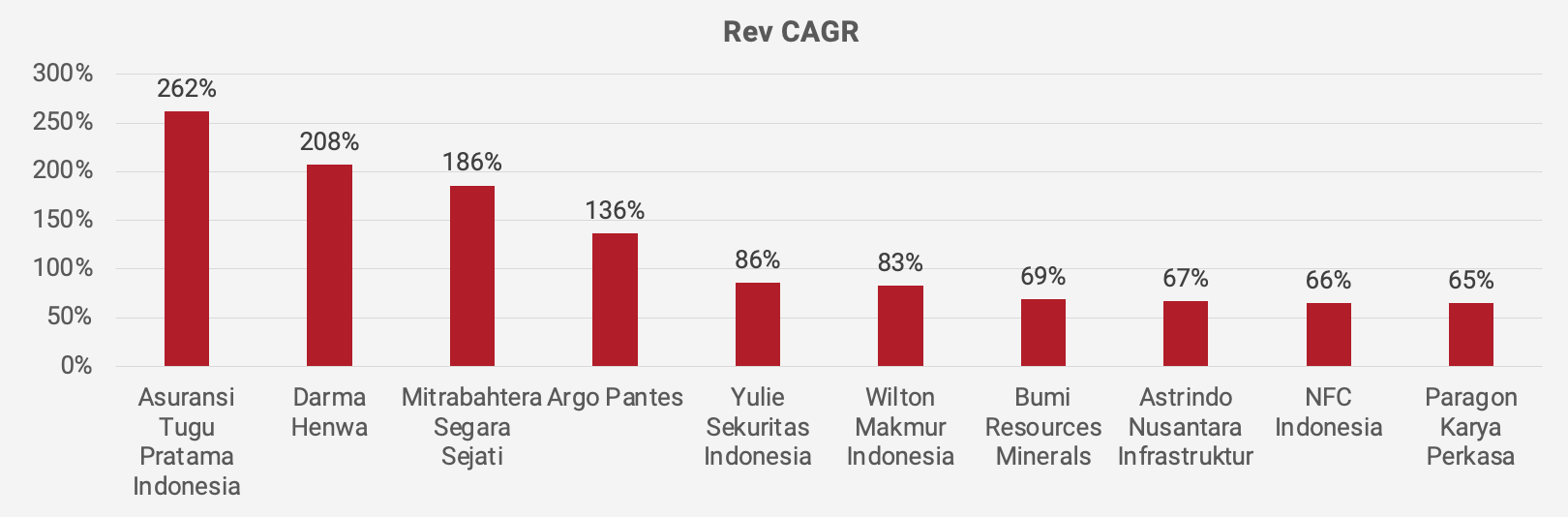
I'd be more cautious about these, with none of them truly exhibiting hidden champion-like characteristics.
Finally, here are the top ten companies in Indonesia in terms of share price return CAGR:
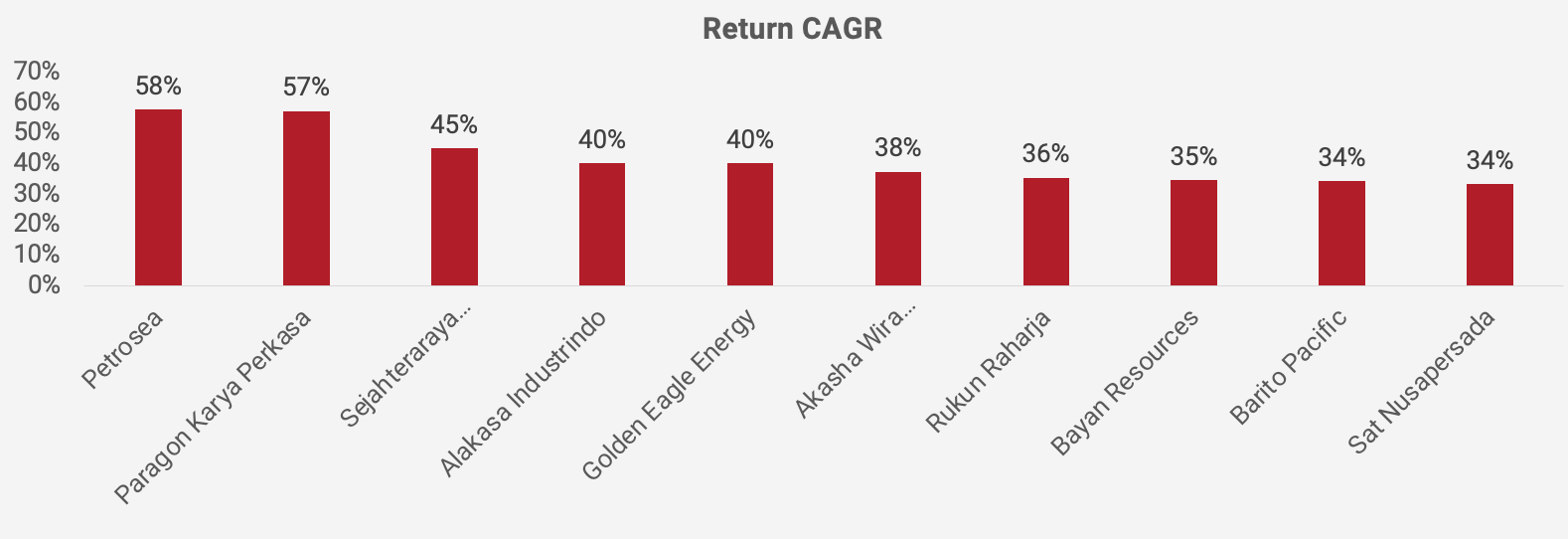
The only stock here that might qualify as a hidden champion is Akasha Wira International, which sells bottled water such as Nestlé Pure Life/Vica brand names as well as beauty care products.
In any case, I've distilled the 503-company list into a spreadsheet, where I've ranked each of them on return on equity, historical share price performance and revenue growth. Stocks above 10% in each category are highlighted in green.
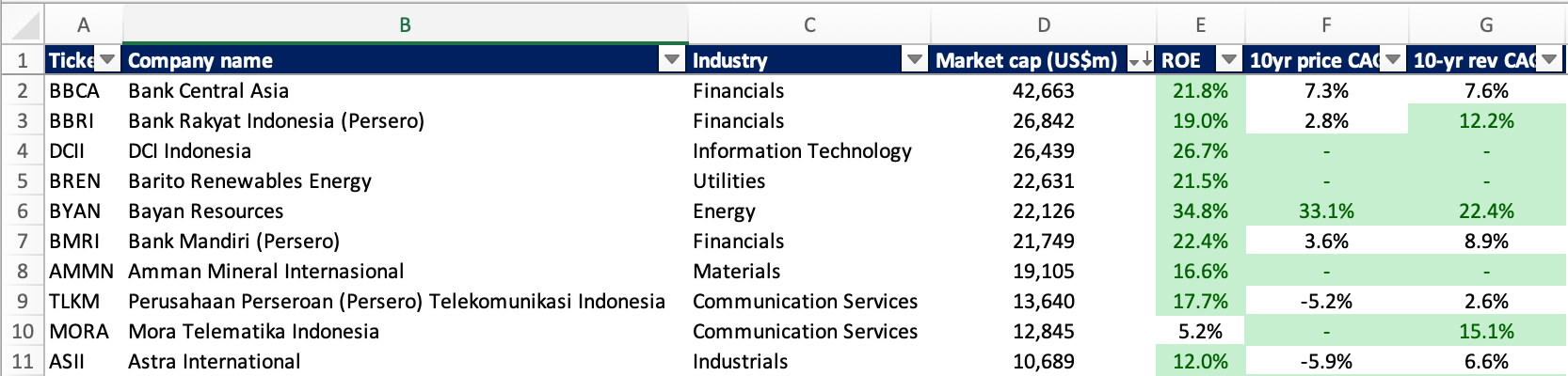
You can download the full spreadsheet here: