Insider activity September 2026
5 stocks in Singapore, China, Hong Kong and South Korea

Hi! Welcome to a subscriber-only edition of Asian Century Stocks – a newsletter about Asian value stocks. For a complete list of all previous posts, check out the Table of Contents.
September insider transactions
Insider buying activity rose +19% in September 2026. US$2.4 billion was repurchased across 930 transactions. We still saw slightly more buys than sells in Asia, while sentiment continues to be bearish in the US:
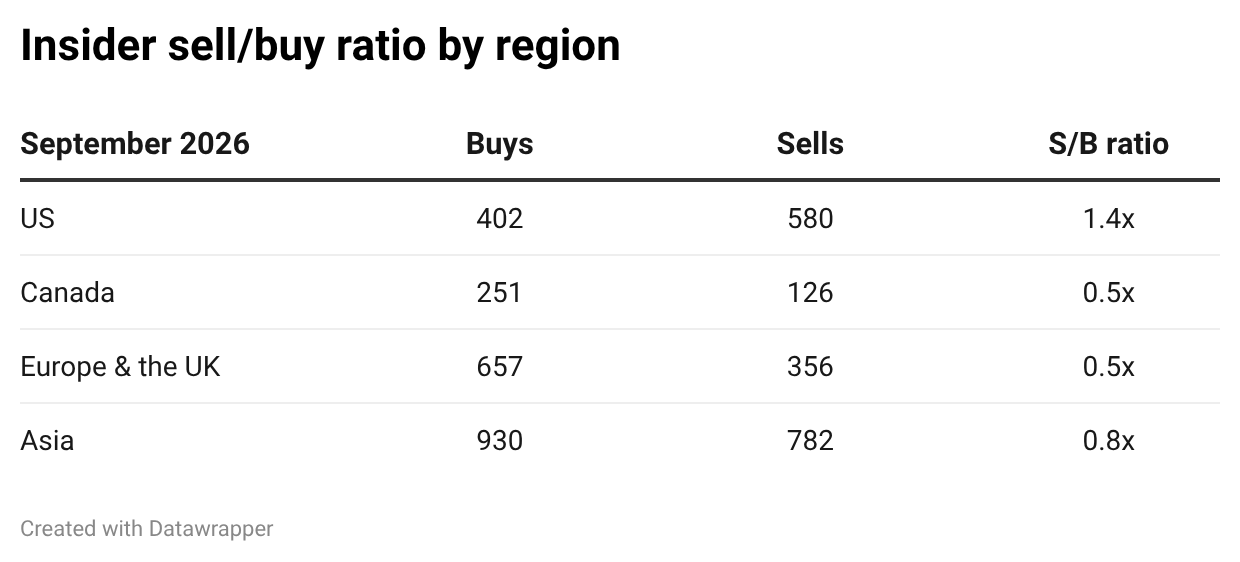
Sentiment is particularly bullish in Hong Kong, Malaysia, South Korea, Thailand and Vietnam.
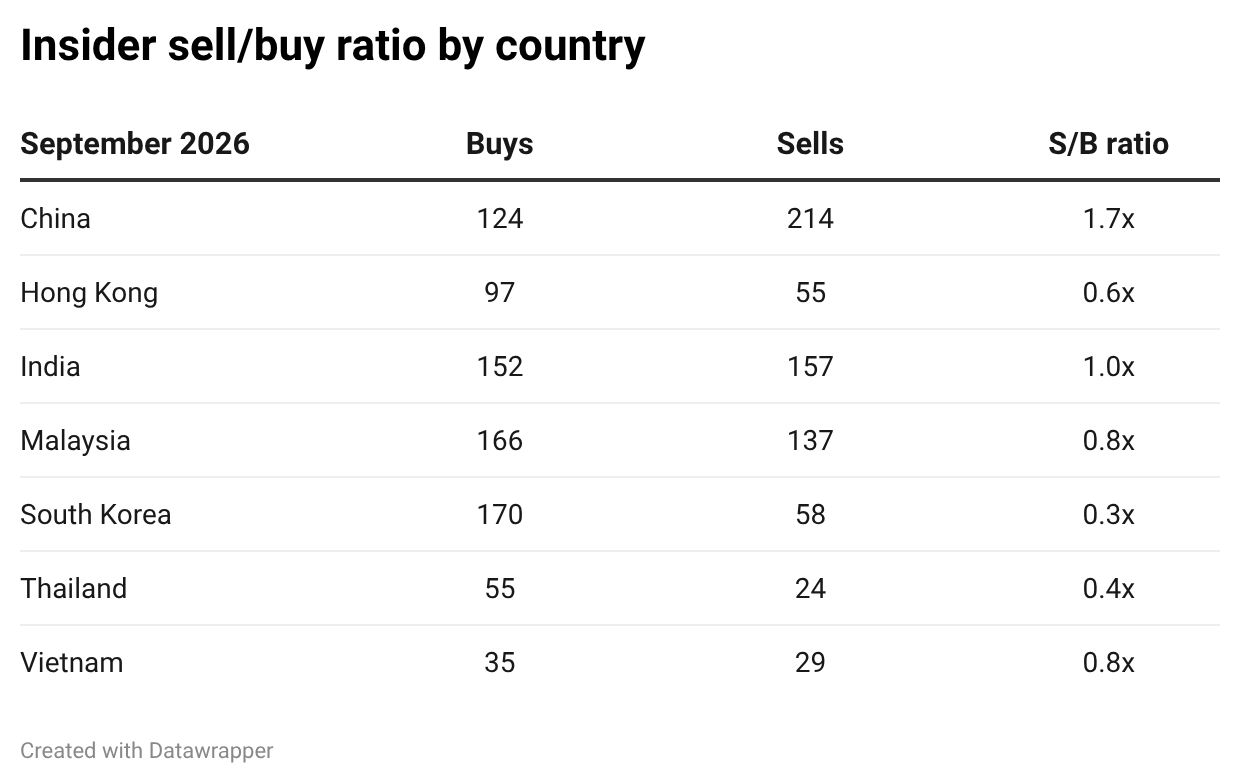
South Korea has gone from 5x as many buys as sells to just 3x. But that's still a very bullish number.
Several major retailers like Alibaba and Mobile World are now seeing insider buying. Another big cluster is in technology hardware stocks like EG Industries and SK Hynix. Meanwhile, there's been a selling cluster in software stocks such as Kakao and Wipro.
Five highlighted situations
I'll now go through five of the most significant insider buys in Asia, using data from Smart Insider and ranked from the highest market cap to the lowest:
1. Grab
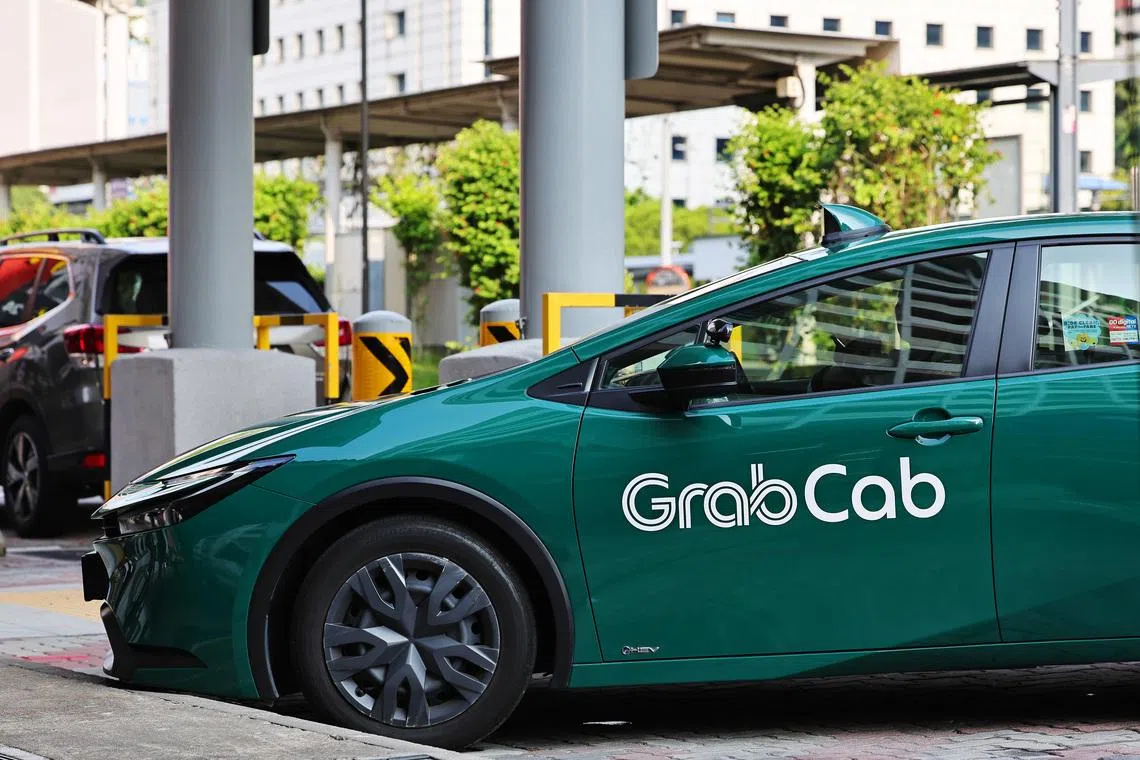
Anthony Tan's US$30 million purchase of ride hailing giant Grab (GRAB US — US$13 billion) was by far the most discussed insider buy in Asia.
Grab is best described as the Uber of Southeast Asia: combining a ride-hailing app, a food delivery service and a digital bank. It's based in Singapore but operates across Southeast Asia, including in Thailand, Vietnam and Malaysia. Grab serves as the middleman between buyers and sellers, taking a cut from each transaction. The food delivery business now accounts for more than half of revenue, while the ride-hailing business makes up about 1/3. The remainder comes from Grab's financial services business, where users can deposit money into a wallet and use it to pay for goods and services.
In my view, Grab still has significant upside to its margins compared to Uber. Taxi drivers in Singapore tend to complain about the mid-20s take rate, but I'm sure the monetization potential is greater in other countries in the region. Top-line revenue has grown about 20% per year, though partly through Grab's riskier financial services business.
The stock has seen a lot of insider selling historically, as you can see in the chart below. However, Anthony Tan made a splash buying US$30 million worth of shares in late September 2026. COO Alex Hungate purchased yet another US$1 million worth of shares. Asian Century Stocks readers will recognize him as the former CEO of SATS.
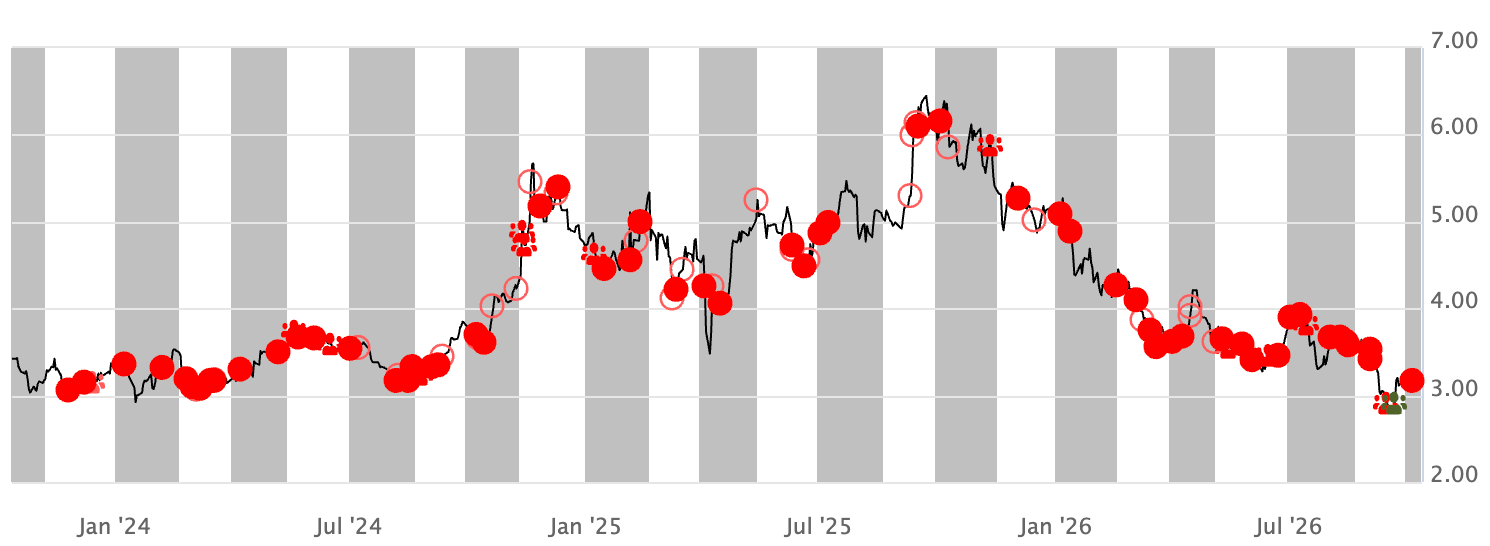
Some of you cynics out there have argued that Anthony tried to make a statement with his insider buying to stop the slump in the share price after Grab's acquisition of buy-now-pay-later company Atome Financial. At the same time as the insider buys, Grab also announced a US$900 million share buyback program. To me, that's a positive development, because why would you buy back shares unless you think they're undervalued?
Grab now trades at 23x forward P/E. Bulls will argue that the platform remains unmonetized and that the take rate could one day double from the current 12-15%.
In the past, I've suspected Grab would eventually lose market share to other ride-hailing platforms like Gojek or Tada. But consumers seem to love Grab, and I think its market dominance remains largely unchallenged.
I'm more worried about Grab's financial services business. Lending is not their core business, and the loan portfolio is growing rapidly. The acquisition of Atome should be seen as an intent to move further in the direction of becoming a financial services company.
The rest of the post is available to premium subscribers. Subscribe to read about 4 more stocks with insider buying in China, South Korea & HK.