This Week in Asia #41


Hanssem's CEO has been buying stock. Verdad argues that the Japanese yen is the cheapest G-10 currency. And my portfolio update for August 2026 is finally out.
Watchlist update
- Elevator service company Hong-Wei Electrical announced it's moving from an over-the-counter listing to a main board listing on the Taiwan Stock Exchange. This will make it easier to access capital.
- APR's second-quarter results confirmed that its Medicube cosmetics brand continues to grow. Revenues grew +134% year-on-year and operating profit grew +135%. The full-year revenue guidance was raised to KRW 3 trillion with a 24-26% operating margin.
- Chinese oil exploration & production company CNOOC reported its 1H2026 results, with net profit rising +23% year-on-year on the back of higher oil prices. Production growth of +4% also helped, bringing output to 399 million barrels of oil equivalent. The interim dividend was hiked to HK$0.94.
- Modern Dental's 1H2026 was excellent, too. Revenue grew +11% year-on-year, driven by higher order volumes in Europe thanks to digitalization. Gross margin improved, driving net profit up +31%.
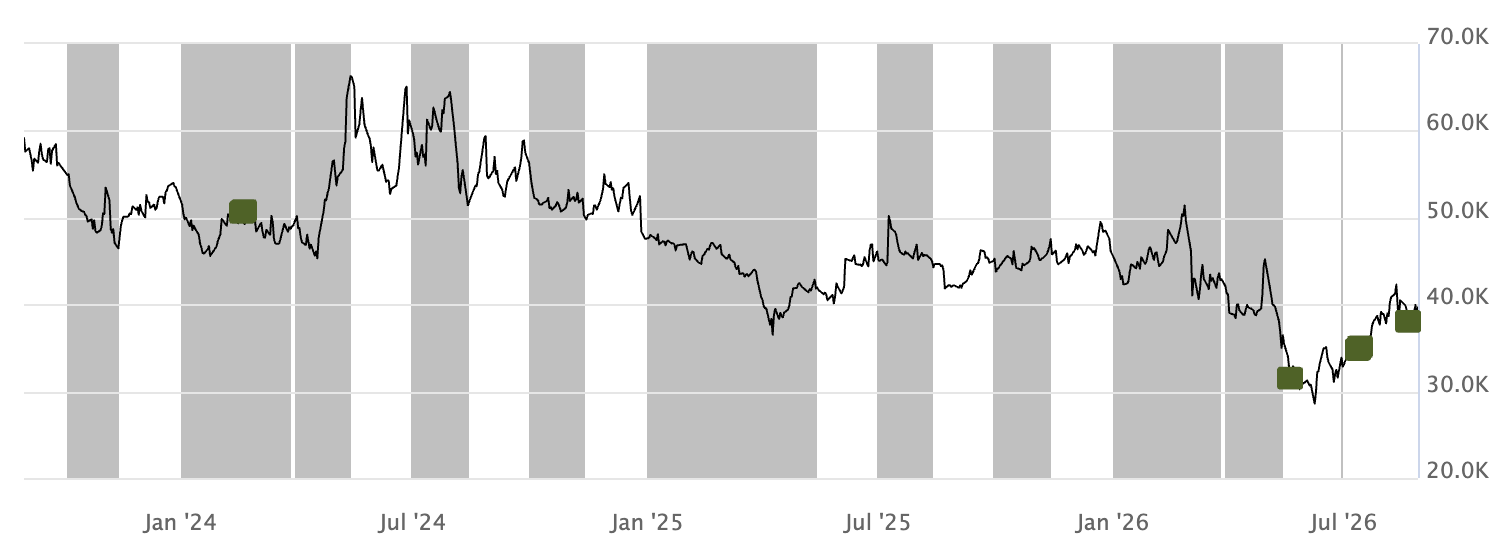
- South Korean furniture retailer Hanssem has had significant insider buying in the past few weeks. CEO Kim Yu-jin has acquired roughly US$1.7 million worth of shares after the stock hit a multi-year low. Hanssem has confirmed it will cancel its entire treasury block of ~30% of shares outstanding, putting private equity owner IMM at above 50% ownership, and making a control sale far easier. Of course, that's just my own speculation – nothing is guaranteed, and IMM has given no indication they want to sell. Meanwhile, the Korean housing market is still weak. I hold no position.
Worth your time

- Long-time Japan bull Andrew McDermott of Mission Value Partners joined Grant Williams's podcast. He argues that Japan's manufacturing sector is top-notch across defense, semiconductors, robotics, machine tools, etc. He further argues that the Japanese yen is not a driver of corporate profitability, a statement I do not agree with.
- Verdad wrote a post about the Japanese yen. The yen has reached a multi-decade low, and speculative short positions are now the highest since 2007. Verdad argues that the yen is now the cheapest G-10 currency on a real effective exchange rate basis. Furthermore, the US and Japan have undertaken a coordinated currency intervention to strengthen the yen. While Japan's gross debt is high, Verdad argues that the government sits on assets equivalent to 171% of GDP.
- Substack author IJW at Turtles Research wrote a very thoughtful post on Korea's corporate governance reforms. He makes the point that listed companies usually face lower inheritance taxes since they're valued at (low) market prices instead of a government-set valuation methodology. And paying out dividends not only triggers dividend taxes but also raises the inheritance tax base on the accumulated cash.
- Jakub at Numbers Not Narratives wrote about a super-interesting South Korean in-vitro diagnostics company, Protia. He argues that Protia makes the best allergy tests in the world for the price. It's a typical razor-and-blades business model: the strips only work with Protia's reader. With most costs fixed, Jakub argues that operating leverage should kick in as the company continues to grow. Two question marks: high inventory days and questionable capital allocation.
Portfolio update August 2026
Yesterday, I published another monthly portfolio review. The portfolio has done well over the past year, which mechanically lowers the forward-looking IRRs I estimate on the same holdings. Japanese stocks have become a bit expensive, so I am now finding more opportunities in South Korea, the Philippines and Indonesia.
You can read the full update here:
 Michael Fritzell

This was a free-to-read edition of Asian Century Stocks – a newsletter about Asian value stocks. New to the publication? Sign up here. If you don't want to receive these free weekly updates, you can adjust your e-mail preferences here.
Get instant access to 148 deep-dives on Asian value stocks: