Riverstone (RSTON SP)
An unexpected AI beneficiary at 10x next-year P/E and 8% dividend yield

Disclaimer: Asian Century Stocks uses information sources believed to be reliable, but their accuracy cannot be guaranteed. The information contained in this publication is not intended to constitute individual investment advice and is not designed to meet your personal financial situation. The opinions expressed in such publications are those of the publisher and are subject to change without notice. You are advised to discuss your investment options with your financial advisers, including whether any investment suits your specific needs. From time to time, I may have positions in the securities covered in the articles on this website. Full disclosure: I do not hold a position in Riverstone at the time of publishing this article. To reiterate, this post and the presentation below are for informational and educational purposes only - not a recommendation to buy or sell shares.
Asian Century Stocks reader Christopher alerted me to the fact that Riverstone’s (RSTON SP — US$779 million) CEO recently bought 1 million shares on the open market.
That caught my attention. Insider buying after a decline in the share price is usually a positive sign. I also knew that Riverstone had been one of the best-performing stocks on the Singapore Stock Exchange, compounding earnings per share at a +15% annual rate since its IPO in 2006.
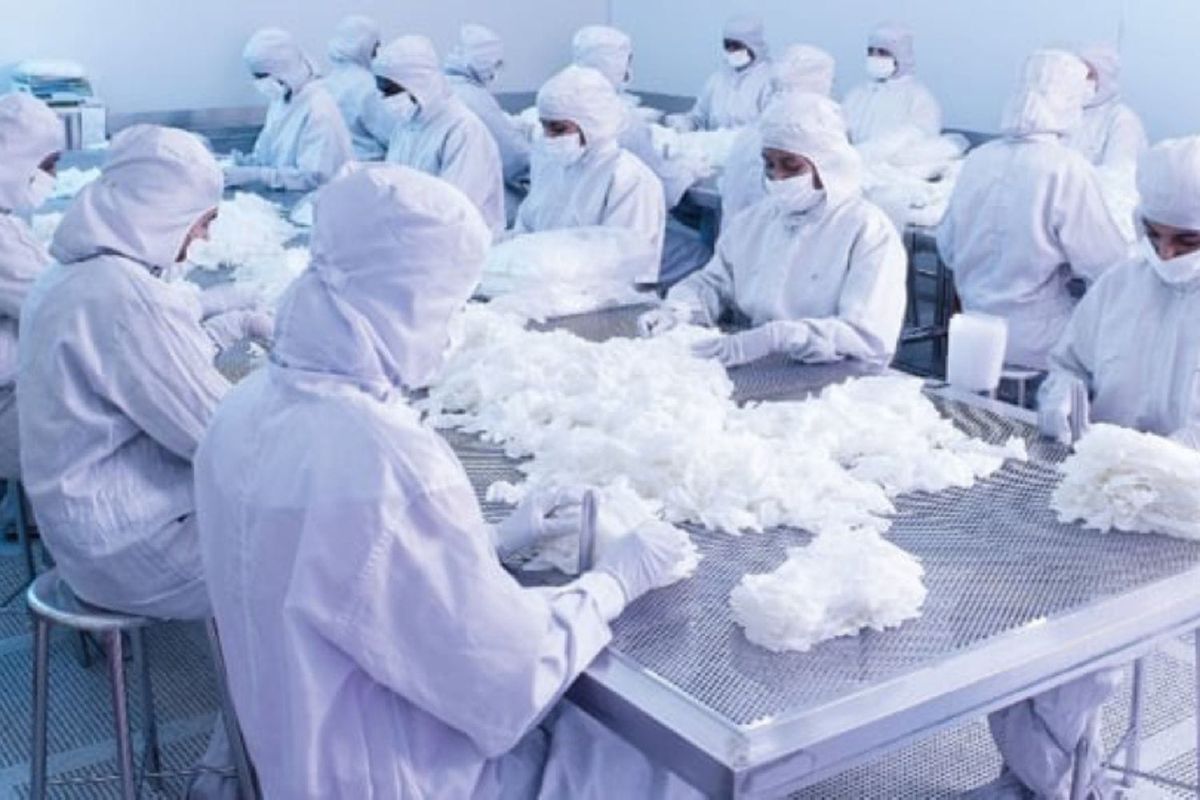
The company manufactures disposable nitrile gloves for customers worldwide. But unlike its larger peer, Hartalega, Riverstone focuses on customized gloves sold directly to the end-users. And unlike Hartalega, Riverstone has a significant focus on cleanroom gloves used in semiconductor fabs and other electronics-related industries.
These gloves are made-to-order and high-spec, specifically designed to minimize contamination, corrosion, and the risk of electrostatic discharge. They’re sold to Class 10 and Class 100 cleanrooms, which have exacting standards regarding the amount of airborne particles allowed in the air. Disposable gloves used in such settings should not shed particles.
Since the gloves are high-spec, Riverstone can charge US$88 per 1,000 pieces — far above the US$20 typically charged for medical gloves. These high prices have also enabled Riverstone to earn decent operating margins of 20-30%.
The company is run by the two co-founders, Teek Son (“TS”) Wong and Lee Wai Keong. Both were chemistry majors working in the R&D department of a Malaysian electronics firm. When it was shut down, the two of them managed to take over a manufacturing line for disposable gloves. That business eventually grew into what is today known as Riverstone Holdings.
I have only good things to say about TS Wong. He is media-shy and laser-focused on growing the business. As an avid runner, his mantra is apparently “keep fit, keep curious”. And he’s shareholder-friendly, with a majority independent board and paying out cash to shareholders to the extent they’re not needed to grow the business.
Just like its rubber glove peers, Riverstone initially benefited from the COVID-19 pandemic, when demand for medical gloves skyrocketed. Average selling prices for cleanroom gloves also rose significantly, as industry capacity was redirected to the medical side. Riverstone also has exposure to the healthcare glove market. But the boom eventually turned to bust, and Riverstone’s margins have come off since the peak in 2022.
However, roughly 70% of gross profit comes from the cleanroom glove segment, and it continues to do well. Investments in new fabs and electronics factories continue amid the current generative AI boom. Many plants are now relocating from China to Malaysia, where Riverstone’s primary business is located.
Riverstone’s first-quarter 2025 earnings were weak due to the strength of the Malaysian Ringgit. But competitor Hartalega just reported that it will increase its glove prices by 10%, so perhaps the industry will eventually adapt to fluctuations in exchange rates. I also believe that average selling prices will be supported by the additional US tariffs on Chinese gloves, which increased to 80% this year and are set to reach 130% next year.
I also see earnings growth from the Riverstone’s Phase 8 expansion, which will bring total production capacity to 12.0 billion pieces per year by the end of 2026.
According to my calculations, Riverstone trades at 11x current-year earnings and 10x next-year earnings. Gross margins will come off, but not materially. Riverstone’s net cash position accounts for 22% of the market cap, and the majority will be distributed as dividends over the next few years. The dividend yield of 8% is high, but I expect this to fall to mid-single-digit levels by 2027.
The only question mark is whether Chinese competitors such as Intco will eventually catch up in terms of quality control. Chinese energy and labor costs are lower, so they could potentially undercut Riverstone on price.
Then again, Riverstone does have an edge in high-specification gloves. And it has strong customer relationships. So it can probably withstand the competition for now.
Thank you for reading.
Michael
Further material:
- Riverstone’s first quarter 2025 investor presentation
- Riverstone’s 2024 annual report
NOTE! This was just a summary of the actual deep dive. To view the full PowerPoint presentation, click the “Download” button below: