Prosus (PRX NA)
Tencent at a 35% discount with consistent share buybacks

Disclaimer: Asian Century Stocks uses information sources believed to be reliable, but their accuracy cannot be guaranteed. The information contained in this publication is not intended to constitute individual investment advice and is not designed to meet your personal financial situation. The opinions expressed in such publications are those of the publisher and are subject to change without notice. You are advised to discuss your investment options with your financial advisers, including whether any investment suits your specific needs. From time to time, I may have positions in the securities covered in the articles on this website. Full disclosure: I do not hold a position in Prosus at the time of publishing this article. To reiterate, this post and the below presentation are for informational and educational purposes only - not a recommendation to buy or sell shares.
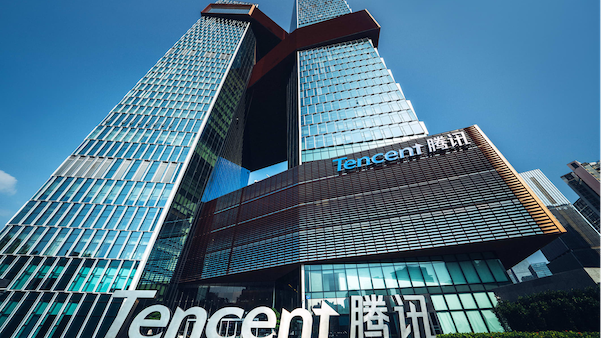
Prosus (PRX NA - US$76 billion) is an Amsterdam-listed investment holding company with a 25.2% stake in Chinese Internet company Tencent (700 HK - US$337 billion).
Its parent company, Naspers, began as a newspaper publisher in 1915 and then became a book publisher. In the 1980s, a young Naspers executive named Koos Bekker formed a pay-TV business that became a major success. In 1997, he began investing in Internet-related businesses, including the 2001 deal to acquire 33% of Tencent for just US$34 million.
Fast-forward 20 years, and Tencent has become one of the most successful growth stories ever. The value of that initial 33% stake (later upped to 50%) has gone up over 3,000x.
Tencent is an incredible company. It controls the WeChat messaging platform and has interests in social media, e-commerce, games, online streaming services, payments, and more. Tencent’s founder and CEO, Ma Huateng, is known for being savvy and has always had a cordial relationship with the government.
To what extent is Naspers simply a “clown that fell into a gold mine”? In other words, can the success of the Tencent investment be repeated?
In 2014, Koos Bekker resigned from Naspers, and a Dutch former McKinsey consultant named Bob van Dijk took over. Shareholders protested against van Dijk and his management team's empire-building tendencies. In a desperate attempt to close the NAV discount, Naspers spun off its Internet assets into a separate company called Prosus and relisted them in Amsterdam. But the NAV discount persisted.
I thought the NAV discount would never go away. But since 2022, there’s finally been some green shoots emerging. Prosus has begun a share buyback program funded by selling its stake in Tencent. Whenever the NAV discount becomes too large, it will aggressively buy back Prosus shares.
In 2023, Bob van Dijk resigned—or, more likely, was fired by Koos Bekker. The new interim CEO is a young former Goldman Sachs and SoftBank executive named Ervin Tu. Judging from his public appearances, he seems laser-focused on improving shareholder value.
Today, 74% of Prosus’s gross asset value comes from Tencent. The remaining assets are venture-like investments in food delivery companies like Delivery Hero, classifieds businesses like OLX, payment companies like PayU, education technology companies like Stack Overflow, and e-commerce companies like Romania’s EMAG. While many of them remain loss-making, their profitability has improved nicely under the supervision of Ervin Tu.
Since the buyback program began in 2022, the discount has narrowed from 50% to 35%. There are signs that the share buybacks will stop if the discount narrows too much, but they’re still ongoing.
Does Prosus deserve a 35% discount? Well, on the negative side:
- Judging from the peer group, NAV discounts like these are not uncommon. You have similar NAV discounts at Kinnevik and Groupe Bruxelles Lambert.
- Prosus has two share classes with differential voting rights, so you would expect the ones with lower voting rights to trade at a discount to the liquidation value
Meanwhile, on the positive side:
- Selling shares of Tencent does not lead to any tax consequences
- The valuation marks seem reasonable to me
- The corporate overhead is minimal compared to the gross asset value
- The leadership under Koos Bekker and Ervin Tu is top-notch
So it’s not entirely clear to me that there should be much discount. The risks here are related to the venture capital cycle. It looks like it’s turning down. There are also political risks for Tencent in China if it has to donate more capital to the Communist Party’s common prosperity drive.
But in any case, it looks like capital allocation at Prosus is finally improving. And I say that as someone who has previously been frustrated with Bob van Dijk and the way Prosus used to be run. I have much greater faith in Ervin Tu and how he’s trying to increase NAV/share while narrowing the discount to said NAV.
Click the “Download” button below to access the full PowerPoint presentation: