Nippon Parking Development (2353 JP)
Irreplaceable assets with +12% historical EPS CAGR at 13x P/E

Disclaimer: Asian Century Stocks uses information sources believed to be reliable, but their accuracy cannot be guaranteed. The information contained in this publication is not intended to constitute individual investment advice and is not designed to meet your personal financial situation. The opinions expressed in such publications are those of the publisher and are subject to change without notice. You are advised to discuss your investment options with your financial advisers, including whether any investment suits your specific needs. From time to time, I may have positions in the securities covered in the articles on this website. Full disclosure: I do not hold a position in Nippon Parking Development at the time of publishing this article. To reiterate, this post and the below presentation are for informational and educational purposes only - not a recommendation to buy or sell shares.
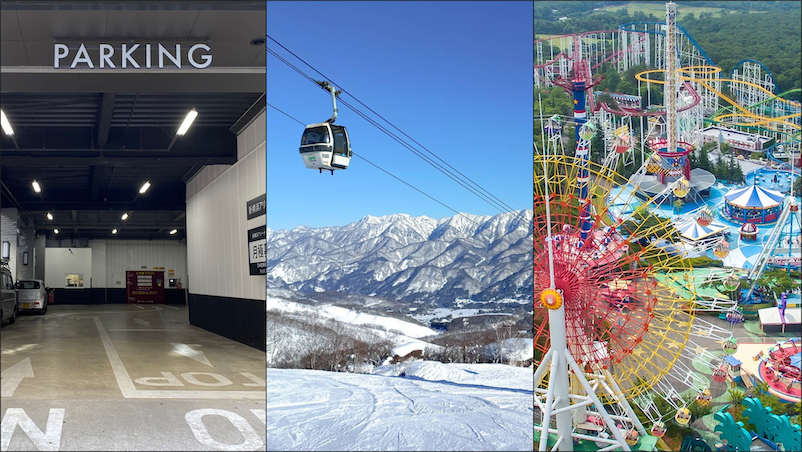
Nippon Parking Development (2353 JP — US$477 million) — also known as “NPD” — is a Japanese lessor of parking spaces and an operator of ski resorts and theme parks.
It’s the brainchild of lifelong entrepreneur Kazuhisa Tatsumi, who literally built the company in his garage in the early 1990s.
In Japan, developers are generally required to build 1/3 parking space per 100 square meters of floor area for any large building. This is known as “legally mandated parking space”.
The purpose of legally mandated parking spaces is to keep parked vehicles off roads. The government wants to minimize congestion and reduce the risk of traffic accidents. However, legally mandated parking has led to an oversupply of parking space in many urban areas across Japan.
Kazuhisa Tatsumi saw an opportunity to make money from the excess supply of parking spaces. He would enter into long-term contracts with property owners to take them over and then sublease individual parking spaces on a monthly basis.
It turns out that Tatsumi’s sales-focused organization was adept at taking at finding underutilized assets and then turning them around. He eventually formulated the strategy as NPD’s “Happy Triangle” — finding solutions to underutilized assets that benefit owners, users, and society alike.
The same type of thinking led Nippon Parking Development to the ski resort industry in the mid-2000s. From that point onwards, it acquired a collection of eight ski resorts in central Japan, half of which are in the Hakuba Valley. These resorts now belong to the separately listed subsidiary Nippon Ski Resort Development (6040 JP — US$129 million).
NPD acquired snow machines to increase utilization, built terraces overlooking beautiful mountain valleys, and introduced a kids' loyalty program. These efforts helped increase the attractiveness of the company’s ski resorts.
In the mid-2010s, NPD entered the theme park industry by acquiring the Nasu Highland Park and, later, a nearby family ranch. These were mismanaged before the acquisition and are now thriving. Some measures taken included building indoor roller coasters for rainy days, seasonal character events and festivals, family-friendly features such as a dog park and barbecue areas, and a new area with rental villas for overnight guests.
Meanwhile, the parking rental business has continued to grow steadily. Over the past 20 years, Nippon Parking Development’s earnings per share has grown at a +12% annual rate. Meanwhile, nearly 60% of earnings have been paid out as dividends, on top of modest share buybacks. Kazuhisa Tatsumi’s genius can be gleaned from the company’s exceptional 35% return on equity.
The outlook for the parking business is positive. About five years ago, the company launched a website called Nippon Parking Search, which allows customers to search a growing inventory of roughly 200,000 parking spaces.
The ski resort business had a record year in 2024 thanks to snow in the Hakuba Valley throughout March and robust inbound tourism. However, I worry that the recent strengthening of the Japanese Yen will cause overseas tourists to shy away from Japan, so I’m expecting a sequential decline in ski resort earnings.
The theme park business is doing well. Last year was unusually rainy, so it’s possible that earnings will recover. Visitors are mostly domestic tourists, including students on school trips.
The stock currently trades at a 12.9x headline P/E. Now that the Yen has strengthened, I expect earnings to come off slightly and continue to grow from next year forward. That’s an unusually low multiple compared to its peers and its historical level 25x.
Of course, bad weather can occur in any year. For example, the exceptionally warm winter of 2016 caused ski resort earnings to plummet, and that could certainly happen again. Volatility in the Yen exchange rate can also cause the number of visitors to drop.
On the parking side, the biggest risk is regulatory. If a new regulation improves parking space utilization, that could reduce the need to hire NPD to find parking lot users. However, with the new Nippon Parking Search website, it looks like NPD has built a moat that will be difficult for competitors to cross.
On the positive side, Nippon Parking Development announced last month that it’s planning to IPO its theme park subsidiary on the Tokyo Stock Exchange. I’m hoping that an IPO could demonstrate the business's intrinsic value. And perhaps free up cash for further development of the company. I’ll keep you posted.
NOTE! This is just a summary of the actual deep dive. To view the full PowerPoint presentation, click the “Download” button below: