MTR Corporation (66 HK)
Hong Kong public transport monopoly and property developer at 13x forward P/E

Disclaimer: Asian Century Stocks uses information sources believed to be reliable, but their accuracy cannot be guaranteed. The information contained in this publication is not intended to constitute individual investment advice and is not designed to meet your personal financial situation. The opinions expressed in such publications are those of the publisher and are subject to change without notice. You are advised to discuss your investment options with your financial advisers, including whether any investment suits your specific needs. From time to time, I may have positions in the securities covered in the articles on this website. Full disclosure: I do not hold a position in MTR Corporation at the time of publishing this article. To reiterate, this post and the below presentation are for informational and educational purposes only - not a recommendation to buy or sell shares.
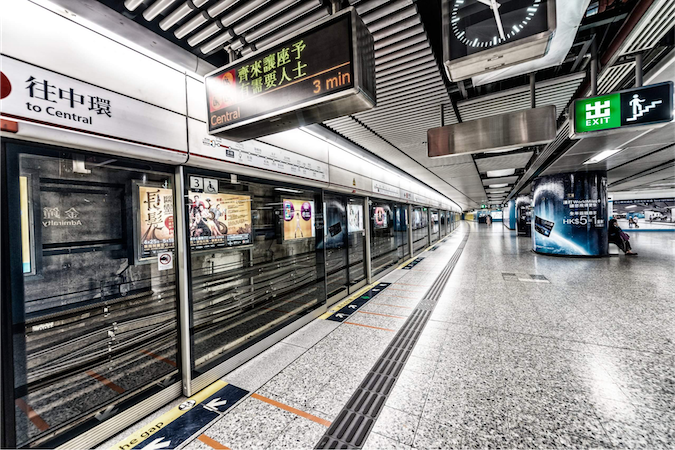
MTR Corporation (66 HK - US$21 billion) is the operator of Hong Kong’s world-famous MTR subway system.
It runs 99 MTR stations and 68 light rail stops, handling over 5 million passengers each day. And it’s a complete monopoly, with zero competition in the rail sector.
The company has been given a concession to run the MTR system for 50 years, from 2007 to 2057. Chances are high though that it will be extended for another 50 years at no extra cost. If so, MTR will retain its monopoly until 2107.
What makes MTR unique is that it only only operates Hong Kong’s MTR system, it also builds property in and around its stations. For example, it has retail shops in each station that it leases out to third parties. It builds shopping malls that cater that Hong Kong’s daily commuter. And it also teams up with property developers who build residential developments close to MTR’s station buildings. This is a fantastic arrangement, because MTR doesn’t take any development risk yet shares in the profits of those developments.
MTR’s subway system is known for being one of the best in the world. The punctuality rate is 99.9%. Trains arrive every 2 minutes during peak hours. Ticket prices are relatively affordable. While the company sometimes receives criticism in media, it’s clear that the subway system is superior to that of almost any other country on earth.
Its success in Hong Kong has enabled it to expand overseas. And it now operates similar public transport systems in Mainland China, Australia, Sweden and the United Kingdom. There should be the potential for further growth overseas.
In Hong Kong, ridership will probably grow around 2-3% per year as the MTR system continues to take market share from buses. On top of that, we should see ticket prices rise up to 3% per year. So a mid-single digit growth in public transport revenues seems reasonable to me. On top of profits from from MTR’s retail properties and development arm.
The stock price has dropped about 40% in the past year. That’s highly unusual for high-quality blue chips in Hong Kong. I’ve concluded that this drop in the share price is due to three separate factors:
- The rise in interest rates has caused housing affordability to weaken and property prices to decline. That was the primary reason why the Tung Chung East package tender failed to attract any bids in October 2023. This then led to MTR Corporation’s property development profits falling 80% and the overall profit falling 21%.
- Investors reacted negatively to the new Fare Adjustment Mechanism, which adjusts ticket prices according to MTR’s profits in its property development arm.
- MTR Corporation exited two commuter train services in Stockholm as they had been racking up losses.
While I concede that the high interest rate environment continues to be a headwind, I doubt it’ll last for much longer. The European Central Bank and the Bank of Canada just cut rates, and I think the Federal Reserve is not far behind. Lower US interest rates would feed through Hong Kong interbank rates and cause Hong Kong borrowing costs to drop.
The removal of additional buyer’s stamp duties from 30% to zero earlier this year should also have a positive impact on the sales of Hong Kong properties to wealthy Mainland Chinese. It does seem like Hong Kong property developers have become more positive towards land banking since the news about the reduced stamp duties.
In my view, the new Fare Adjustment Mechanism is a non-issue. While the formula now takes property development profits into account, high profits will, at most, impact the fare hikes by 20 basis points - a minuscule portion of MTR’s total profits.
In the meantime, ridership continues to recover from COVID-19. Tourists are coming back to Hong Kong. And the retail segment will benefit from the two new shopping malls ”The Wai” in Tai Wai and “Southside” in Wong Chuk Hang. They have already increased the lettable area in the shopping mall segment by +18%.
The stock has dropped almost 40% and now trades at a Price/Book of just 1.0x, close to its 2009 lows. Brokerage firm CLSA estimates that the stock trades at a 45% discount to its NAV/share of HK$45. On my numbers, I project a 2026e P/E of 13x with a dividend yield of 5.8%.
The biggest risks seem to be political. The HKSAR government must take voter concerns into account when setting policy. There is a risk that it pushes harder for lower ticket prices or excessive capital expenditure to improve the network coverage. In fact, the capex guidance for 2024-2026 seems excessive to me.
However, the government also relies on MTR’s generous dividends to fund itself. I think it’s happy with the status quo. Why rock the boat?
While I agree with David Webb and others that it would be better if MTR could set its fares, at least it’s able to monetize its public transport network through its property development arm. As well as use new construction to build up a portfolio of high-quality retail properties.
Click the “Download” button below to access the full PowerPoint presentation: