Kawai Musical Instruments (7952 JP)
Top piano brand at 0.5x book with a new CEO and a 16% long-term ROE target

Disclaimer: Asian Century Stocks uses information sources believed to be reliable, but their accuracy cannot be guaranteed. The information contained in this publication is not intended to constitute individual investment advice and is not designed to meet your personal financial situation. The opinions expressed in such publications are those of the publisher and are subject to change without notice. You are advised to discuss your investment options with your financial advisers, including whether any investment suits your specific needs. From time to time, I may have positions in the securities covered in the articles on this website. Full disclosure: I hold a position in Kawai Musical Instruments at the time of publishing this article. To reiterate, this post and the presentation below are for informational and educational purposes only - not a recommendation to buy or sell shares.
Kawai Musical Instruments Manufacturing (7952 JP — US$153 million) is one of Japan’s largest piano makers.
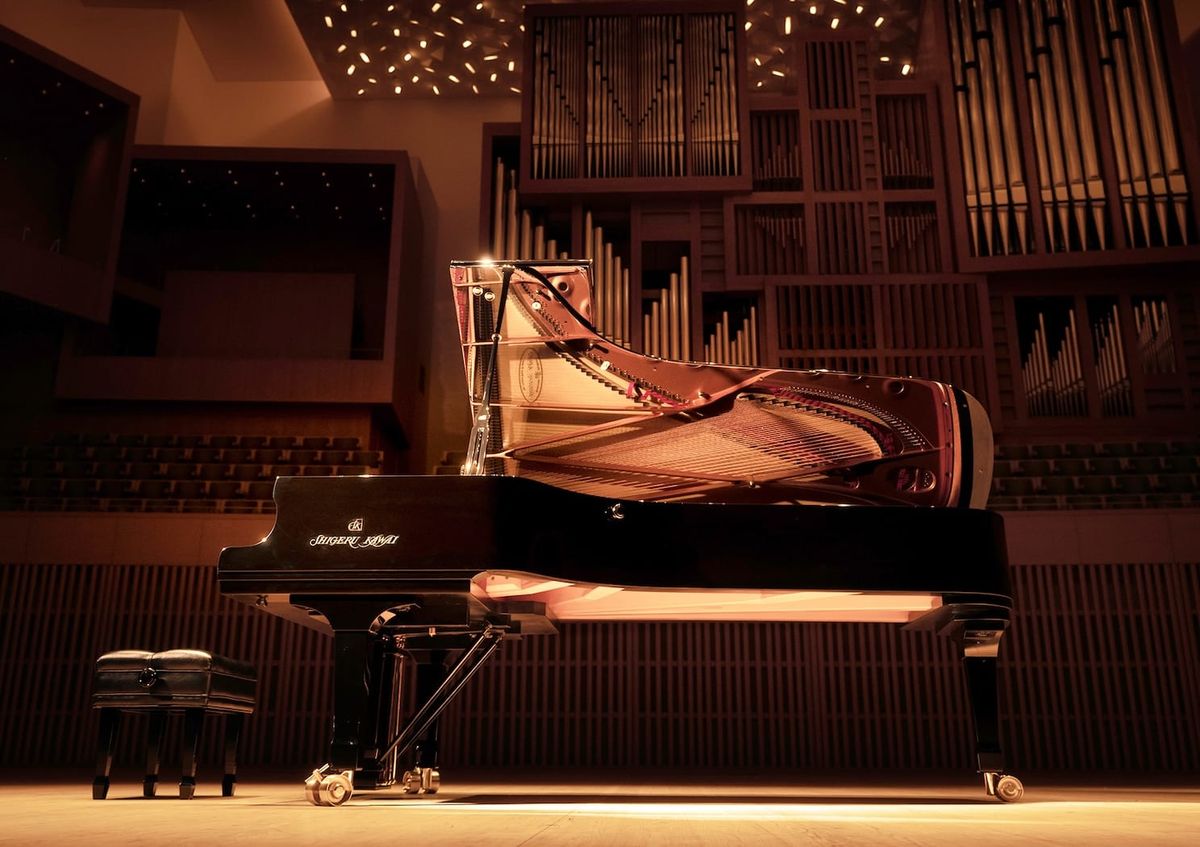
It’s famous for its higher-end Shigeru Kawai pianos, which are used in concert halls around the world. These pianos are close to Steinways in terms of quality and can cost up to US$240,000. But Kawai also sells mid-priced pianos for younger learners and enthusiasts in 80 countries around the world.
In addition, Kawai runs music schools with over 4,000 classrooms and 100,000 students attending each year. It also has a materials business, using what it learnt in piano manufacturing to serve automaker and semiconductor customers. And it also has a number of smaller businesses, including music software, health equipment manufacturing, insurance agents, etc.
The story began in 1927 when Koichi Kawai was an apprentice to Torakusu Yamaha, the founder of Kawai’s larger competitor, Yamaha. After another firm took over Yamaha, Koichi felt it was time to start a business of his own. And for the next few decades, he made handcrafted pianos to the highest possible standards.
In the 1950s, his son Shigeru Kawai took the business to the next level. He took Kawai pianos to the average consumer through mass production techniques. He also innovated in terms of material science, improving the performance of Kawai’s piano action mechanisms through ABS plastics and later carbon.
After Shigeru Kawai stepped down in 1989, the business started to stagnate. Of course, this was at the top of Japan’s bubble economy. However, Kawai also lost market share against Yamaha, and its brand name is not particularly well-known outside the enthusiast segment.
Kawai enjoyed a boom during the COVID-19 pandemic, but that was short-lived. The post-COVID normalization was exacerbated by weak demand in China, which is suffering from falling property prices and changes in regulation that have made households less willing to spend on music education.
In 2024, the former president’s son-in-law, Kentaro Kawai, took over as CEO. And I think he will be a game-changer for the business. At 47 years old, he’s young enough to take risks. But at the same time, he has an excellent background for the job. He studied economics at Kobe University and then spent many years in the insurance industry, where he met his future wife.
At the time, he didn’t know she was Shigeru Kawai's granddaughter. When he travelled to Hamamatsu to meet her family, Shigeru convinced him to join the family business. Kentaro spent his first year on the factory floor learning how to make pianos from the ground up. Later in his career, he’s had roles in strategy and investor relations.
One of Kentaro’s first initiatives has been to devise a new 10-year plan. This was a break from the past 3-year plans, suggesting that Kentaro’s thinking was much more long-term and strategic in nature.
His new FY2035 financial targets are aggressive. He wants to achieve JPY 130 billion in revenues, JPY 15 billion in operating profit and a 16% return on equity. And that’s for a company with an enterprise value of just JPY 17 billion.
To achieve this, Kentaro envisions moving the Shigeru Kawai brand to the absolute top in terms of quality. By cementing Kawai’s reputation as a top piano maker, it will produce digital and hybrid pianos for the mass market. These will have the feel of concert pianos but at a lower cost and with added conveniences such as recording features, headphone jacks, etc. Kentaro also wants to shift to digital marketing on YouTube and social media. And Kentaro is adamant about hiring based on merit — not age or experience, as is common in Japan. Kawai is about to become a meritocracy.
Today, Kawai trades at 0.49x book, with a clean balance sheet and a large net cash position. If the company gets anywhere near its 16% return on equity target, the stock will end up trading at a low-single-digit P/E.
I project a 7.5x P/E by FY2028, below its pre-COVID trading range of 10x to 15x. With a new total payout ratio of above 50% of profits (dividends + share buybacks), I think we can expect a mid- to high-single-digit dividend yield. In the next three years alone, Kentaro has promised at least JPY 6 billion of capital returns, equivalent to 27% of the current market cap.
So is Kentaro’s plan realistic? I happen to think it is. He comes from a finance background, and should realize that better capital allocation alone can probably increase the return on equity to much higher levels. I also like his strategic initiatives. Kawai has hired Ogilvy to improve its brand and seems to be moving towards influencer marketing. That’s exactly what the brand needs.
I don’t like Kawai’s existing poison pill, which protects management from hostile takeovers. I also wish Kentaro owned more shares, perhaps through a more generous stock option program. But at least we now have Murakami and Hibiki Path Advisors in the shareholder register, and they’re both pushing for change.
So, there’s much to be positive about. Now, we just need to be patient enough to allow Kentaro’s ambitious plan to be implemented over the next few years.
Thank you for reading.
Michael
Further material:
- Kawai’s March 2025 Mid-Term Plan
- Hibiki Path Advisors’ May 2023 Letter to Kawai
NOTE! This was just a summary of the actual deep dive. To view the full PowerPoint presentation, click the “Download” button below: