Giant Manufacturing (9921 TT)
The world’s largest bicycle manufacturer nearing an inflection point at 10x P/E

Disclaimer: Asian Century Stocks uses information sources believed to be reliable, but their accuracy cannot be guaranteed. The information contained in this publication is not intended to constitute individual investment advice and is not designed to meet your personal financial situation. The opinions expressed in such publications are those of the publisher and are subject to change without notice. You are advised to discuss your investment options with your financial advisers, including whether any investment suits your specific needs. From time to time, I may have positions in the securities covered in the articles on this website. Full disclosure: I do not hold a position in Giant Manufacturing at the time of publishing this article. To reiterate, this post and the presentation below are for informational and educational purposes only - not a recommendation to buy or sell shares.
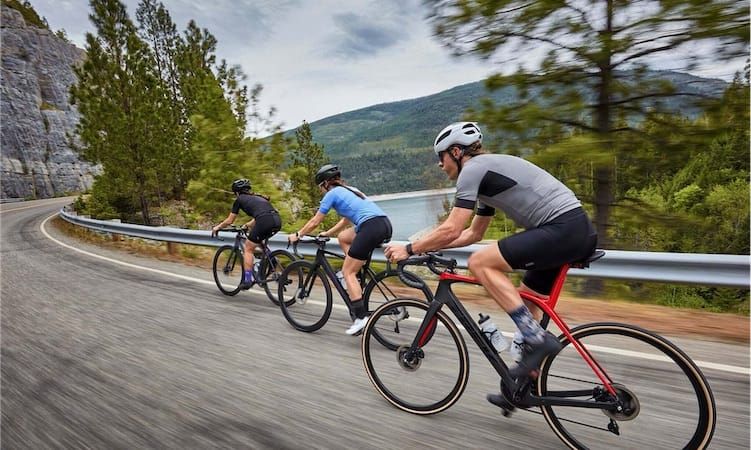
Taiwan’s Giant Manufacturing (9921 TT — US$1.7 billion) is the world’s largest bicycle manufacturer.
It’s based in the Taiwanese city of Taichung, which has become somewhat of the center of the global bicycle industry. From there, it controls nine factories around the world, selling about 6 million bicycles a year via many thousands of distributors in 50 countries. Most of these bicycles are sold under their own brand names, including “Giant” and “Liv.”
The founder, King Liu, set up Giant Manufacturing in the early 1970s with several business partners. In the first year, he produced and sold 3,800 bicycles. The big breakthrough came in 1976, when America’s Schwinn hired it to become a supplier. Giant benefited enormously, and soon, Schwinn represented 75% of total revenues.
However, King Liu became concerned that Giant was becoming too reliant on Schwinn, so he launched the brand “Giant” domestically in Taiwan. Those fears were warranted because Schwinn soon cut ties to Giant, forcing it to survive independently.
In the following years, King Liu responded by aggressively moving upmarket. He enlisted much-younger NTU graduate Tony Lo to spearhead an international expansion, first to the Netherlands and then to America. He built up an international organization with mostly local hires, so much so that today, many consider Giant to be a “Western” brand, despite its Taiwanese origins.
Throughout this period, Giant collaborated with Taiwanese research institutes and designers to innovate. For example, it developed carbon fiber bicycle frames and compact road design frame geometries.
By the mid-2010s, Giant became the largest bicycle manufacturer in the world. Industry insiders called Giant’s factories the most efficient and sophisticated in the industry, making it a natural supplier to well-regarded brands such as Trek.
When I was on the buy-side in the 2010s, Giant was seen as a blue-chip growth stock. Its top-line revenues grew close to 10% per year, and its margins remained steady at about 8%.
The company has had its fair share of challenges since then:
- Since 2015, Giant’s major US customer, Trek, has been diverting orders to Mainland Chinese competitor Quest Composite.
- Then came the 2016-17 bike-sharing boom, when millions of bicycles flooded the streets of China and elsewhere. The boom proved short-lived but hurt Giant’s financials for a year or two.
- COVID-19 was initially a challenge for Giant as factories shut down. But then came one of the biggest booms the industry has ever seen. Flush with stimulus checks, consumers spent lavishly on higher-end bicycles. They felt that bicycles were a safe form of transport with a low risk of infection.
We’re now at the tail end of the COVID-19 bicycle boom. Throughout 2021 and 2022, inventories kept rising, forcing bicycle brands to raise their discounts. With higher discounts, Giant’s margins fell from 24 to 19%. The slump reached a crescendo in the fourth quarter of 2024 with a TWD 1.9 billion inventory write-down.
It looks like the bottom is in. Giant’s sales growth in the first few months of 2025 ended up in positive territory. Management is now guiding for European inventories to fall from about 5 months to normal levels by the second half of 2025. I don’t expect a rapid turnaround, but the recovery is certainly starting to take shape.
There is another kicker. Donald Trump seems intent on raising US tariffs on Chinese goods, including bicycles. A few days ago, Trump said that 80% tariffs on China “seems right”. I think such tariffs would be positive for Giant. Close to 90% of all bicycles sold in the US come from Mainland China.
I suspect Trek orders would come back to Giant in short order, as it will be able to satisfy them through its factories in Europe or Southeast Asia. Giant will also have less competition selling its higher-margin Giant-branded bicycles through its US store network.
There’s plenty to be positive about in the long term, too. While Giant does assembly, it’s not an easy business to replicate. There’s a cluster of bicycle component suppliers in Taichung serving Giant, including Shimano, SRAM, KMC, Topkey and Transart. The “Giant” brand is well-known globally. It has a global distribution network of 12,000+ retail stores. And Giant sits on key carbon fiber technologies, which are essential to reducing the weight of performance-focused higher-end bicycles.
I also think the e-bike trend will be a positive growth driver. 30% of Giant’s revenues now come from e-bikes, and this market grows about 8-10% annually. E-bikes feature batteries and electric motors that provide extra power, making the cycling experience easier and more enjoyable. Giant is one of the world's top e-bike brands, so it definitely benefits from this trend.
The stock price has come down significantly due to the current oversupply. During the April 2025 mini-crash, the stock tested its 2020 lows. With management guiding for 2025 operating margins of 4-7%, I expect the longer-term number to end up at 7% and the forward-looking P/E at about 10x. It is not super-low, but it is lower than Giant’s historical level of 20x.
There are a few question marks. One is that founder King Liu retired in late 2016, leaving the reins to his son Young Liu. It’s hard to live up to the expectations of a true genius, and it does look like Giant has become less nimble than before. In early 2025, Young Liu became Chairman while promoting Phoebe Liu to CEO. She was his executive assistant previously, so I’m not expecting a significant shift in management priorities.
So expect more of the same. That said, I have great conviction that margins bottomed in 2024 and that they will recover in 2025. Meanwhile, the e-bike trend should continue for the foreseeable future as the technology improves and more consumers discover the benefits of pedal-assist electric bikes.
Thank you for reading.
Michael
Further material:
- Asianometry’s Introduction to Giant
- Alex Sweet’s write-up of Shimano
- DaBao’s introduction to Topkey
- VIC user jt1882’s write-up of Transart Graphics
NOTE! This is just a summary of the actual deep dive. To view the full PowerPoint presentation, click the “Download” button below: