Hysan Development (14 HK)
Hong Kong tourism proxy at a 67% discount to NAV

Disclaimer: Asian Century Stocks uses information sources believed to be reliable, but their accuracy cannot be guaranteed. The information contained in this publication is not intended to constitute individual investment advice and is not designed to meet your personal financial situation. The opinions expressed in such publications are those of the publisher and are subject to change without notice. You are advised to discuss your investment options with your financial advisers, including whether any investment suits your specific needs. From time to time, I may have positions in the securities covered in the articles on this website. Full disclosure: I do not hold a position in Boustead Singapore at the time of publishing this article. To reiterate, this post and the below presentation is for informational and educational purposes and not a recommendation to buy or sell shares.
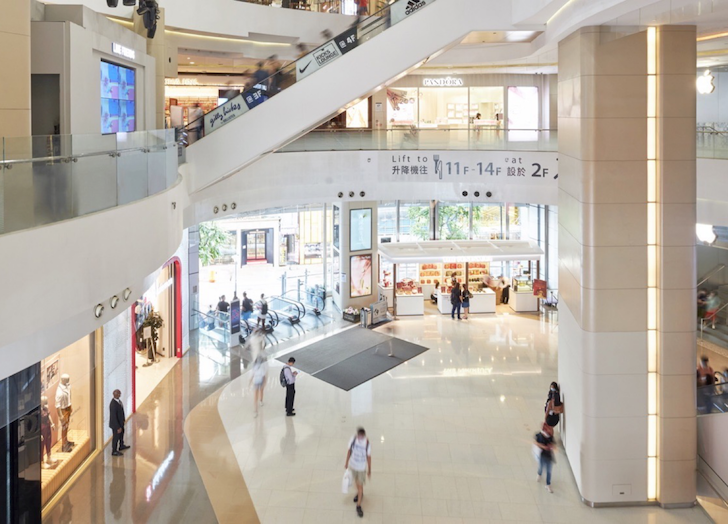
Hysan Development (14 HK - US$2.9 billion) is a commercial property owner and developer in Hong Kong’s Causeway Bay. The company is known for its heritage and its decent corporate governance.
Hysan has traditionally been seen as a “pure play” on Chinese tourism. It owns key properties around Times Square, which is popular among Chinese tourists. A few of its buildings include Lee Gardens and Hysan Place. The company’s rental income is split almost 50/50 between office and retail, though the proportion from retail used to be a lot higher.
Rents have come down since 2019 for three separate reasons:
- First, the anti-government protests in mid-2019 cut off mainland tourism to Hong Kong, hurting Hong Kong’s retail industry. Overall retail sales are down about 30% since then, and even more for the higher beta categories.
- Second, COVID-19 caused many employees to work from home, reducing the need for office space.
- Third, there’s been new construction of office space, causing some pressure on Hong Kong island office rents.
But in early 2023, China’s borders have practically reopened, with no PCR test needed anymore and no restrictions to speak of. COVID-19 restrictions have been taken away, both on the mainland and in Hong Kong. And over the past two months, the number of mainland tourists to Hong Kong has gone up exponentially. In my view, all the conditions necessary for a retail recovery are now there.
Then there’s a question of whether the Hong Kong office property market has been permanently impaired by COVID-19. I personally doubt it. Working from home is inconvenient in Hong Kong, where homes tend to be small, and several generations often live under one roof. In fact, Asia’s larger cities have had far higher return-to-office rates than those in North America. I’m also noting that public transport usage in Singapore is already back to pre-pandemic levels. Might we see a similar recovery in Hong Kong?
Hysan Development’s discount to NAV is currently 67% - an all-time high. And the assumptions used in that NAV are fairly conservative, with cap rates of 5-5.5% for office and retail, above market levels.
Could cap rates expand further? Sure. But I personally believe that the path of least resistance is for US and Hong Kong interest rates to go down over the next 1-2 years.
Then there’s a question of leverage. Hysan borrowed to finance its acquisition of an expensive plot of land on Caroline Hill in the southern part of Causeway Bay. Hysan and its JV partner will build a three-tower property on the plot. Great location, but leverage will remain elevated until the building is completed in 2026. At 23% net debt/equity, the debt burden is real. However, Hysan remains an investment-grade borrower.
And on the positive side, the Caroline Hill project and its other new developments could add to NAV, pushing the discount up even further. The question is, how long will that discount remain?
Click the “Download” button below to access the full PowerPoint presentation: