Sierra Rutile (SRX AU)
Spin-off dynamics for the largest rutile mine in the world

Disclaimer: Asian Century Stocks uses information sources believed to be reliable, but their accuracy cannot be guaranteed. The information contained in this publication is not intended to constitute individual investment advice and is not designed to meet your personal financial situation. The opinions expressed in such publications are those of the publisher and are subject to change without notice. You are advised to discuss your investment options with your financial advisers, including whether any investment suits your specific needs. From time to time, I may have positions in the securities covered in the articles on this website. Full disclosure: I do not hold a position in Sierra Rutile at the time of publishing this article. To reiterate, this post and the below presentation are for informational and educational purposes only - not a recommendation to buy or sell shares.
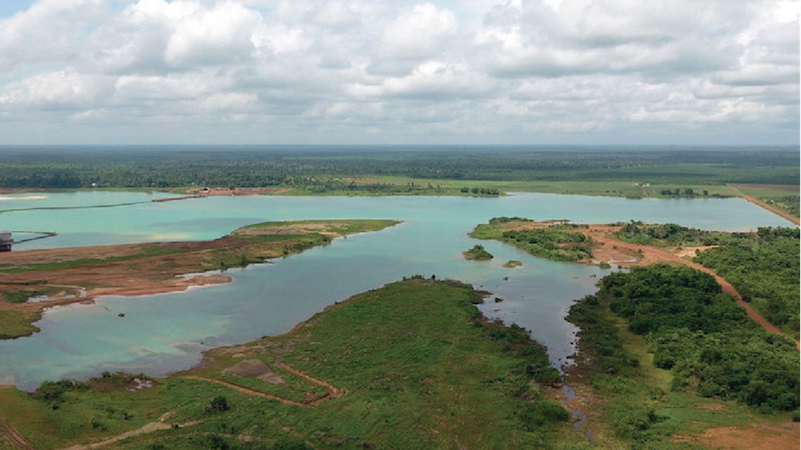
Now, here’s an oddball stock: Sierra Rutile (SRX AU - US$58 million) is a micro-cap that owns the largest rutile mine globally, located in the African country of Sierra Leone.
Rutile is a type of mineral sand with a high concentration of titanium dioxide (~95%), primarily used as an ingredient in white pigment in paints, plastics, paper and cosmetics.
Sierra Rutile’s mining operation began in the 1960s. After an interruption during Sierra Leone’s civil war in the 1990s, it re-listed on AIM in the 2000s and was acquired by Australian mineral sands exploration company Iluka Resources in 2016 for AU$455 million in total consideration (equivalent to US$400 million).
Eventually, in 2022, Iluka decided to spin off Sierra Rutile as a separately listed entity on the ASX. Because of its much lower market cap, and the fact that it’s not part of any index, Sierra Rutile has traded down significantly in price.
Today, Sierra Rutile’s market cap is US$58 million. If you deduct net cash of US$36 million, you get to an enterprise value of US$22 million. That’s a low number compared to the company’s historical enterprise value range of US$50 million to US$600 million when listed on AIM.
There are a few complicating factors, though:
- One is that the remaining mine life of Sierra Rutile’s key production base, “Area 1”, is supposedly only four years. In 2022, the reserve replacement ratio was over 100%. And Sierra Rutile will undertake an expansion project in adding the Pejebu and Ndendemoia deposits, adding several years to Area 1’s reserves. And I also find it remarkable that Iluka Resources’ acquisition documents claimed Sierra Rutile had a 20-year projected mine life.
- Sierra Rutile plans to undertake a US$337 million project in an adjacent area called Sembehun. While mineral sands are easy to mine and the existing Area 1 infrastructure can be used, there could be other technical difficulties.
- It’s unclear whether Sierra Rutile will be able to finance the capex of Sembehun via capital markets. If equity is issued, that would be dilutive to minority shareholders.
- The government has recently announced that it wants to renegotiate the fiscal arrangement for the company, which means it may need to pay higher taxes in the future.
- White pigment is partly used in construction, and construction activity is weighed down by high interest rates. That said, the supply & demand for natural rutile continues to be constructive thanks to a scarcity of supply.
The mine has operated for almost 60 years with no major issues replacing lost reserves. The government has been mostly supportive, including under President Julius Maada Bio.
Perhaps most importantly, Sierra Rutile is run by an able management team. Its Chairman resigned from much larger Iluka Resources to run Sierra Rutile. Its CEO has over 25 years of experience, including at BHP. And the finance director is the former head of corporate finance at Macquarie’s Perth office, which focuses on metals & mining transactions. These are serious individuals with great reputations at stake.
I’m fascinated by the incentive structure for the management team. The quantum of initial equity grants and long-term performance rights have depended on the trading price of Sierra Rutile shares. And also dependent on the total return achieved from 1 January 2023 to 31 December 2025. In other words, management has been incentivised to push the share price down and achieve a high total return in the subsequent three years.
I don’t know whether management will find a solution to finance Sembehun’s capex. All I know is that it’s a brownfield project with already-proven reserves.
One way to think about the company's valuation is by adding up the four years of remaining free cash flows at Area 1 of about US$120 million, adding the NPV of the Sembehun project to US$65 million and adding the net cash of US$36 million. Then you’ll get to a combined value of US$221 million, much higher than today’s market cap of US$58 million.
The presence of well-regarded value investors Samuel Terry Asset Management in the shareholder register could unlock value in the business, for example, by aborting the Sembehun project.
The definitive feasibility study for Sembehun is due at the end of 2023, and the final investment decision will be taken in early 2024. It remains to be seen whether these events will help unlock the value that’s obvious to more observers.
Click the “Download” button below to access the full PowerPoint presentation: