Kyushu Railway (9142 JP)
Railway operator and real estate developer with COVID-19 catalysts

Disclaimer: Asian Century Stocks uses information sources believed to be reliable, but their accuracy cannot be guaranteed. The information contained in this publication is not intended to constitute individual investment advice and is not designed to meet your personal financial situation. The opinions expressed in such publications are those of the publisher and are subject to change without notice. You are advised to discuss your investment options with your financial advisers, including whether any investment is suitable for your specific needs. From time to time, I may have positions in the securities covered in the articles on this website. Full disclosure: I do hold a position in Kyushu Railway at the time of publishing this article. Note that this is disclosure and not a recommendation to buy or sell.
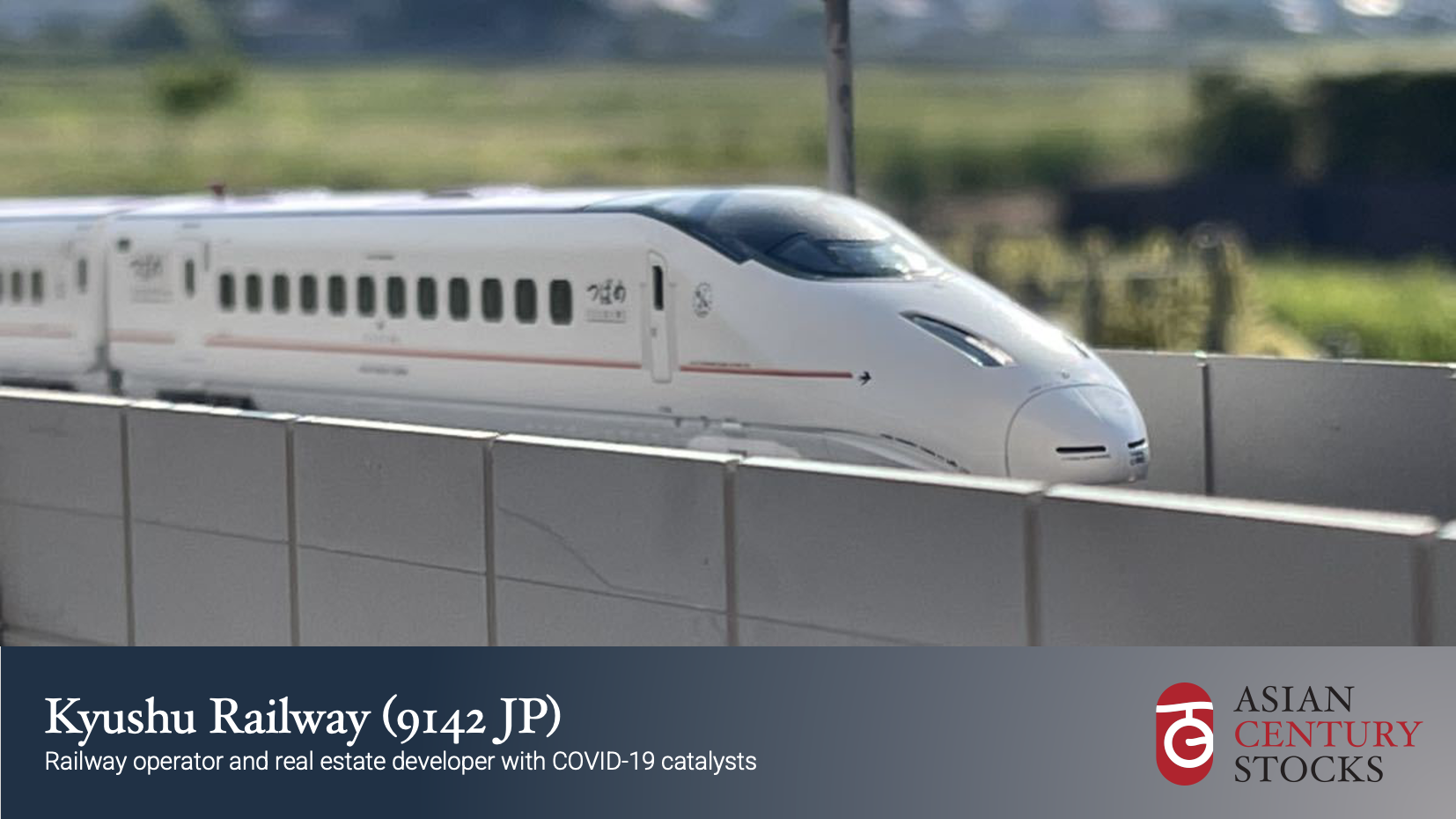
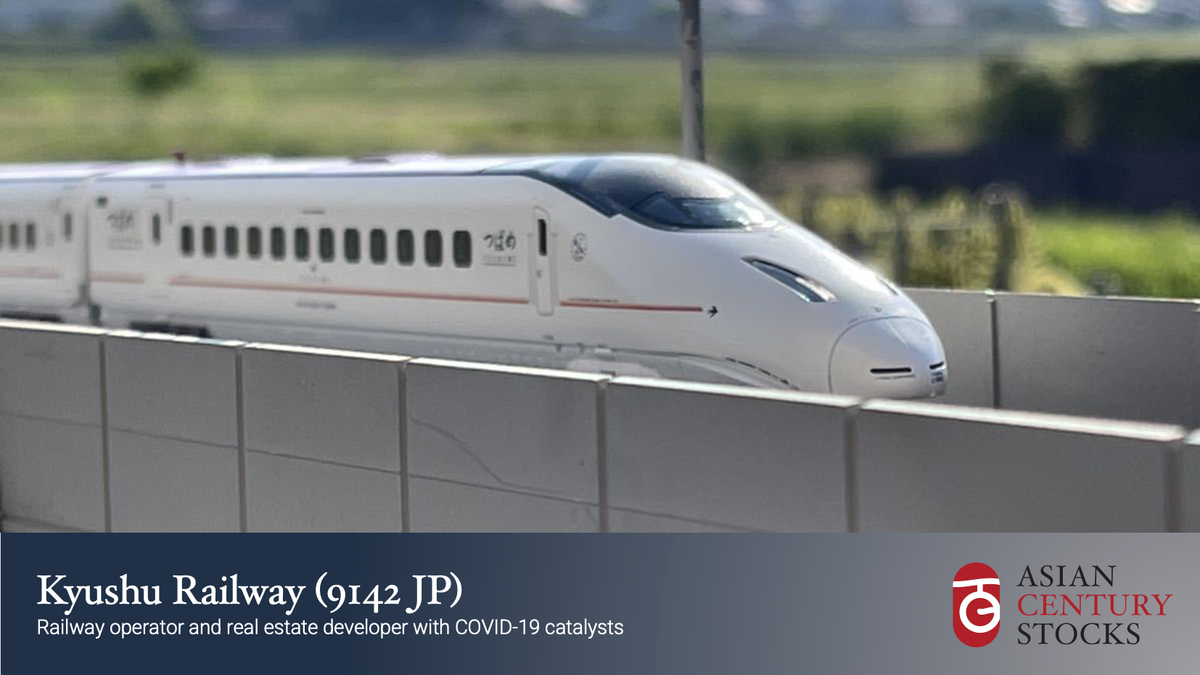
Kyushu Railway Company (9142 JP) is a regional commuter train and real estate operator on the Japanese island of Kyushu. It has close to a monopoly on the main rail infrastructure on the island, with 22 lines across 567 stations, transporting 300 million passengers yearly.
The rail business itself is uninteresting. Fares are capped through regulation, and the population growth on the island of Kyushu has stagnated.
But modern-day Kyushu Railway is more a real estate developer than a railway company. Like MTR Corporation in Hong Kong, Kyushu Railway takes full advantage of the fact that it can get hold of valuable land next to its railway stations. It then builds commercial property around those stations and rents them out profitably.
Since the COVID-19 pandemic broke out in Japan in early 2020, railway traffic has ground to a halt. The recovery has so far been modest.
There are two potential reasons for optimism. One is that the COVID-19 case count has started dropping in Japan and Kyushu. The second is that Japan’s borders will open from 10 June onwards. Kyushu is a major tourist destination that’s especially popular among Korean tourists.
Other growth drivers include the launch of Kyushu Railway’s second Shinkansen line, the Nagasaki Line, in September 2022. New station building developments such as the Kumamoto, Miyazaki and Nagasaki stations will add almost 40% to Kyushu Railway’s total station building square footage between 2019 and 2023.
Before COVID-19, Kyushu Railway used to make JPY 50 billion in net profit. A large proportion of those revenues came from property rentals and were recurring. Given the growth in the rental space and the new Shinkansen line, I believe we could well see JPY 64 billion in net profit by 2027, putting the stock on a P/E ratio of 6.5x. Historically, the stock and its railway peers have traded closer to 11-16x P/E.
Considering that most of Kyushu Railway’s pre-pandemic revenues came from real estate rental, a closer peer might be Fukuoka REIT, which trades at 22x EBITDA. While Fukuoka REIT enjoys tax benefits, its properties are of lower quality than Kyushu Railway’s station buildings and hotels.
One risk is that Japan’s demographics deteriorate, which could be problematic for a company with such a high fixed cost base. Another risk is inflation, which could hurt margins if wage growth exceeds fare hikes and the effect of higher interest rates on borrowing costs.
Click the “Read now” button below to access the full PowerPoint presentation: