
Disclaimer: Asian Century Stocks uses information sources believed to be reliable, but their accuracy cannot be guaranteed. The information contained in this publication is not intended to constitute individual investment advice and is not designed to meet your personal financial situation. The opinions expressed in such publications are those of the publisher and are subject to change without notice. You are advised to discuss your investment options with your financial advisers, including whether any investment suits your specific needs. From time to time, I may have positions in the securities covered in the articles on this website. Full disclosure: I do hold a position in the Philippine Stock Exchange at the time of publishing this article. To reiterate, this post and the below presentation are for informational and educational purposes only - not a recommendation to buy or sell shares.
I came across a write-up on Value Investors Club discussing The Philippine Stock Exchange (PSE PM - US$231 million). You can find it here (members only).
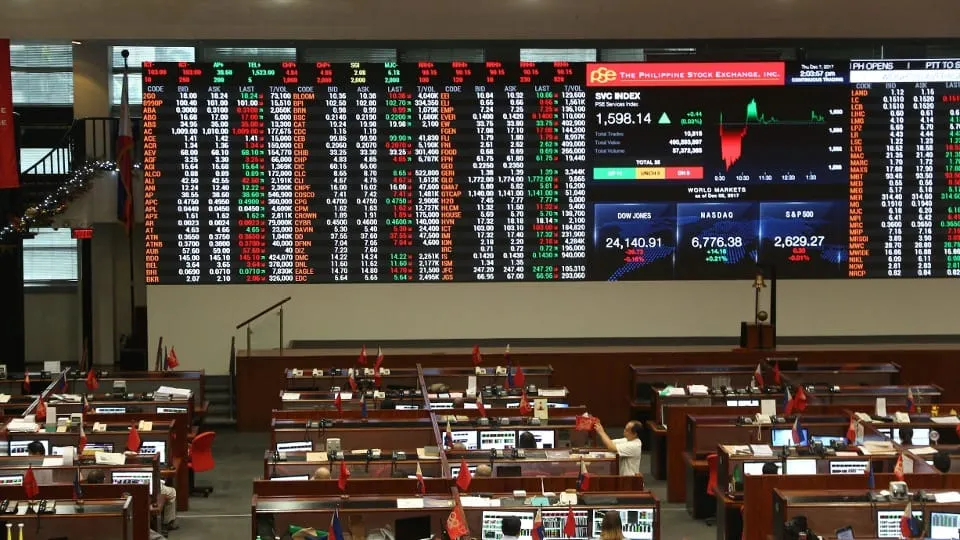
After spending several days on the stock, I think the VIC author was spot on. The story is this: the Philippine Stock Exchange (“PSE”) is the monopoly stock exchange operator for the Philippines, a developing country with a young population of 114 million.
The industry is attractive because it’s capital-light with few fixed expenses, barriers to entry and significant network effects. For example, market participants are attracted to the largest trading venues with the greatest liquidity.
PSE’s business can almost be seen as a toll bridge, collecting “royalties” on the growth of the listed equity universe of the Philippines. The company makes money by taking a cut of capital raises, annual fees to maintain stock listings, membership fees for brokerage firms, transaction fees, data fees and so on.
The company has had a tough ten years as foreign investors have shunned Philippine equities. But what could help the PSE monetise its monopoly in the future is a greater number of companies listed, higher valuations and greater trading volumes:
- The number of companies listed has stayed flat for most of the past ten years. But in 2020, the government finally repealed the country’s 1-4% IPO tax, paid by each issuer. The Philippines had been the only country in the ASEAN region to impose such a tax, and companies may have understandably avoided going public. And since 2020, we’ve seen more companies go public.
- Valuation multiples for Philippine stocks have now come down to record low levels, with a forward P/E for the Philippine Composite of 12.5x compared to a ten-year average of 18.6x.
- In mid-August 2023, financial super app GCash launched a service for single-stock trading called “GStocks PH”. Users can now buy any stock listed on the Philippine Stock Exchange through the app. There are currently 1.7 million brokerage accounts in the Philippines, with a penetration rate of just 1.5%. Given that GCash has 80 million users, it could move the needle. And expect users to sign up for trading once GCash itself goes ahead with its IPO, planned for year-end 2023.



)