
Disclaimer: Asian Century Stocks uses information sources believed to be reliable, but their accuracy cannot be guaranteed. The information contained in this publication is not intended to constitute individual investment advice and is not designed to meet your personal financial situation. The opinions expressed in such publications are those of the publisher and are subject to change without notice. You are advised to discuss your investment options with your financial advisers, including whether any investment suits your specific needs. From time to time, I may have positions in the securities covered in the articles on this website. Full disclosure: I do not hold a position in Micro-Mechanics at the time of publishing this article. To reiterate, this post and the below presentation are for informational and educational purposes only - not a recommendation to buy or sell shares.
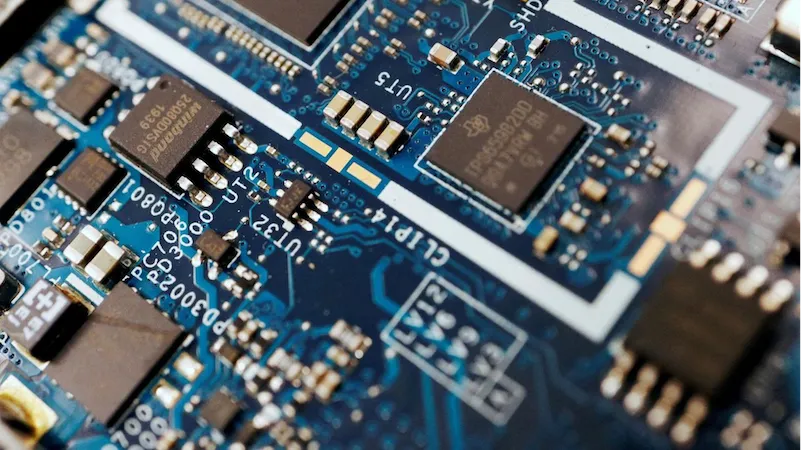
Micro-Mechanics (MMH SP - US$147 million) is a manufacturer of precision tools used in the back-end processes of semiconductor chip manufacturing.
The company’s founder, Chris Borch, is an American who was sent to Singapore as an expat working for a semiconductor equipment maker. After two years, he left his job and used his US$600 of savings to build a precision manufacturing company in the back of a hat factory in suburban Singapore.
Fast-forward to today, his company, Micro-Mechanics, is now a major producer of parts for the back-end of semiconductor chip manufacturing across its five manufacturing plants. Such parts include:
- Die ejector needles to separate the die by pushing it out from the wafer
- Rubber tips to pick up dies from wafers and place them onto leadframes
- Dispensing nozzles to spread out adhesive on leadframe before dies are placed on them
- Wire bond clamps, wedges and wire cutters, used in the wire-bonding process to provide electrical connections between the chip and external leads
While these products may seem like commodities, they’re anything but. Chips are becoming smaller and smaller, and extreme precision is therefore needed for the tools involved in their making. The parts are also mission-critical, and any defect can be very costly for customers. This has provided Micro-Mechanics with pricing power.
Micro-Mechanics’ moat can be observed through its financial track record. For most of its history, it’s enjoyed 60% gross margins and 30% operating margins. And its return on equity has historically stayed between 20% and 30%.
Growth has been steady, though not spectacular, at around 8% per year in the past two decades. The driver seems to have been higher global chip sales volumes, as well as more complex packaging. Dies have increasingly been stacked on top of each other, requiring multiple layers of wire bonding.
As chips become smaller, the technological barriers to entry have also increased, enabling Micro-Mechanics to gain market share. It currently enjoys an 11% global market share in its core segments.






)