Skip to content

L'Occitane (973 HK)

Cosmetics giant at half the peer group multiple, despite a fast-growing hidden asset

Disclaimer: Asian Century Stocks uses information sources believed to be reliable, but their accuracy cannot be guaranteed. The information contained in this publication is not intended to constitute individual investment advice and is not designed to meet your personal financial situation. The opinions expressed in such publications are those of the publisher and are subject to change without notice. You are advised to discuss your investment options with your financial advisers, including whether any investment suits your specific needs. From time to time, I may have positions in the securities covered in the articles on this website. Full disclosure: I do not hold a position in L’Occitane at the time of publishing this article. To reiterate, this post and the below presentation are for informational and educational purposes only - not a recommendation to buy or sell shares.


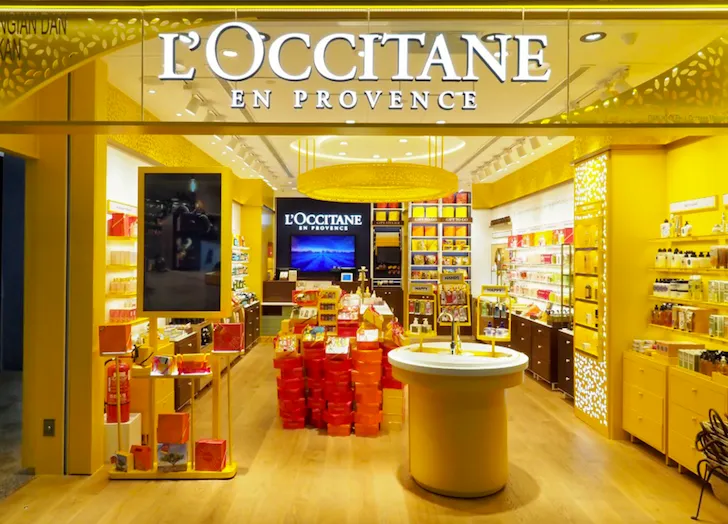
L’Occitane (973 HK - US$4.6 billion) is a Hong Kong-listed French cosmetics brand focusing on skincare products.

The company was founded in the 1970s by Olivier Baussan. He wanted to use natural, organic ingredients from his home province of Provence to produce personal care products. The word “Occitan” refers to the culture of Provence, suggesting deep ties to the region.

In the early 1990s, Austrian businessman Reinold Geiger took control of L’Occitane and helped the brand become an international phenomenon.

Today, L’Occitane has almost 1,400 stores worldwide. The biggest target markets are the United States, Japan and China. The products sold in the store span body care, face care, hair care, and fragrances.

What are the most popular products? “Shea Butter Hand Cream” for dry hands and “Immortelle Precious Cream”, used to smooth out wrinkles.

The main brand, “L’Occitane en Provence”, is mature. The business is growing in the mid-single digit range and - in my view - limited pricing power.

While some capex has been reinvested in the main business, free cash flow has also been used for acquisitions. Unfortunately, many have been made at high prices, causing goodwill to accumulate on the sheet. And the return on equity has gradually come down to about 10%.

But since 2018, there have been signs of improvement. The company introduced a new corporate strategy called “Pulse”, which emphasised employee incentives and a decentralised organisation. While some employees complain that the company has become greedy and money-focused, that may not be a bad sign for shareholders.

Since 2022, L’Occitane also has a new CFO called Christian-Matthias Klever, with an incredible resume, including being CFO of Breitling when well-regarded private equity firm CVC owned it. The previous CFO, Thomas Levilion, had been with the company since 2008.

This post is for paying subscribers only

Subscribe

Already have an account? Sign In

Latest

The DRAM capital cycle

The DRAM capital cycle

My friend MacroValue recently noted that the spot price for DDR5 memory chips has started declining, after an incredible rise from September 2025 onwards: This decline begs the question: Is the DRAM capital cycle nearing its peak? The "capital cycle" concept comes from Edward Chancellor who put together

Members Public
India's development trajectory

India's development trajectory

Last week, I read Amitabh Kant's book Made in India, which examines the growth of private-sector entrepreneurship in India. Let me share the key insights from the book: One is that many of today's conglomerates – Tata, Birla, Godrej, Bajaj, Cipla, etc. – were formed during the British

Members Public