Disclaimer: Asian Century Stocks uses information sources believed to be reliable, but their accuracy cannot be guaranteed. The information contained in this publication is not intended to constitute individual investment advice and is not designed to meet your personal financial situation. The opinions expressed in such publications are those of the publisher and are subject to change without notice. You are advised to discuss your investment options with your financial advisers, including whether any investment suits your specific needs. From time to time, I may have positions in the securities covered in the articles on this website. Full disclosure: I have a short position in Pop Mart at the time of publishing this article. To reiterate, this post and the presentation below are for informational and educational purposes only—not a recommendation to buy or sell shares.
Wang Ning and the creation of Pop Mart
Labubu is a collectible plush toy created by China's Pop Mart (9992 HK — US$33 billion).
It's become a global phenomenon, thanks in large part to the brilliance of young entrepreneur Wang Ning.

The story begins in 2010, when he and his girlfriend took a trip to Hong Kong. He noticed a fashionable lifestyle shop called LOG-ON, selling cute character-based goods. People went to the store to buy cute and trendy items. He felt that while Mainland China had plenty of department stores, it lacked trendy stores that sold items the younger generation was interested in.
So when he got back to Beijing, he set up a variety store called "Pop Mart" that sold comic books, mobile phone accessories, and toys.
It was a struggle. Managing the inventory of thousands of low-margin items was challenging, and the store struggled with profitability. At one point, his entire staff resigned, leaving him to manage the store on his own.
But Wang Ning was determined to succeed. He eventually returned to university, enrolling at Peking University's Guanghua School of Management to learn the basics of building a business.
And it was here that he adjusted the business into what it is today. Once he returned to running Pop Mart, he reoriented it to focus entirely on toys, using the now-famous "blind box" concept.
These weren't entirely new. In fact, Japanese toy company Bandai launched its "gachapon" capsule vending machine way back in 1977, and these remain popular.

In these vending machines, customers put in a coin, and out popped a random toy. The low price point and the uncertainty created an experience similar to a slot machine. And customers would come back, hunting for rare items or toys in a collection they hope to complete.
Pop Mart set out to replicate this vending machine experience. In 2016, he asked his followers on Weibo which artists and characters they would like to see in a collectible format. 50% of the replies mentioned the character "Molly", created by Hong Kong-based artist Kenny Wong.
So Wang Ning jumped on a flight to Hong Kong and asked if he could use the character for a series of toys sold as blind boxes:
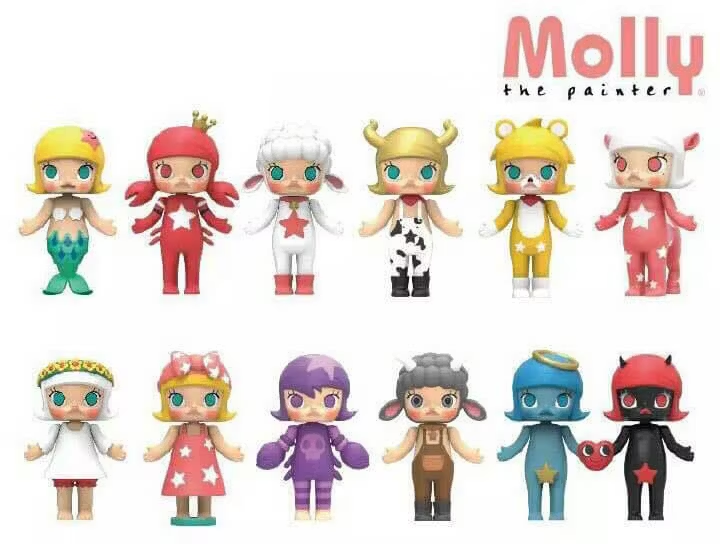
The Molly series became a massive success. Buyers paid CNY 59 per box, and they randomly got one out of the twelve toys. And every 144th time, they got the special edition "Acquarius" figurine. Many customers kept spending until they finally completed their entire sets.
After the launch of Pop Mart's "Molly", its revenues jumped from US$13 million in 2016 to a whopping US$73 million in 2018.
The Labubu craze
But this was just the beginning. The next phase in Pop Mart's development was the launch of its "Monster" series, created by artist Kasing Lung, who was also born in Hong Kong but grew up in the Netherlands.
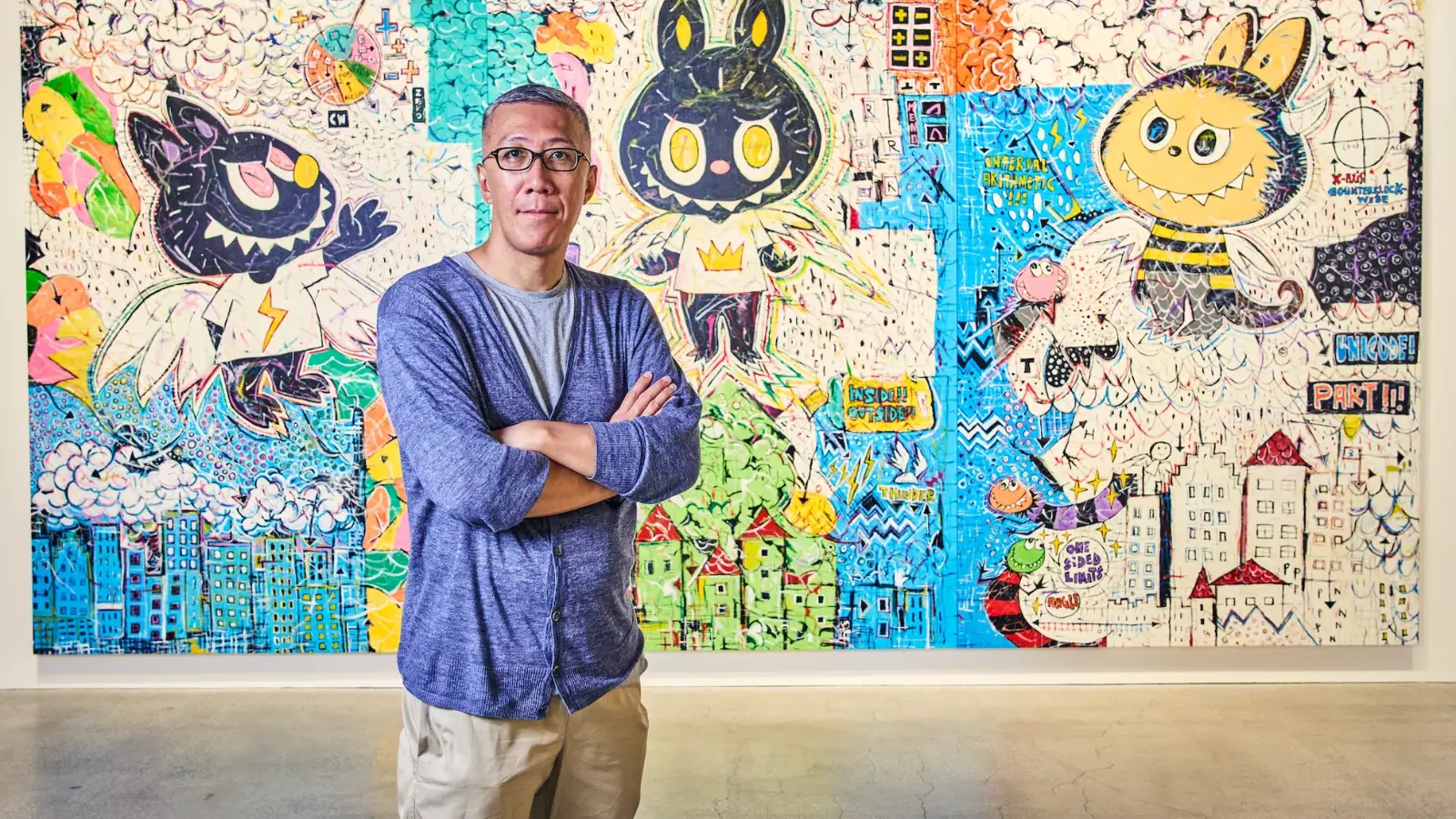
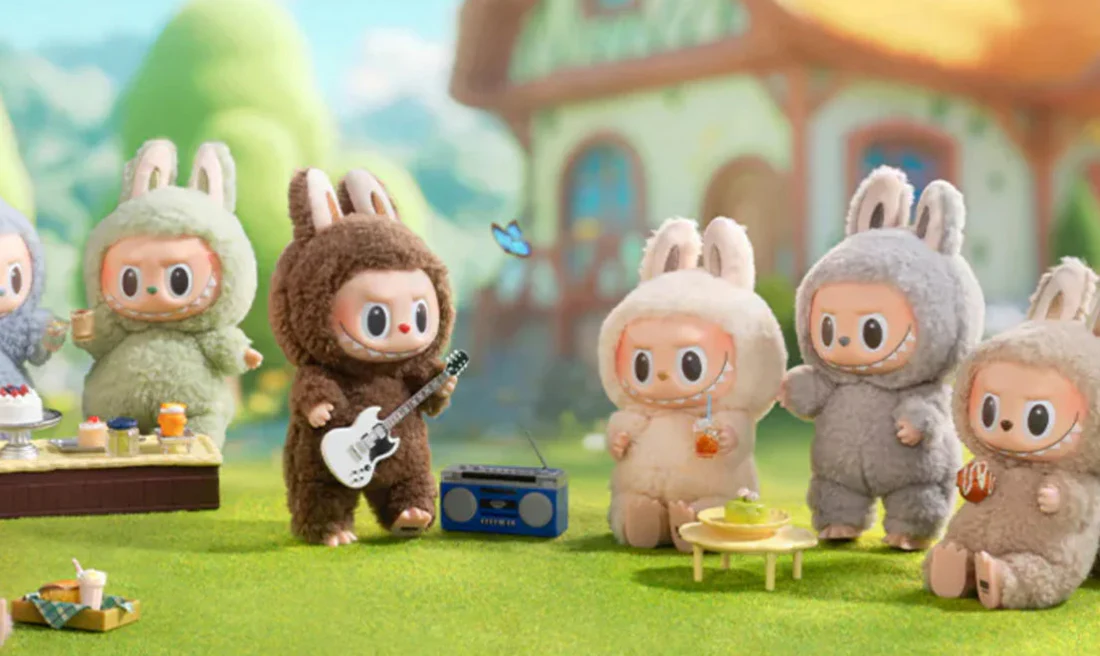
The Monster series were inspired by Nordic folklore. One of the characters was called "Labubu" - a mischievous but kind-hearted forest elf with big ears and nine teeth. These were also sold as blind boxes.

After Labubus' launch in 2019, Pop Mart suddenly became the best-selling toy on Tmall during China's Singles Day, out-selling established companies like Disney and Lego. This was unprecedented in the history of China's toy industry.
Pop Mart's revenues slowed after its blockbuster 2020 IPO. It was hurt by China's COVID-19 lockdowns, as foot traffic to its stores ground to a halt.
Instead, Wang Ning shifted his focus overseas. Pop Mart announced that it would open 40-50 stores overseas, including in the United States and the United Kingdom.
He also made a crucial modification to its Labubu character, transitioning from vinyl to plush. This made the toy feel more "cuddly and cute", appealing to the female demographic.
Crescendo
In the rest of the article, I describe how the demand for Pop Mart's products have evolved since mid-2025. It's only available for premium subscribers, so subscribe to continue reading.
In the first quarter of 2024, Thai singer "Lisa" from K-pop group Blackpink was seen with a Labubu doll attached to her Louis Vuitton purse.
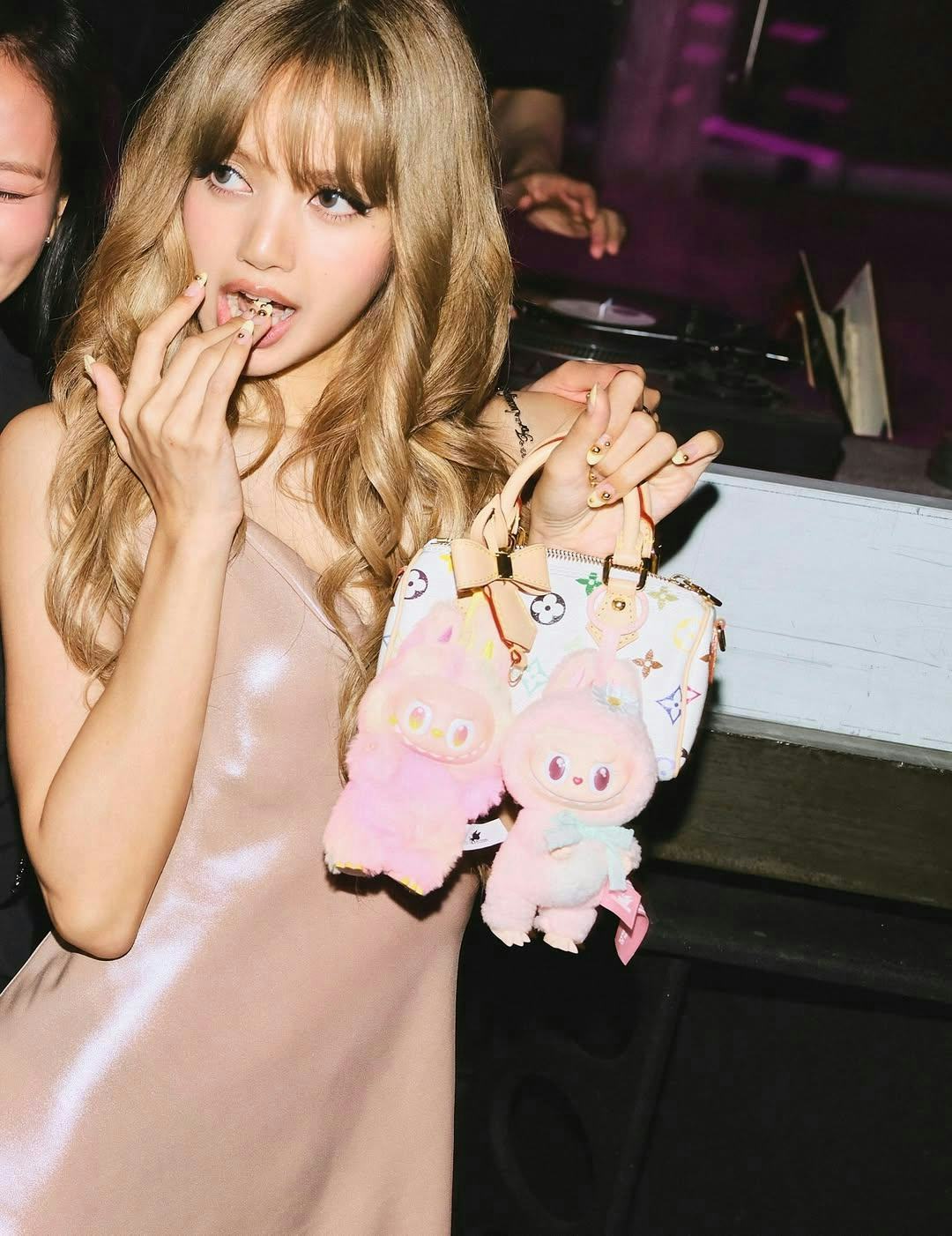
This paparazzi photo ignited a frenzy for Labubu toys across Southeast Asia, and later, the rest of the world. In the following year, Pop Mart's revenues almost quadrupled:
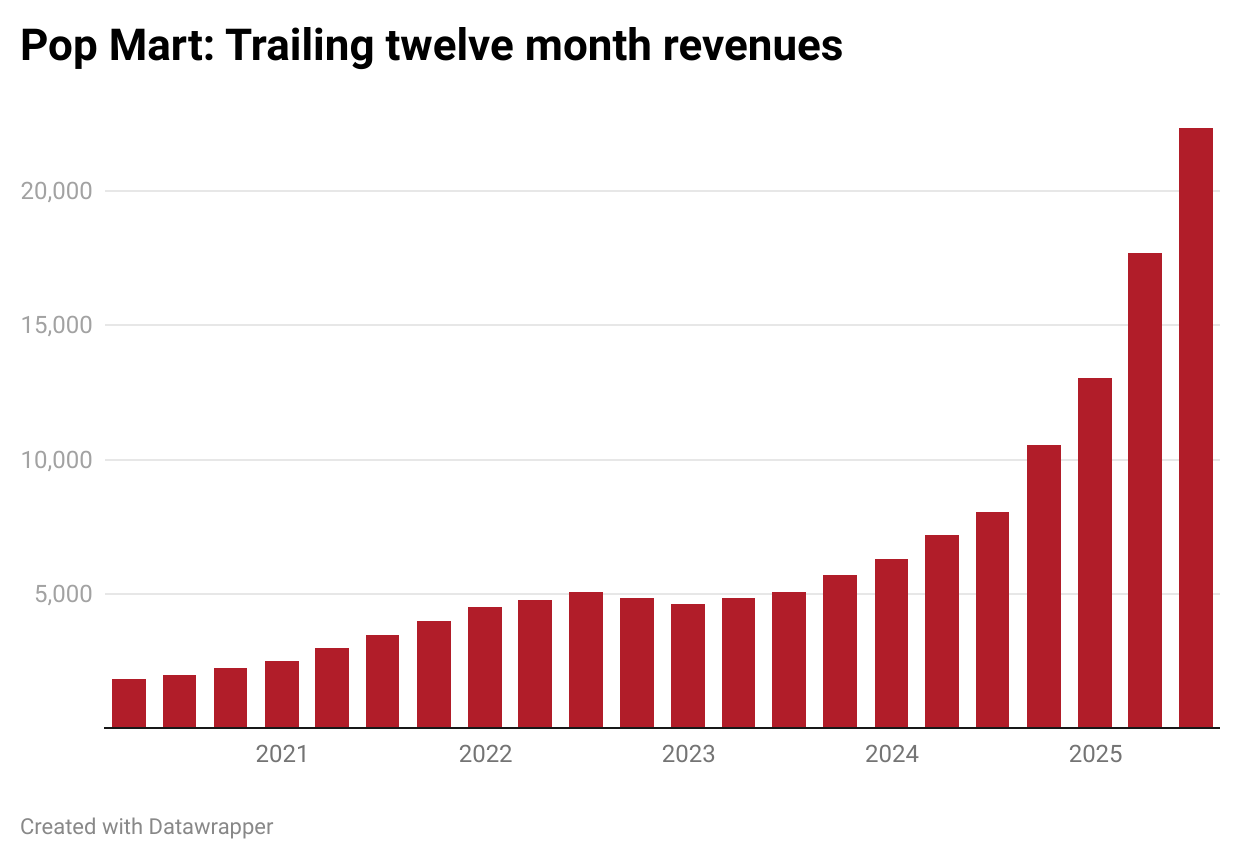
In the following year, celebrities like Rihanna and the Kardashians were spotted with Labubu bag charms, making the brand a global phenomenon.
By mid-2025, queues to Pop Mart's stores in the UK were so long that it had to halt Labubu sales temporarily. Meanwhile, in Singapore, over 160 fans queued from 5:30 in the morning to get a chance of buying the Labubu "Wacky Mart" blind box drop. The special edition sold out within hours.

In June 2025, a first-generation human-sized Labubu doll sold for US$150,000 at an auction in China. One of the "Big Into Energy" Labubu toys was sold at 45x the retail price in the secondary market.
Media personality Kevin O'Leary — the self-proclaimed "Mr Wonderful" — said in an interview that he wouldn't sell his Labubu for $50 million. That's how much he valued it.
Forget stocks, @kevinolearytv hottest investment is… a Labubu. He swears he wouldn’t sell it for $50M. Have you bought into the collectibles craze yet? pic.twitter.com/yVbLrfimf7
— Nicole Lapin (@NicoleLapin) December 6, 2025
As the collector frenzy gained momentum, Wang Ning suddenly became the 10th-richest man in China. Pop Mart was a phenomenon.
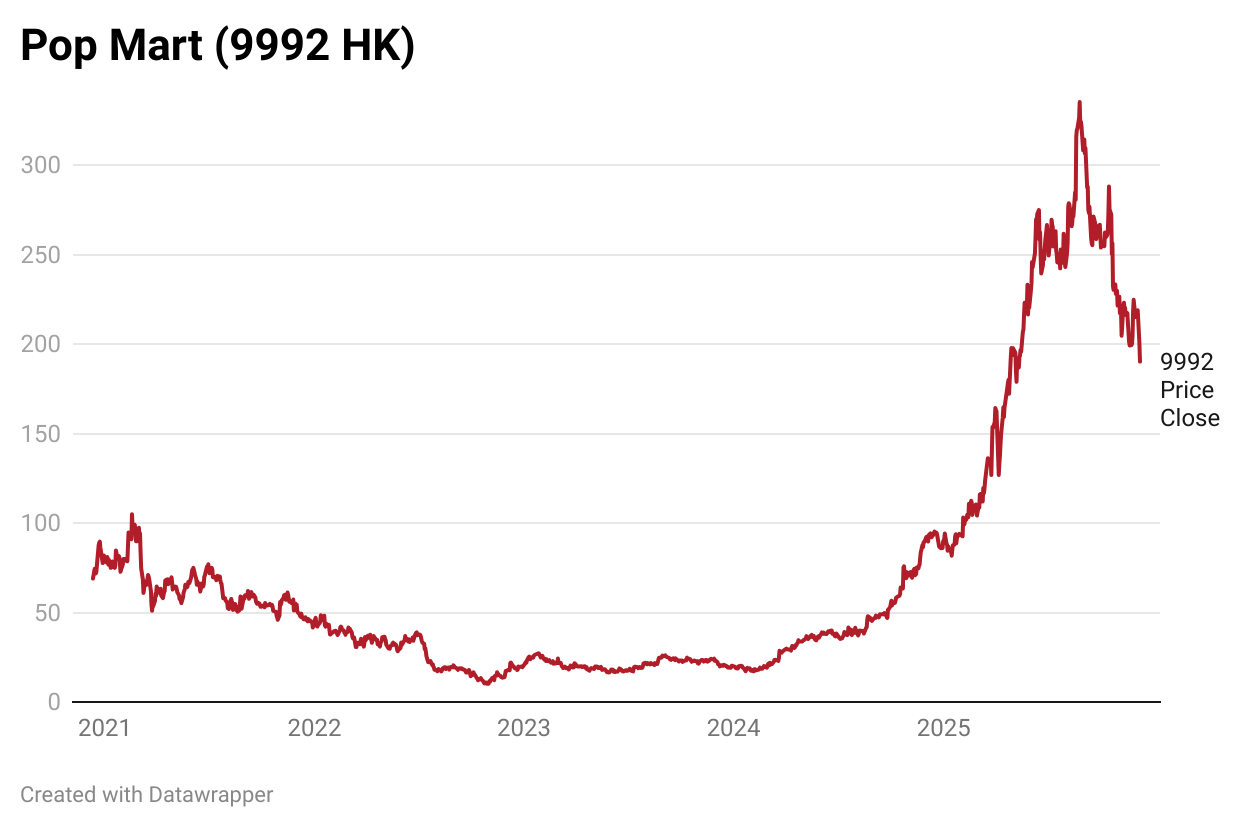
That's when the Chinese government decided to get involved. In the Communist Party mouthpiece "People's Daily", an author criticized blind boxes for being traps to encourage repeat purchases. The stock price reacted negatively.
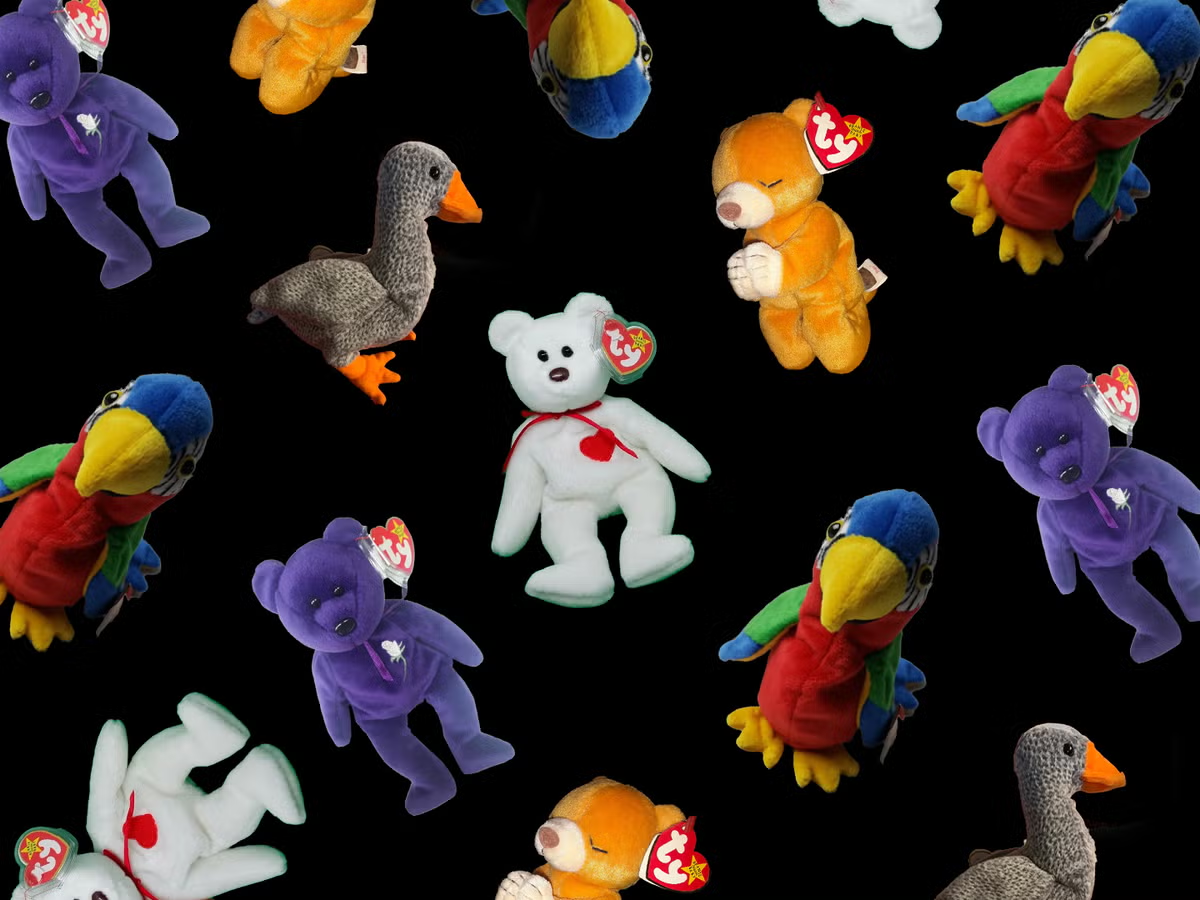
Beanie Babies 2.0?