Table of Contents
Disclaimer: This article constitutes the author’s personal views and is for entertainment and educational purposes only. It is not to be construed as financial advice in any shape or form. Please do your own research and seek your own advice from a qualified financial advisor. From time to time, the author might hold positions in the below-mentioned stocks consistent with the views and opinions expressed in this article. This is a disclosure, not a recommendation to buy or sell stocks.
So what is "e-paper" anyway?
The technology was invented by an MIT professor called Joe Jacobson. In 1993, he had travelled to Peru. When a local man asked him for books, Jacobson only had a few to offer.
This led to a realization: he couldn't carry many books on the trip because they're heavy and take up too much space. So he began dreaming about a portable book with hundreds of pages that could change through the click of a button.
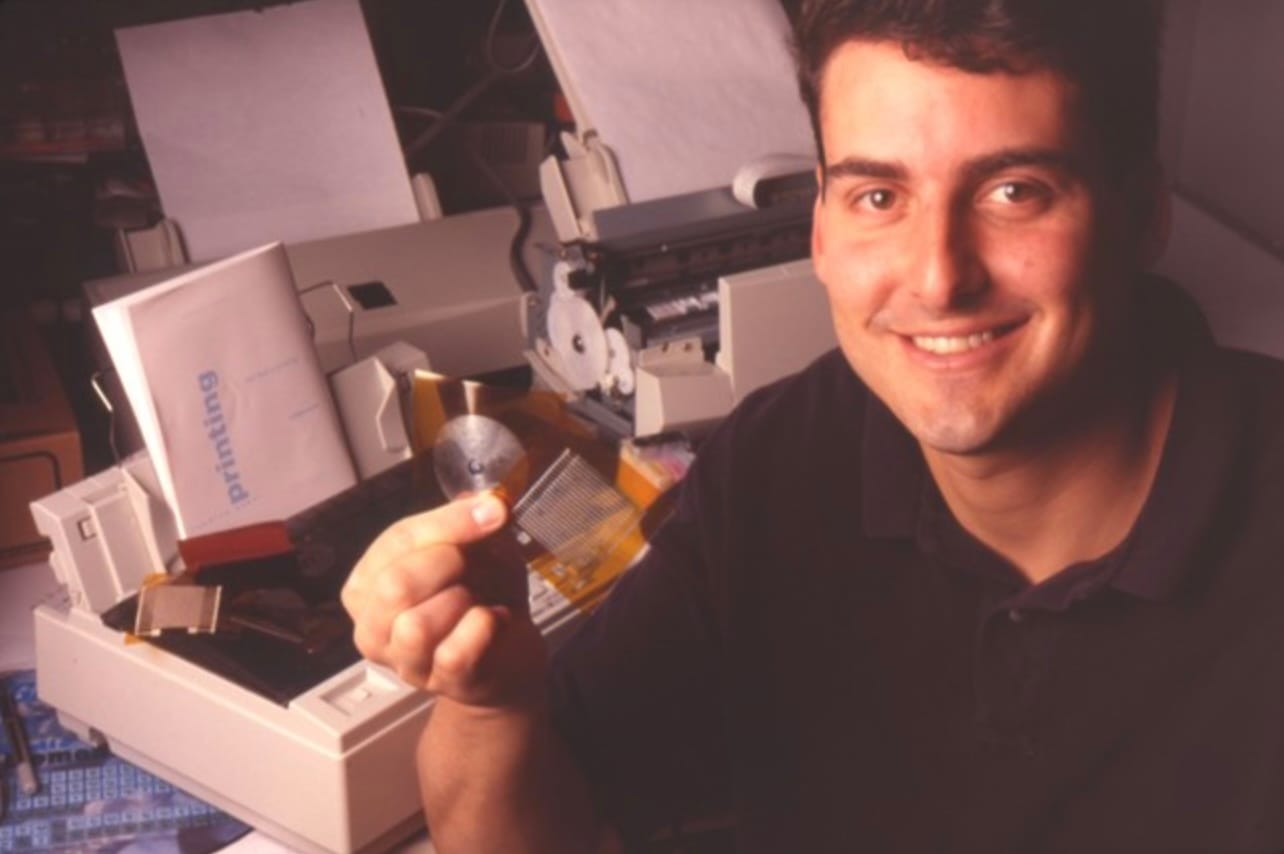
Once Jacobson arrived at MIT, he recruited two undergraduates to work on the problem. The solution they came up with was called "electrophoresis": moving ink particles around on a screen through an electric field. Each ink particle contained differentially charged black and white pigment. When electricity was applied, the black ink would rise to the top, or vice versa. And suddenly, text would form on the screen.
The technology he invented, e-paper, was later adopted in the first-generation Amazon Kindle e-reader in 2007. While the device didn't create much of a splash initially, it's now become the industry standard.
The benefit of e-paper is that once the ink particles have moved, they stay in place. So the screen requires zero power to maintain an image, only to change it.
For that reason, e-paper devices have exceptional battery lives – sometimes lasting for months. They're also easy on the eyes, reflecting ambient light just like a normal book would.
And they've become gradually better over time. The contrast has improved. The resolution has reached a very impressive 300 pixels per inch. And while still slow, page refresh speeds have become better than before. E-readers remain niche devices, but they have a devoted fan base.
What's interesting is that the industry is currently undergoing significant change:
- One major shift was the 2022 release of the Kindle Scribe — a 10-inch black-and-white e-paper device that you can write on. The pen doesn't require a battery: instead, it pulls up black ink particles when you write. Because of this, using the Kindle Scribe feels like you're writing on actual paper, rather than an electronic device.
- Another shift was Amazon's 2024 release of the Kindle Colorsoft — the first color e-reader released to the broad masses. It's led to a big jump in sales for the Kindle, with many wanting to upgrade to read comics and graphic novels in full color.
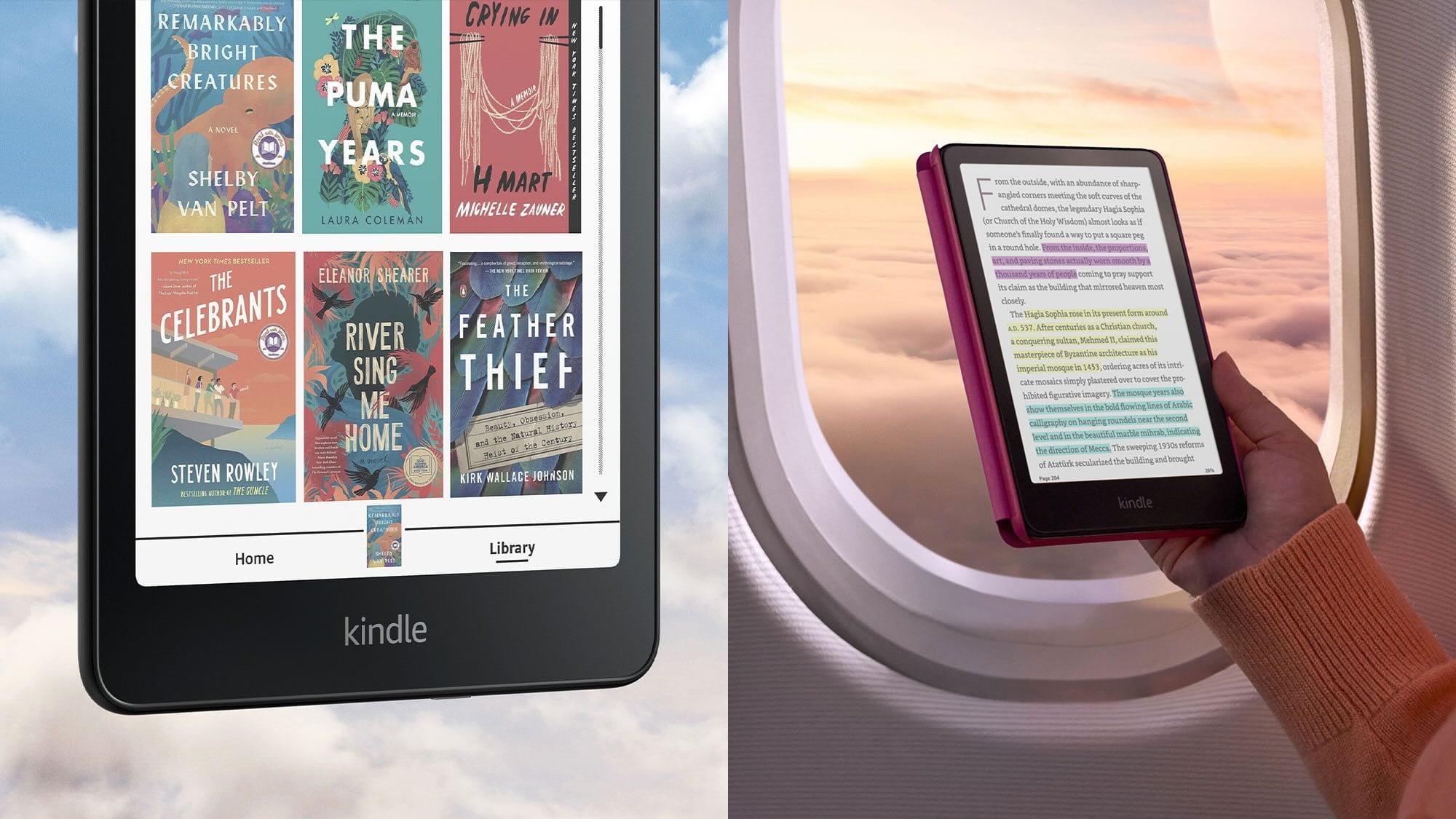
So the industry is currently in flux, with a refresh cycle boosting sales volumes, and average selling prices moving up, bit by bit.
E-paper is also becoming popular in another product category: electronic shelf labels. Such labels are used to display item prices in retail stores.
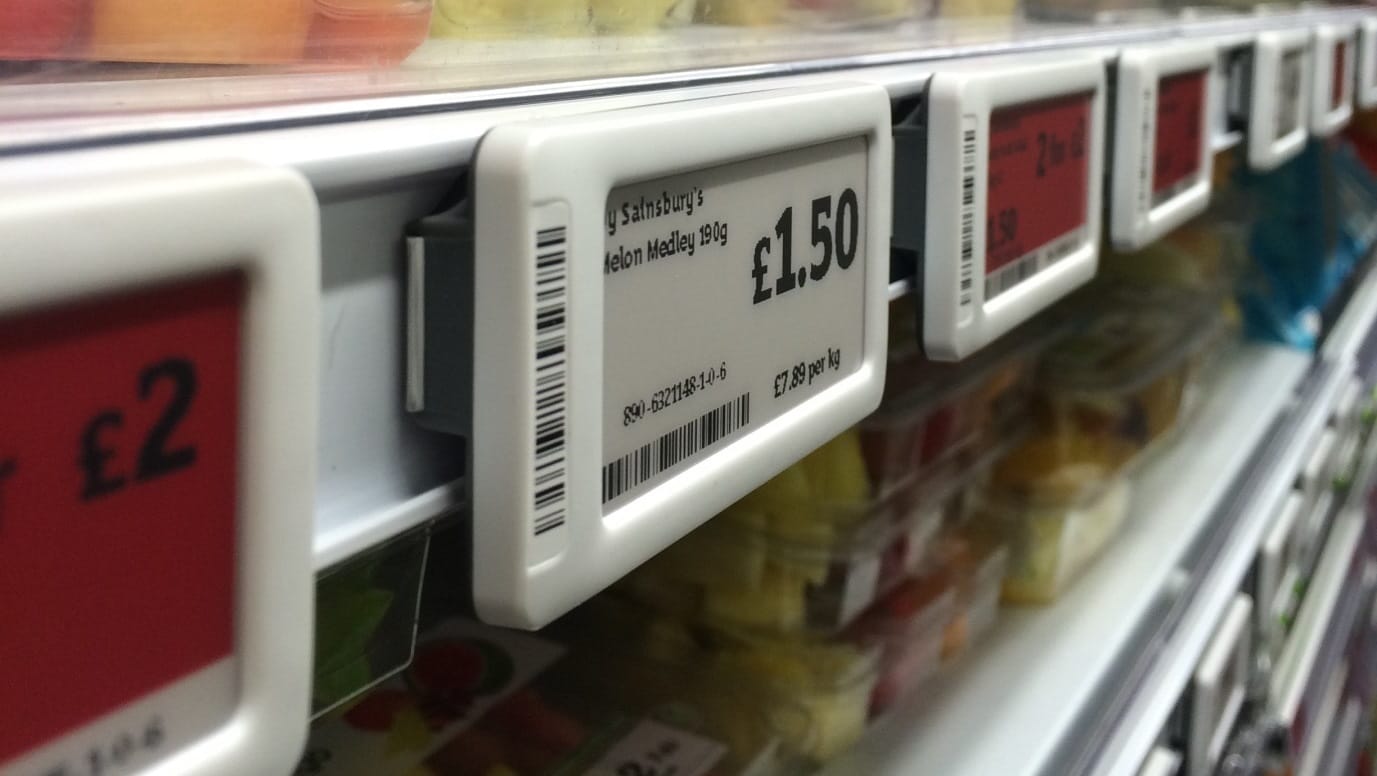
The benefit is that prices can be changed through software across an entire store. And it allows for dynamic prices. For example, a supermarket can charge higher prices during lunch hours or during the holiday season.
In 2009, Jacobson sold his e-paper business to Taiwan's E Ink Holdings. It currently serves two groups of customers:
- On the electronic shelf label side, it customers are the European system integrators Vusion and Pricer.
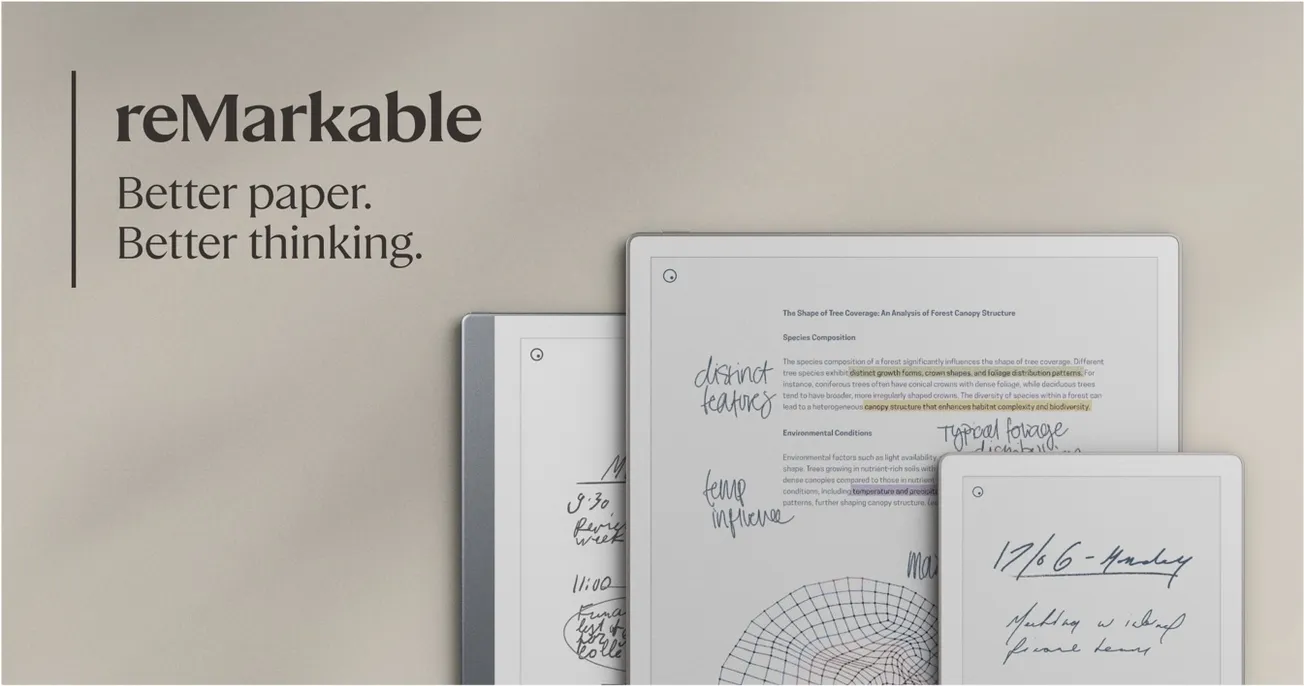
- On the e-reader side, Amazon remains the undisputed leader. But in Japan and certain other countries like Canada and the Netherlands, Rakuten's Kobo e-reader is popular as well. Other e-reader brands include Norway's reMarkable and China's soon-to-be-listed Onyx International, which owns the Boox brand.
Here are the multiples for each of these companies:
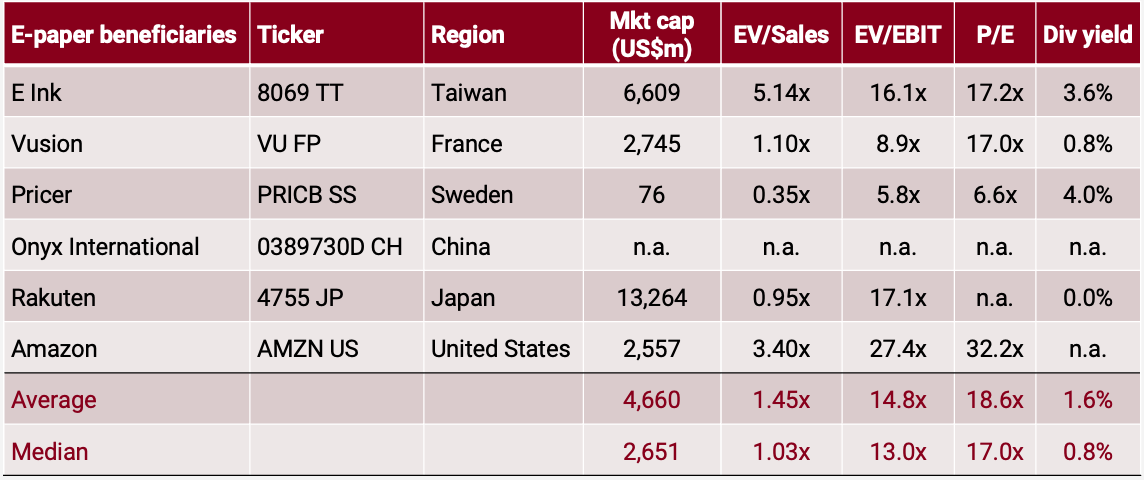
But be aware that installing electronic shelf labels is a low-margin industry. Most of the industry economics seems to be captured by either Amazon or the monopoly e-paper display manufacturer, E Ink.