
Table of Contents
Hi! I'm Michael Fritzell. Welcome to a free-to-read edition of Asian Century Stocks – a newsletter about Asian value stocks. First time reading? Sign up here. For a complete list of all previous posts, check out the Table of Contents.
Disclaimer: Asian Century Stocks uses information sources believed to be reliable, but their accuracy cannot be guaranteed. The information contained in this publication is not intended to constitute individual investment advice and is not designed to meet your personal financial situation. The opinions expressed in such publications are those of the publisher and are subject to change without notice. You are advised to discuss your investment options with your financial advisers, including whether any investment suits your specific needs. I hold a position in Nintendo at the time of publishing this article. To reiterate, this post and the presentation below are for informational and educational purposes only—not a recommendation to buy or sell shares.
Nintendo (7974 JP — US$74 billion) is a Japanese video game developer, best known for its Zelda and Super Mario franchises.
It's an old business. It was founded in 1889 by Fusajiro Yamauchi, initially focused on Japanese "Hanafuda" playing cards. In fact, its initial name "Nintendo Koppai" meant "trading cards," and this was the primary focus of Nintendo over its first few decades.
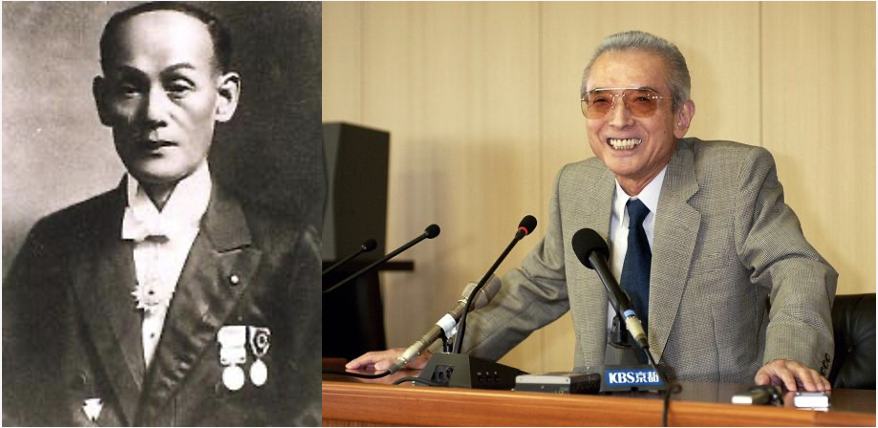
In 1949, Fusajiro's great-grandson, Hiroshi Yamauchi took over. He was only 22 years old at the time and quit his studies at prestigious Waseda University to take over Nintendo after a family death. Hiroshi's only condition was that no other member of his family could take leadership roles within the company. And over the next 53 years, he ran the business with an iron fist – firing any managers who dared question his authority.
One of his master setrokes was the 1959 licensing deal with Disney. It allowed Nintendo to print Disney characters on its Western-style playing cards. It became a massive success, selling over 600,000 cards in the first year alone.
But in the 1960s, Hiroshi took Nintendo into various failed business ventures. For example, he started a taxi company, an instant rice business and even ran Nintendo-branded "love hotels", which diluted the brand name.
Due to these failures, Nintendo was eventually burdened with a significant amount of debt and almost went under. Almost by accident, Hiroshi noticed that one of his maintenance engineers, Gunpei Yokoi, was playing with an "extending arm" toy he had built for fun. Hiroshi ordered Nintendo to put the toy into mass production, calling it the "Ultra Hand". It quickly sold 1.2 million units, providing Nintendo with the liquidity it needed to survive.
Hiroshi then worked with the engineer to take Nintendo into the arcade gaming industry and later the video game industry. He also nurtured other talent within Nintendo, tapping a young industrial designer, Shigeru Miyamoto, to design a new game called Donkey Kong in 1981. It became a massive success and paved the way for the real blockbuster: the Nintendo Entertainment System (NES).

Many of us who are in our early 40s have nostalgic feelings about the NES and its successors. Nintendo's early game consoles introduced franchises such as Donkey Kong, Super Mario Bros., Zelda, Pokémon, and more.
While Hiroshi stepped down in 2002, Nintendo's business model remains the same. It focuses on family-friendly video game consoles, with new models released every 5-10 years and hit games released almost every quarter. There is greater competition from mobile games, and the video game industry is mature. But many households in developed markets continue to buy video game consoles for their children.
Nintendo has also taken inspiration from its early partner, Disney. It's now becoming an intellectual property powerhouse, using its characters for other businesses. For example, its 2022 Super Mario Bros movie earned US$1.3 trillion at the box office, and drove additional demand for Nintendo's video game consoles.
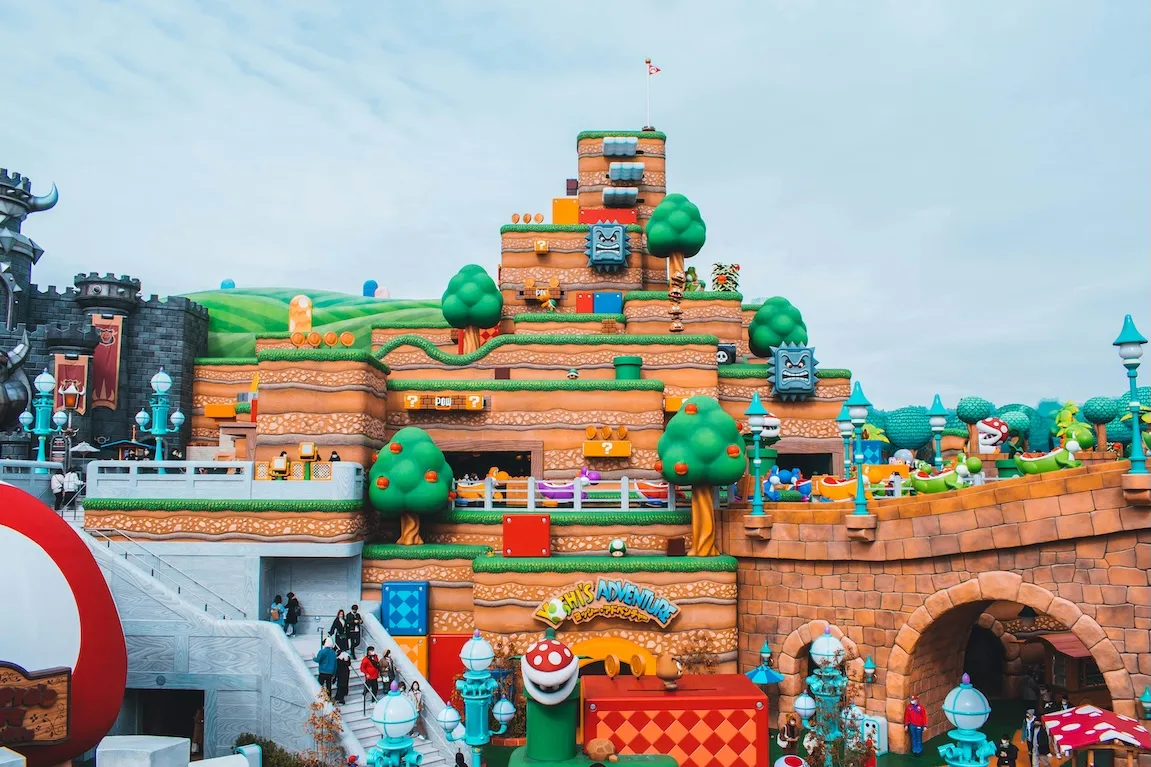
In addition, Nintendo has partnered with Universal Studios to build "Super Mario World" theme parks worldwide. They have currently built three theme parks, in Hollywood, Orlando and Osaka. And another one is currently being built in Singapore.
Nintendo is now in the midst of a transition from one video game console to another. In June 2025, Nintendo released the Switch 2:
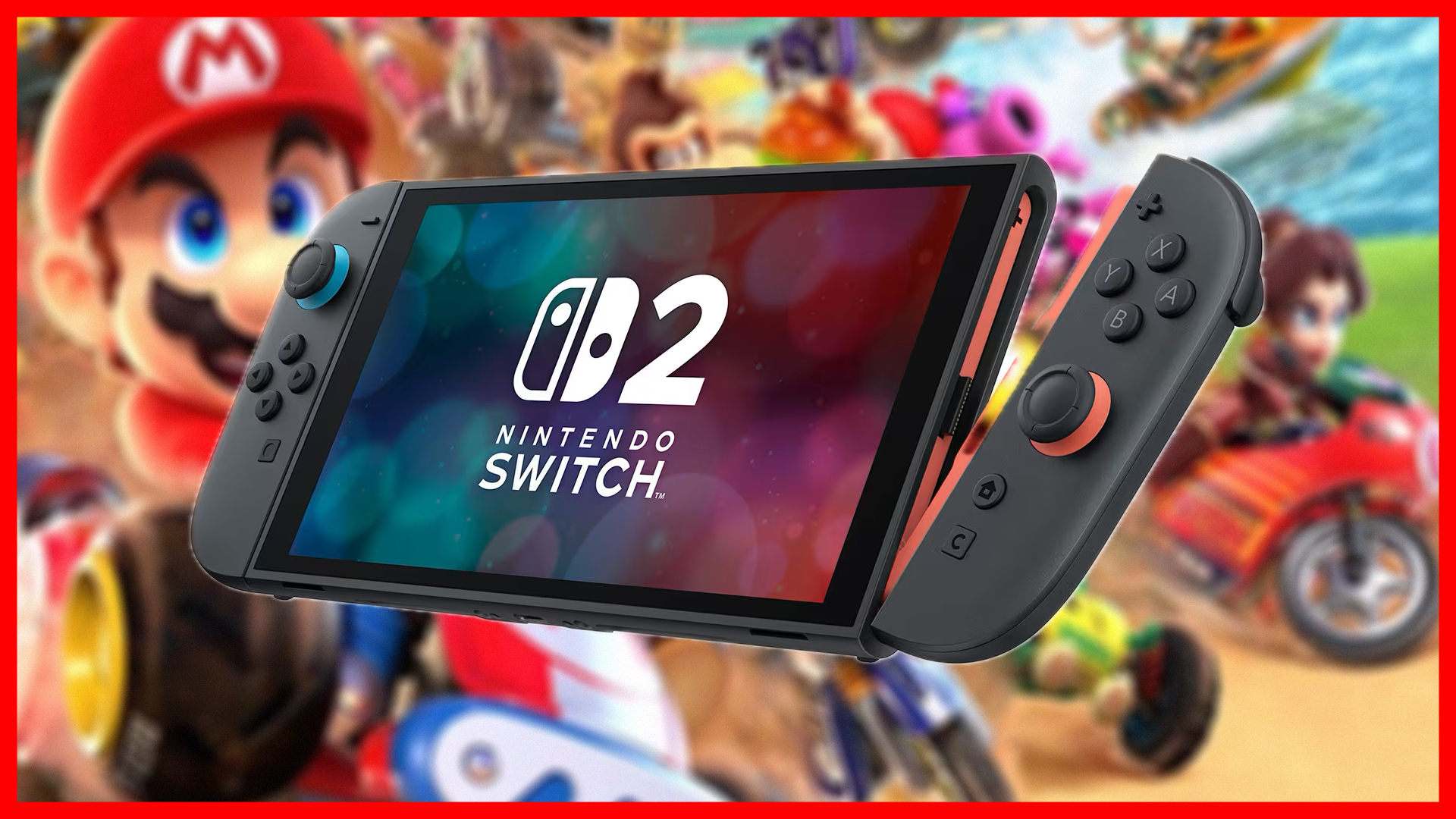
It can be docked and plugged into your TV or used as a handheld device. You can buy games in physical copies or download them directly from the Nintendo Store.
The sell-through rate has been very encouraging, reaching 15 million units faster than any other console in history:
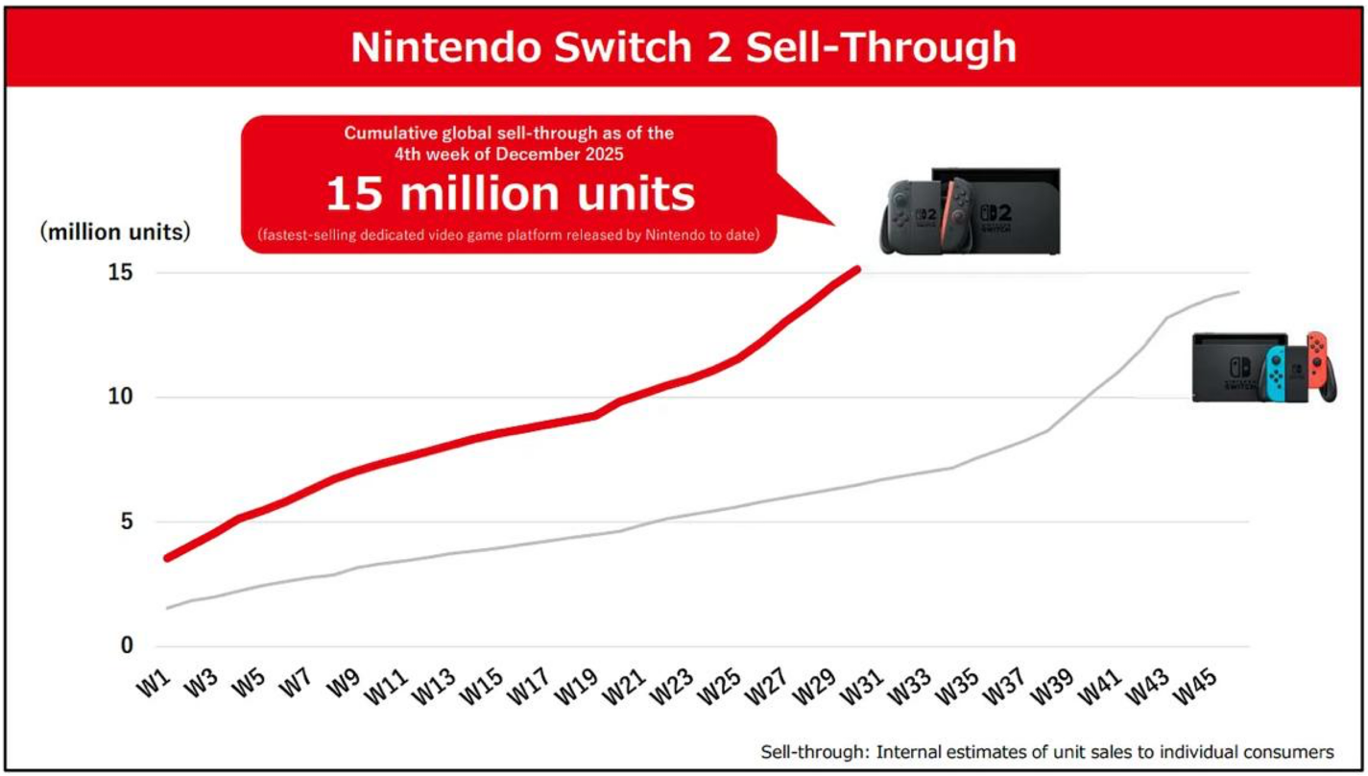
That said, the sale of new games has lagged expectations. During the holiday season, neither Donkey Kong Bananza nor Metroid Prime 4 made much of a mark. Seven months after launch, owners of the new Switch 2 console had only bought 2.2 games on average, lower than the 3.6 games for the original Switch console at this stage of its development.

So the headline numbers look mixed. But if we look towards the future, we'll notice several positive catalysts:
- One is the recent release of Pokémon Pokopia. In just a few weeks, it's become a blockbuster, with its success probably on par with the 2020 hit Animal Crossing
- Another is the April 2026 release of the new Super Mario Galaxy movie
- Then, in October 2026, we'll finally see the new 3D Super Mario, which is likely to drive significant sales of the Switch 2 console into the 2026 holiday period
I think we should also recognize that while the console industry is mature, there's significant potential in Nintendo's online store. In FY2025, only 30% of Nintendo's games were digital, compared to 75% for the PlayStation 5. The primary reason is that the original Nintendo Switch console had only 32 GB of storage. Players who bought their games online quickly ran out of storage space.
That issue has been partly solved with the Switch 2. The new console has 256 GB of storage, with an SD memory card slot that allows players to further expand storage capacity. And just as expected, in early 2026, we saw the digitalization rate hit a whopping 50%.
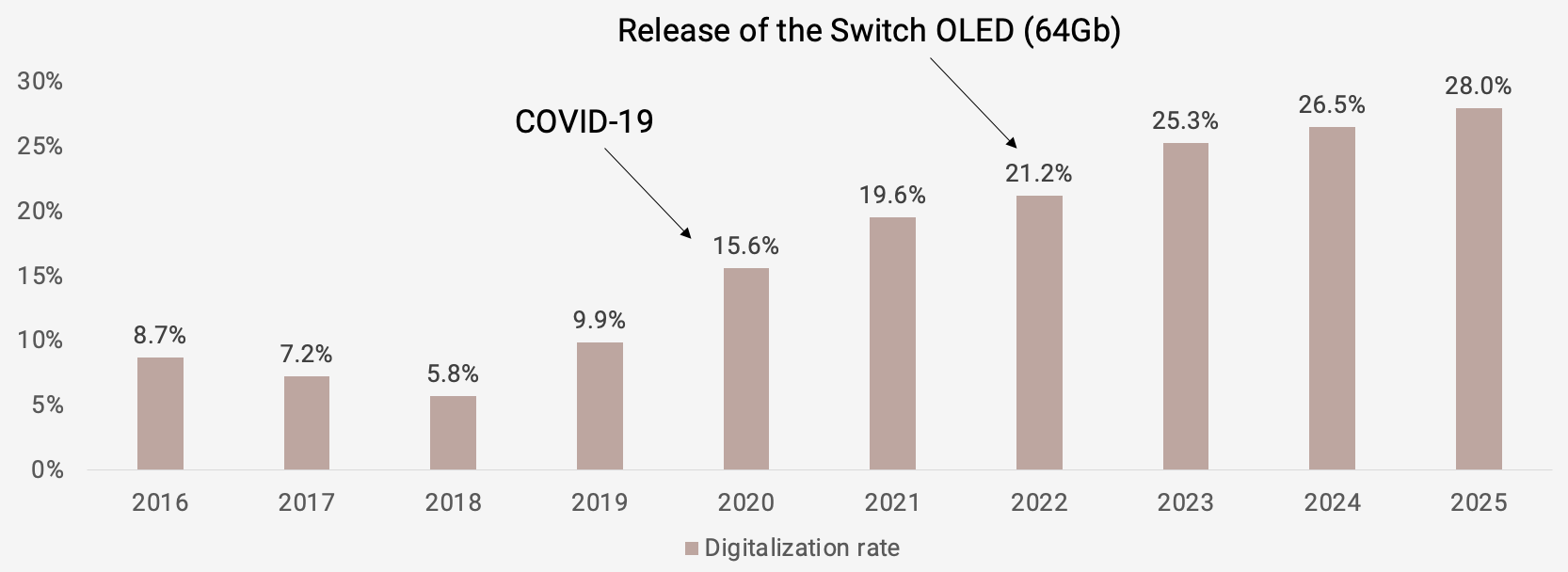
That's going to be important for Nintendo's margins. Nintendo will save on cartridge production costs and keep the 20% retail margin. The incremental margin on a downloaded first-party game is almost 100%, suggesting the transition to the Switch 2 console is likely to be margin-accretive. And for any third-party games, Nintendo will get a fat 30% cut. It's a great business.
I expect the sales of the Nintendo Switch 2 to peak at 25 million units in FY2026. And I expect the number of games per console to hit 8.8 by FY2030. By then, I foresee a gross profit margin of 61%. With these assumptions, I get to a 2028e P/E of 17.7x.
The near-term picture looks positive. Nintendo has an ability to churn out incredible games, year after. It's not entirely clear how it's been able to perform this feat, over and over again. I believe that the leadership of Shigeru Miyamoto — the artist who created the original Donkey Kong game — still has a significant impact on the organisation. So the biggest risk for Nintendo in the long run is if he, or any of the other senior executives, ever retires.
A more near-term challenge is the ongoing bull market for memory chips. Prices have gone to the moon, perhaps due to the ongoing retooling of Korean semiconductor fabs to high-bandwidth memory products. But I expect this headwind to gradually disappear, perhaps as early as the 2026 holiday season.
So, with the Switch 2 early in its console cycle, several blockbuster games, and a new Super Mario Bros. movie hitting cinemas yearly, it looks like Nintendo's earnings are heading in a positive direction.
NOTE! This was just a summary of the actual deep dive. To view the full PowerPoint presentation, click the button below:


Further material:
- Nintendo's latest investor presentation
- Crossroads Capital's latest update on its position in Nintendo
- Substack author Leandro on Chit Chat Stocks discussing Nintendo
- A recent deep dive into Nintendo by The Investor's Podcast

Want more? Sign up for Asian Century Stocks. You’ll get 20x similar write-ups annually, portfolio updates, and more.


)