
Disclaimer: Asian Century Stocks uses information sources believed to be reliable, but their accuracy cannot be guaranteed. The information contained in this publication is not intended to constitute individual investment advice and is not designed to meet your personal financial situation. The opinions expressed in such publications are those of the publisher and are subject to change without notice. You are advised to discuss your investment options with your financial advisers, including whether any investment suits your specific needs. From time to time, I may have positions in the securities covered in the articles on this website. Full disclosure: I do not hold a position in Café de Coral at the time of publishing this article. Note that this is a disclosure and not a recommendation to buy or sell.
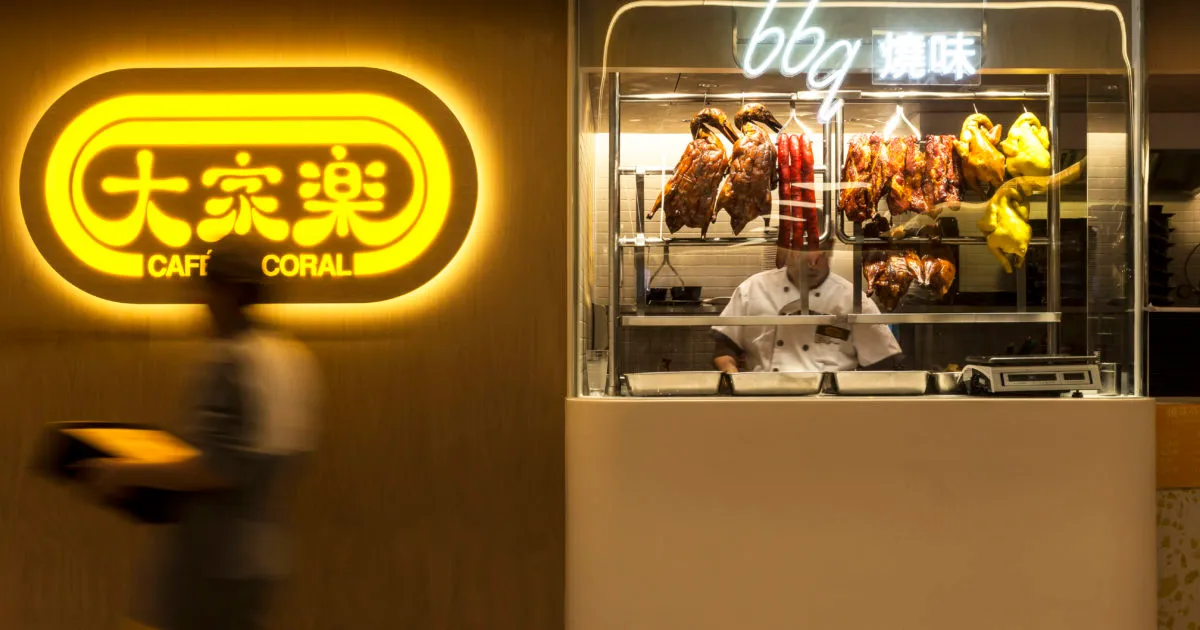
Café de Coral (341 HK) is Hong Kong’s largest local fast-food chain, serving affordable Chinese and Western cuisine to 300,000 customers daily.
The company was started by individuals in the Lo family, which also founded Vitasoy and restaurant competitor Fairwood. The Lo family continues to control Café de Coral, with the CEO now the son of one of the original founders.
Today, Café de Coral has around 500 outlets in Hong Kong and across the border in mainland China. The average ticket price is about HK$40-50 per customer. And many of the customers in Hong Kong are office workers looking for quick and affordable meals.
The growth potential for the business lies in its mainland business. The company plans to double its number of mainland Chinese outlets within the next three years, implying an almost 10% yearly store count growth for Café de Coral, on top of low-single-digit same-store-sales growth.
From what I can tell, unit-level margins are quite high for Café de Coral’s mainland stores. But the company has spread itself thin across many cities and with its food processing plants severely underutilised. Margins should improve as those utilisation rates come up.
Like most restaurants in Asia, the company has suffered during COVID-19. The Hong Kong government introduced customer distancing rules, restricted dining-in hours and the number of restaurant customers at any given time was capped at certain percentages. Many smaller Hong Kong restaurants went out of business.
From October 2022, Hong Kong lifted the restrictions on restaurant opening hours. Some restrictions still remain, including the number of restaurant guests. But given Beijing’s shift towards living with endemic COVID, I believe that we’re now seeing the light at the end of the COVID tunnel.
)