
Disclaimer: Asian Century Stocks uses information sources believed to be reliable, but their accuracy cannot be guaranteed. The information contained in this publication is not intended to constitute individual investment advice and is not designed to meet your personal financial situation. The opinions expressed in such publications are those of the publisher and are subject to change without notice. You are advised to discuss your investment options with your financial advisers, including whether any investment suits your specific needs. From time to time, I may have positions in the securities covered in the articles on this website. Full disclosure: I do not hold a position in Asian Terminals at the time of publishing this article. To reiterate, this post and the presentation below are for informational and educational purposes only - not a recommendation to buy or sell shares.
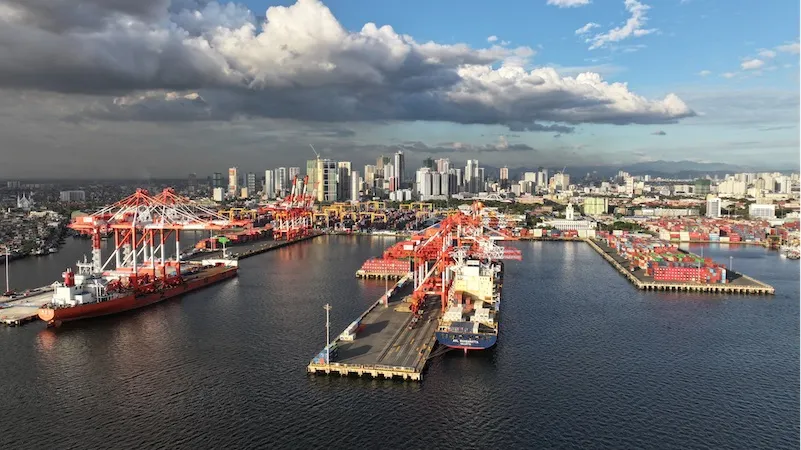
Asian Terminals (ATI PM — US$941 million) is a Philippines-based port operator.
It’s owned by Eusebio (“Yosi”) Tanco, recently famous for having hit a jackpot with online bingo operator DigiPlus and school operator STI Education.
Asian Terminals has also done exceptionally well. It was set up in the 1980s and managed to acquire the Manila South Harbor port in the early 1990s. In the mid-2000s, Asian Terminals received investments and help from Dubai-based DP World to modernize its operations, and they continue to be a key partner.
Today, Asian Terminals manages 1.3 million twenty-foot equivalent containers (TEU) per year at Manila South Harbor as well as 0.3 million TEU at the Port of Batangas further south. At the Port of Batangas, it also imports 200,000 vehicles per year and handles 4 million ferry passengers annually.
Asian Terminals dominates the southern part of Luzon. While there is some competition from ICTSI’s Manila International Container Terminals, they’ve co-existed for decades. Throughout this period, Asian Terminals has achieved a return on equity of nearly 20% while distributing generous dividends to its investors.
So, where is growth going to come from? Partly through capacity expansions:
- In April 2024, the company built the Tanza Barge Terminal, which will connect to Manila South Harbor through sea barges carrying up to 240,000 TEUs per year. It will essentially serve to improve Manila South Harbor’s capacity.
- Separately, Manila South Harbor is expanding its Pier 3, expanding capacity from 1.6 million TEU to 1.9 million by 2025
- Asian Terminals also just spent US$25 million to upgrade the Batangas passenger ferry terminal from 4 million passengers per year to 8 million
- There’s talk of a potential privatization of the General Santos Port in Mindanao. Asian Terminals already owns 35.7% but could potentially acquire the rest.
Another growth driver will be higher port tariffs. Specifically:
Manila South Harbor implemented a 10% tariff hike on 6 August 2024 and another 6% on 6 February 2025.
In addition, Batangas implemented a 10% tariff hike on 1 July 2025 and another 6% will come on 1 January 2026.
)