
Table of Contents
Disclaimer: This article constitutes the author’s personal views and is for entertainment and educational purposes only. It is not to be construed as financial advice in any shape or form. Please do your own research and seek your own advice from a qualified financial advisor. From time to time, the author might hold positions in the stocks mentioned below consistent with the views and opinions expressed in this article. This is a disclosure, not a recommendation to buy or sell stocks.
Alternative data has become table stakes for investors who want to understand a business. But in Asia, competition is lower, and alternative data can still give you an edge.
In this article, I will discuss website analytics. Website behavior can predict customer acquisition and, therefore, revenue growth. Analyzing website data is particularly useful for consumer-facing businesses whose transactions occur on the website itself.
There are three main website traffic analysis tools: Similarweb, Semrush, and Ahrefs. These tools use data they retrieve from partnerships with Internet Service Providers as well as device-level traffic data. The data is not definitive, so we should be careful about drawing definitive conclusions. But if we find that the website traffic is on an upward trajectory, that's probably a good sign for the business.
A few weeks ago, I published a deep-dive on Japanese HR-tech company Visional, which owns the recruitment website BizReach. This is how I would analyze BizReach's main website.
The first step is to Similarweb and type in "BizReach.jp". We'll need to log in with our Google account. After typing in the URL, we're then shown the following chart:
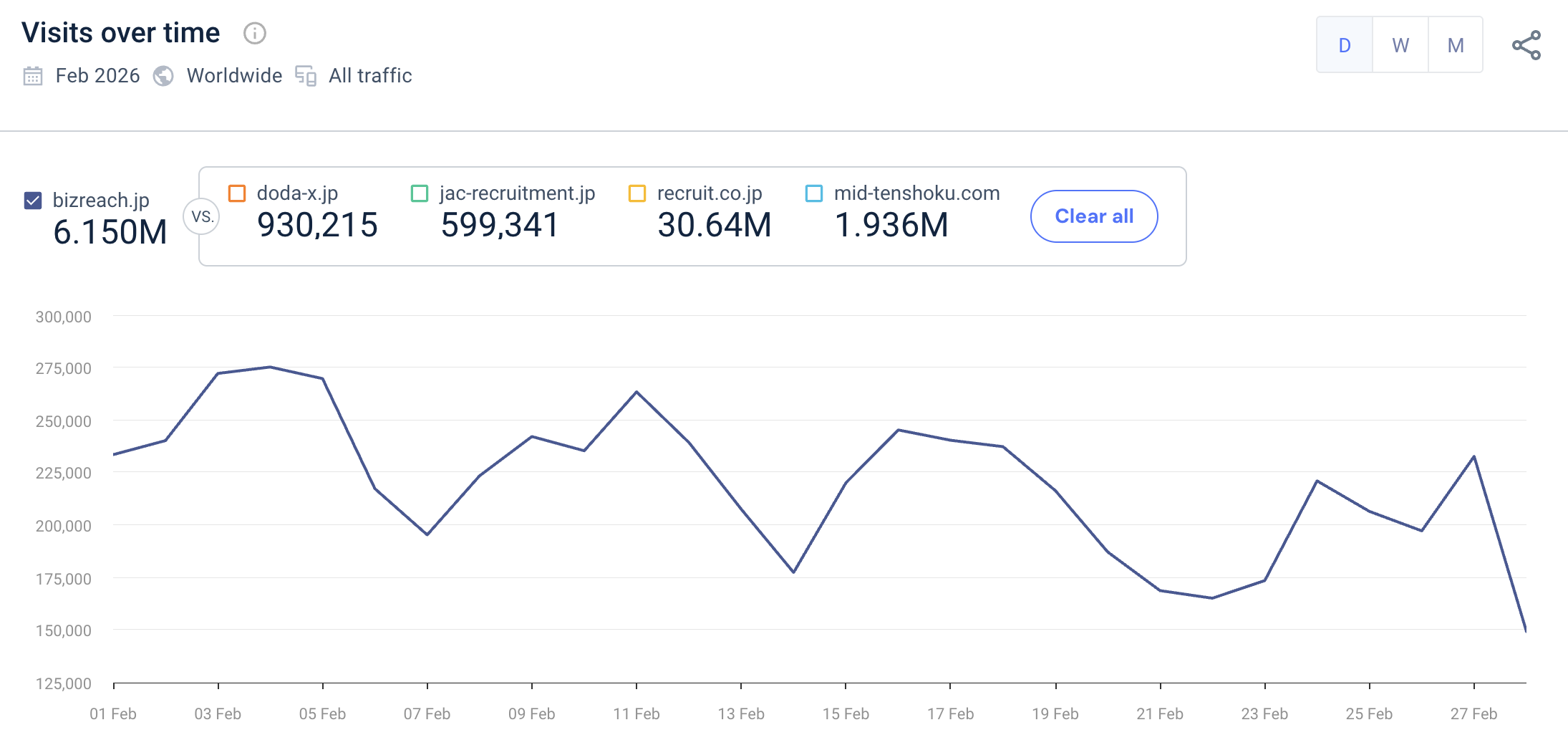
It shows that BizReach.jp had 6.15 million website visitors in February 2026, higher than mid-career headhunting website doda-x.jp but lower than the mainstream job board Recruit.co.jp. This is exactly what I would have expected.
Lower down on Similarweb's dashboard, we also find engagement metrics for BizReach. The website has an average visit duration of 2:45 minutes, with 3.4 pages per visit and a bounce rate of 49.4%. A visit duration of less than 3 minutes is not particularly long, but it probably reflects users landing on a specific job posting and then leaving quickly. Interesting, but it's hard to draw any definitive conclusions from the data.
If we scroll down a bit further, we get the following "Channels overview" chart:
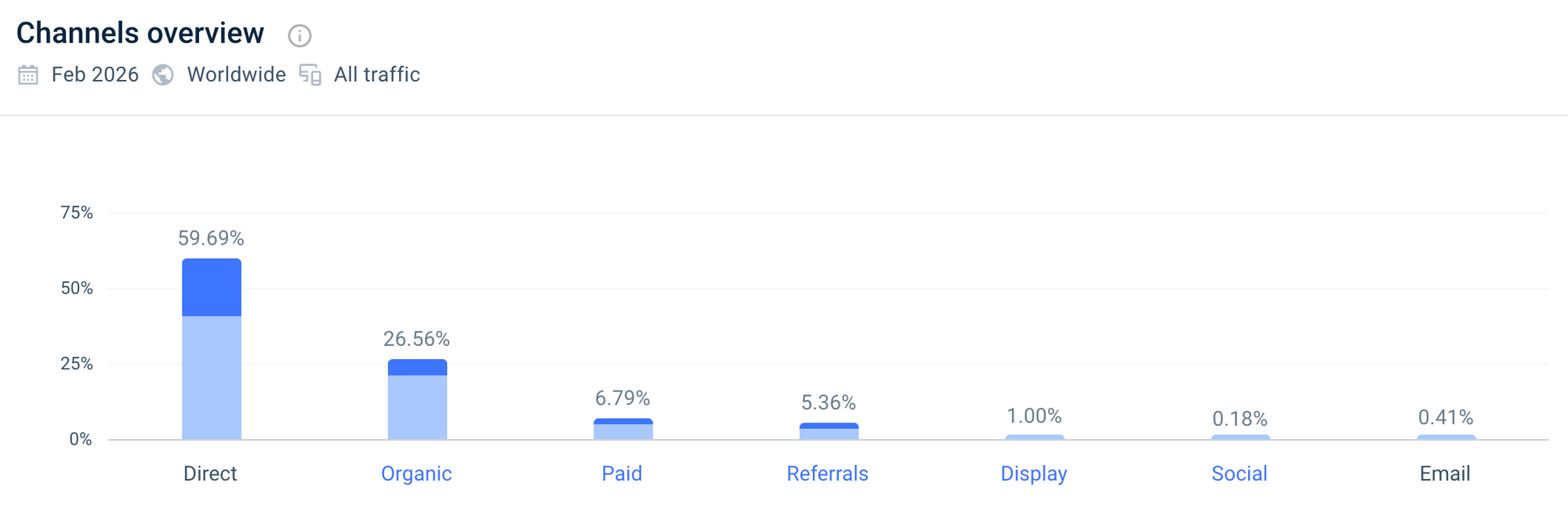
This chart shows us that most of BizReach's traffic is organic. That's usually good news, since BizReach isn't reliant on paid ads for traffic. While paid traffic can be profitable, I prefer that the website has enough "mindshare" that customers are happy to visit the website on their own volition.
If a large part of the traffic comes from social media channels, you can go to X.com and type in site:bizreach.jp. We'll then find all the instances where links to a website are being shared. This helps understand exactly how the website is growing on social media. When doing this for BizReach, I get the impression that the links shared on X are mostly for individual job ads or BizReach's own blog.
Next, go to Semrush and type in BizReach.jp. We're then presented with the following chart, which helps us understand the traffic that it receives from Google search:
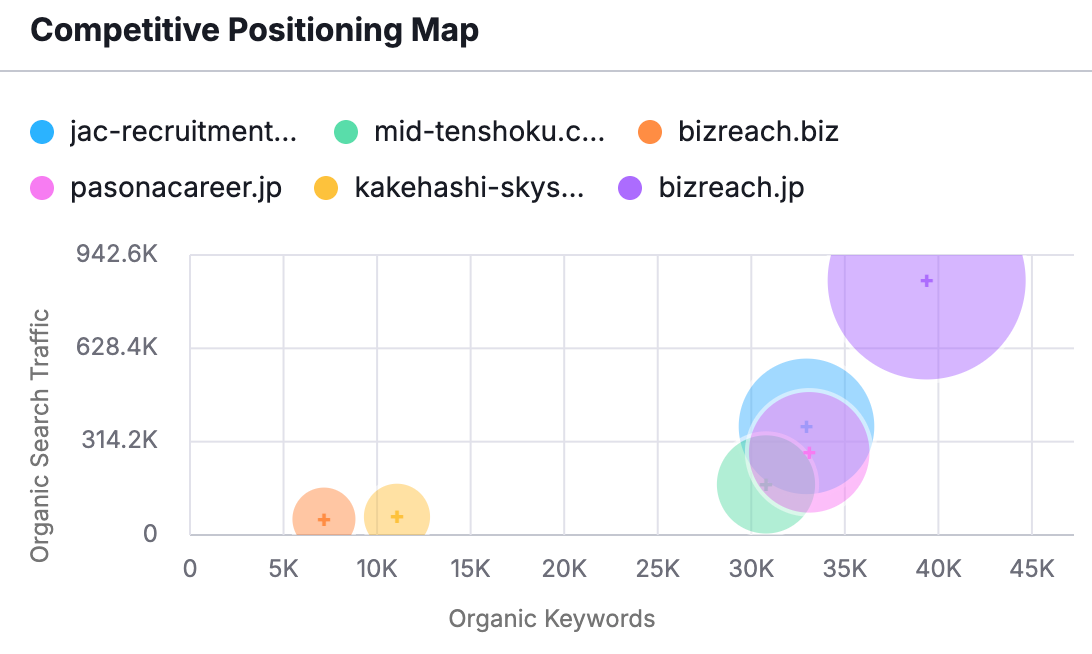
Here, we learn that the main organic search competitors to BizReach are recruitment consultancy JAC-Recruitment and En-Japan's mid-career website Mid-tenshoku. I therefore get the impression that BizReach is seen and used as a website for professionals to change jobs mid-career.
Semrush's dashboard also shows you the keywords that BizReach is paying for, including "ビズリーチ" (BizReach), "てんしょく" (job change), and 職務履歴書 (resume/CV).
Next, let's go to Ahref's Website Authority Checker and type in BizReach.jp:
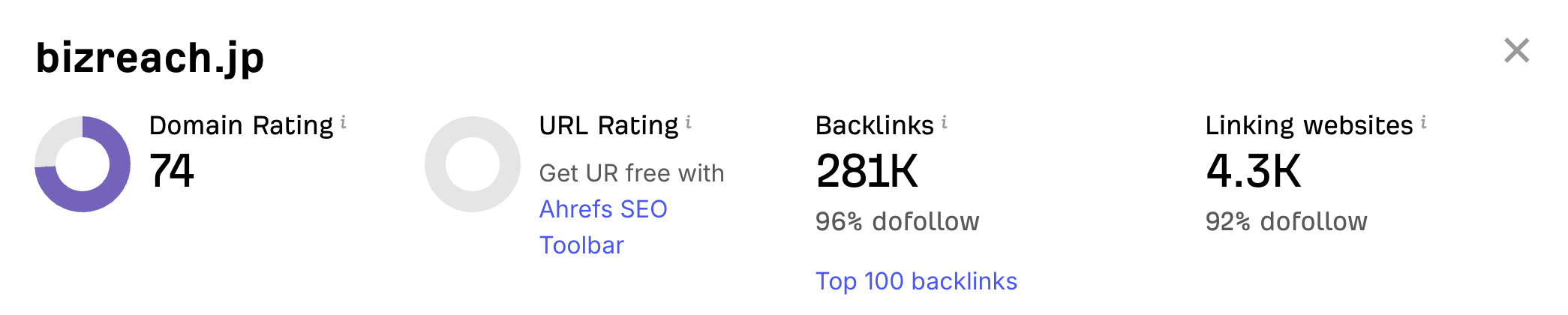
An authority rating of 74/100 indicates that the website is credible in the eyes of search engines. The authority reflects a large number of backlinks from other websites linking to it. With such a high rating, it's highly likely that BizReach will appear in Google search results. Competitor doda-x.jp's website authority is only 60/100, a significant difference given the logarithmic scale.
If you pay for Similarweb's standard plan, you'll get access to historical website traffic data. A cheaper alternative is to use alternative data platform Tickertrends instead. Paying subscribers to TickerTrends can search for Visional 4194 JP and then click "BizReach.jp" under the Web Traffic Trend heading. They'll then be presented with the following chart:
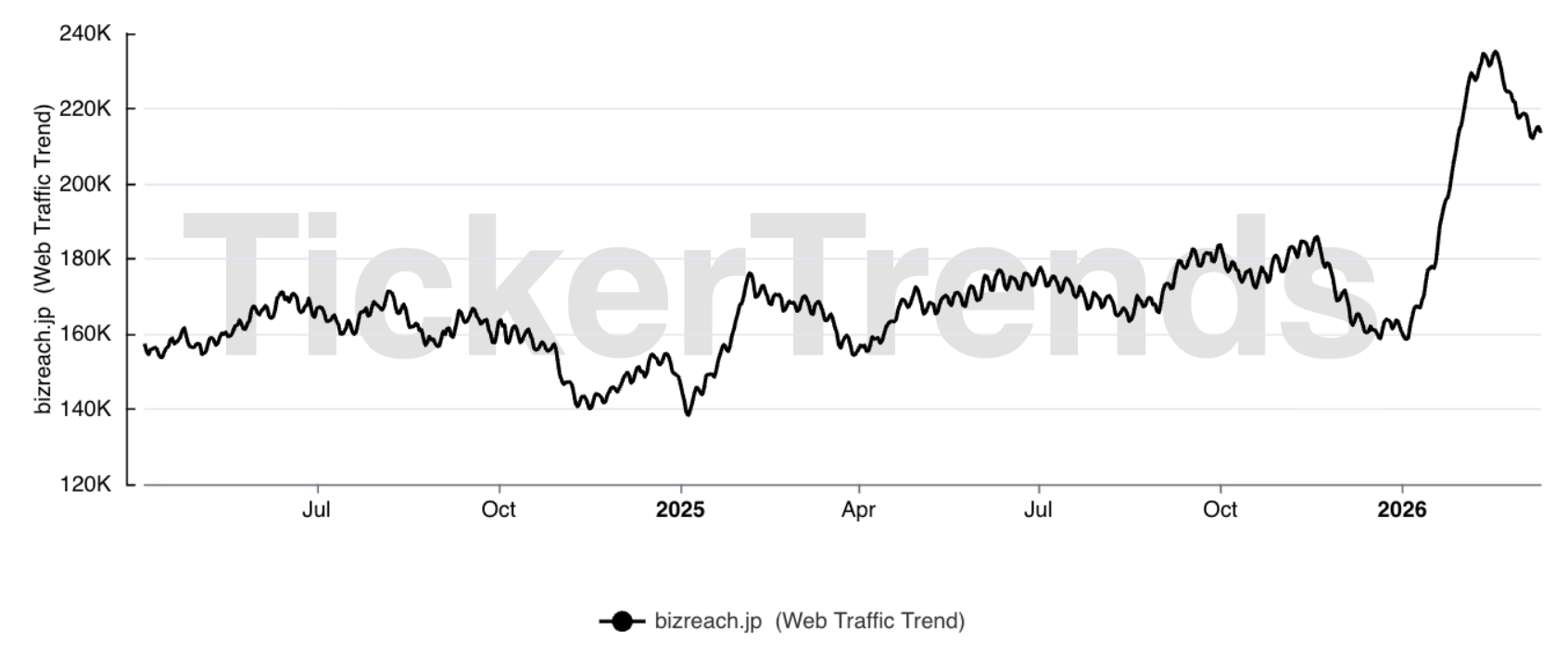
It shows a big jump in website traffic in early 2026. I know that Visional has just launched a new series of TV commercials to attract new job seekers, which could explain the jump. But the strong website traffic could also be due to a strong hiring market, seasonality, or online referral campaigns.
Next, let's talk about generative AI tools. Such tools are still not sending much traffic to specific websites, but search behavior has shifted. Informational search queries are moving away from search engines toward Google's "AI mode" and generative AI tools like ChatGPT and Gemini.
To see whether a brand appears in the answers from generative AI tools, I suggest going to the HubSpot AEO Grader and typing in the brand you want to analyze. For BizReach, we get the following result:
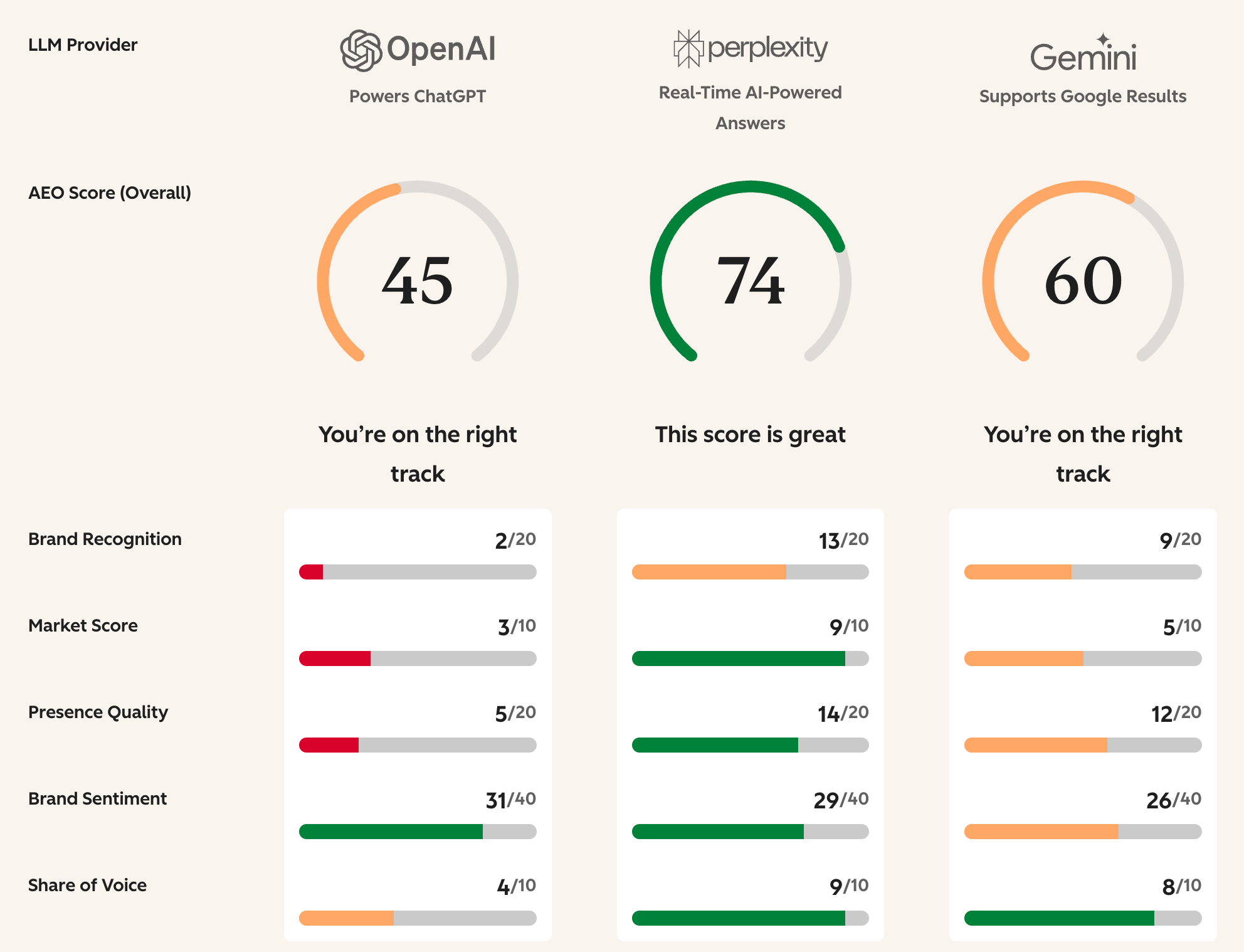
The brand sentiment is strong, suggesting that these tools view BizReach as a quality brand. The share of voice for Gemini is high, indicating it's frequently mentioned in search results. And it's mentioned more frequently than competitors Doda X and Recruit Direct Scout.
Then again, we don't know how much a mention in generative AI tools helps BizReach add resumes to its database or add employers to its customer base. So I'd be careful interpreting the results.
So to summarize, we can use Similarweb, Semrush, and Ahrefs to understand the user journey from search engines, social media, or other channels, and what they do once they land on the website. We can also use TickerTrends to plot website traffic over time and get a sense of its trend.
It's not necessarily true that higher website traffic translates into higher profits. That depends on customer acquisition costs, paid conversion rates, retention rates, etc. But if a company has almost no website traffic, I'd start to consider the possibility that it's a fraud.
If you want to use website traffic to predict earnings beats, I suggest using subdomain URLs like login.salesforce.com or cart.coupang.com, as those tend to be directly correlated with actual revenues. And make sure to back-test the data to gauge the correlation with the company's historical revenues.