
Table of Contents
Disclaimer: Asian Century Stocks uses information sources believed to be reliable, but their accuracy cannot be guaranteed. The information contained in this publication is not intended to constitute individual investment advice and is not designed to meet your personal financial situation. The opinions expressed in such publications are those of the publisher and are subject to change without notice. You are advised to discuss your investment options with your financial advisers, including whether any investment suits your specific needs. From time to time, I may have positions in the securities covered in the articles on this website. Full disclosure: I hold a position in AeroEdge at the time of publishing this article. To reiterate, this post and the presentation below are for informational and educational purposes only - not a recommendation to buy or sell shares.
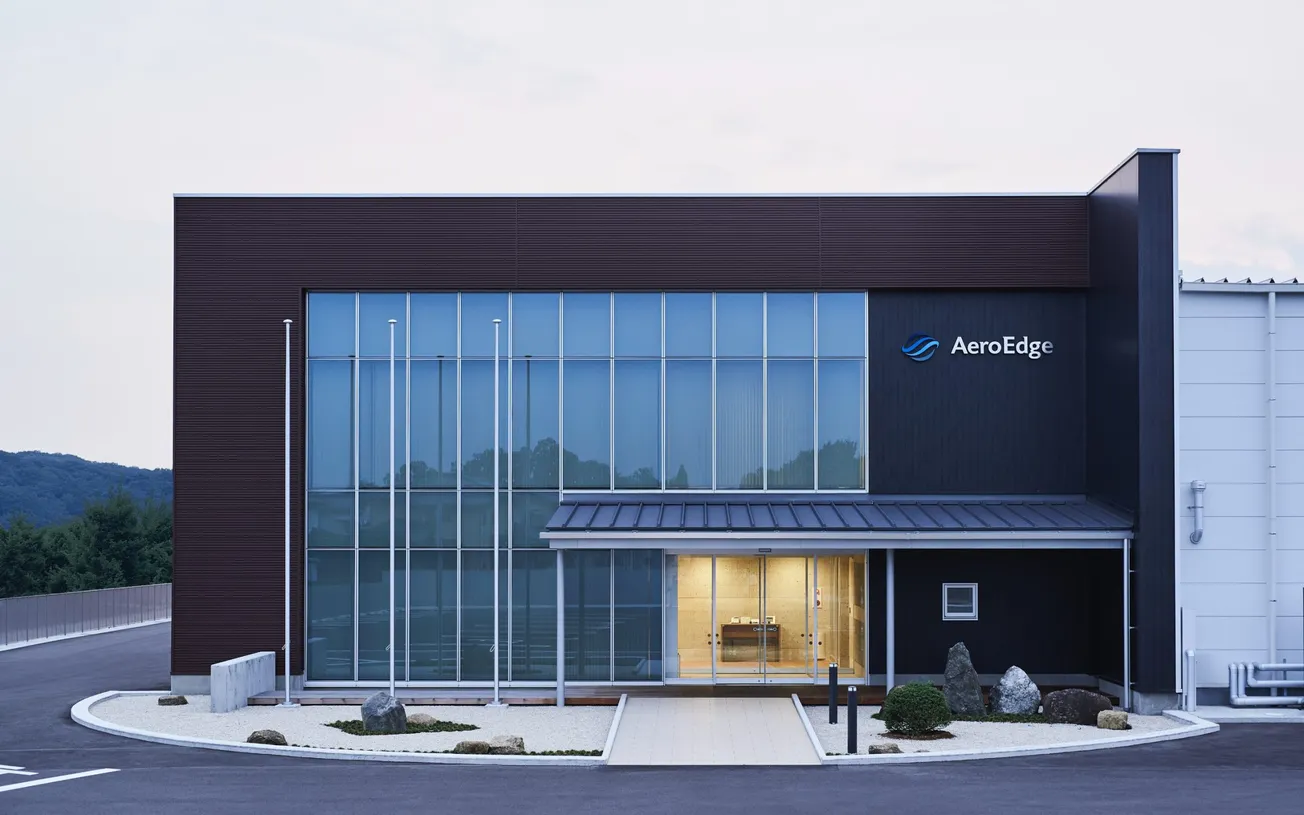
Earlier this month, Substack writer Gezzogero mentioned AeroEdge (7409 JP — US$88 million) on his blog. I thought it was a fantastic write-up and wanted to dig into it myself.
The company is a supplier of aircraft components. It manufactures low-pressure turbine blades for the well-regarded LEAP jet engine, which is used in narrow-body aircraft such as the Airbus A320neo and Boeing 737 MAX.
Turbofan jet engines such as the LEAP compress air and mix it with jet fuel before it’s eventually combusted. At the back end of the engine is the turbine, where exhaust gases are pushed out. These exhaust gases then help rotate the turbine blades, which in turn rotate the fan and compressor at the front of the engine.
Since exhaust gases can reach 1,000 degrees Celsius, turbine blades need to be made from durable materials. In the past, they were mostly made from nickel superalloys. However, when the LEAP engine became the industry standard in 2016, the blades were increasingly constructed using titanium-aluminide (TiAl), an intermetallic alloy of titanium and aluminium.
Turbine blades made from titanium-aluminide have the advantage of being 50% lighter than nickel superalloys. For a typical engine, that works out to about 10 kilograms. With a lower weight, you achieve better fuel efficiency and lower CO2 emissions.
On the other hand, titanium-aluminide alloys are brittle and challenging to shape and handle. Constructing blades from the material is time-consuming, and failure rates are high. That’s why only a few companies globally have been able to break into the industry.
AeroEdge is young. It was spun off in 2016 from Kikuchi Gear, at exactly the same time it received an order from Safran to construct low-pressure turbine blades for the LEAP engine. The previous head of the aerospace division at Kikuchi Gear, Jun Morinishi, is now the CEO of AeroEdge, and he seems to be well-regarded.
The company’s success has been astounding. It’s the only Japanese small- and medium-sized enterprise that has managed to become a Tier 1 aircraft supplier. It now holds a 40% market share for low-pressure turbine blades for the LEAP engine. In 2022, Safran gave it a “supplier performance award”, and in 2025, Safran called it a “top 3 innovative supplier”. It’s clearly doing something right.
The outlook for the LEAP engine is positive. Both Airbus and Boeing have exceptionally long backlogs for the A320neo and 737 MAX. Safran plans to ramp up its deliveries of LEAP engines over the next two years, increasing from 635 engines in 2025 to 921 in 2027. And even then, the backlog will still take over a decade to work through.
In addition, AeroEdge has three additional growth drivers mentioned during the second-quarter FY2025 earnings call:
- With funding from the IPO in 2023, AeroEdge has just built a second factory next to the old one in Ashikaga City, north of Tokyo. It cost JPY 1.9 billion and has a floor space of 3,100 square meters. From mid-2025, it’s going to produce a new product within this factory. Nobody knows what the product is, but I suspect it is the high-pressure compressor blisk (also known as an integrally bladed rotor) for Pratt & Whitney’s new GTF Advantage engine that’s going to be used in the Airbus A321neo. Airbus is guiding for a slow ramp-up of GTF Advantage due to past quality control issues, but AeroEdge, will in any case start to receive revenues from this product from mid-2025 onwards.
- AeroEdge has also signed a long-term agreement until 2036 with a global aircraft manufacturer, who I think is likely to be Airbus. Again, nobody knows what the project entails, but it could involve structural machining for the Airbus A321neo’s pylons, which connect its engines to the wings. This could lead to significantly higher revenues, though at a slightly lower operating margin of around 20 to 25%.
- Since its IPO in 2023, AeroEdge has been collaborating with European research institutes to develop expertise in repairing low-pressure turbine blades for the maintenance, repair, and overhaul (MRO) market. If it’s able to break into this market, that would increase the total addressable market for its titanium-aluminide blades. The LEAP engine went into operation in 2017, and with 5-7 year life spans, the replacement cycle has only just begun. There’s a huge installed base of LEAP engines worldwide.
With these positive developments, and bearing in mind a slight decline in average selling prices for turbine blades as demanded by Safran, I expect AeroEdge’s earnings per share to reach JPY 256 by 2027, putting the forward P/E ratio at 11.2x. That number assumes a 23% operating margin, which has some further upside towards FY2030 as volumes continue to rise.
Customer concentration is the primary risk factor here. Safran accounted for 93% of revenues in FY2024. However, with two new projects, it appears that AeroEdge is poised to become a more diversified business with less reliance on a single customer.
In the near term, we can also expect some volatility in AeroEdge’s margins. Depreciation of the new factory will be reflected in the income statement from fiscal year 2026 onwards. Also, be prepared for low production yields initially before AeroEdge ramps up its exposure to its two new customers.
A longer-term question mark is whether Safran will replace titanium-aluminide with ceramic matrix composite materials in their low-pressure turbine blades. AeroEdge has experience working with ceramic composite materials, but there is no guarantee that it will receive orders after its contract with Safran ends in 2034.
But in the near-to-medium term, the outlook seems brighter than ever.
Thank you for reading.
Michael
NOTE! This was just a summary of the actual deep dive. To view the full PowerPoint presentation, click the “Download” button below:
Further material:
- Gezzogero’s AeroEdge post on Substack
- The METI Journal company feature (Japanese language)
- The 1HFY2025 earnings call presentation (Japanese language)




)