
Table of Contents
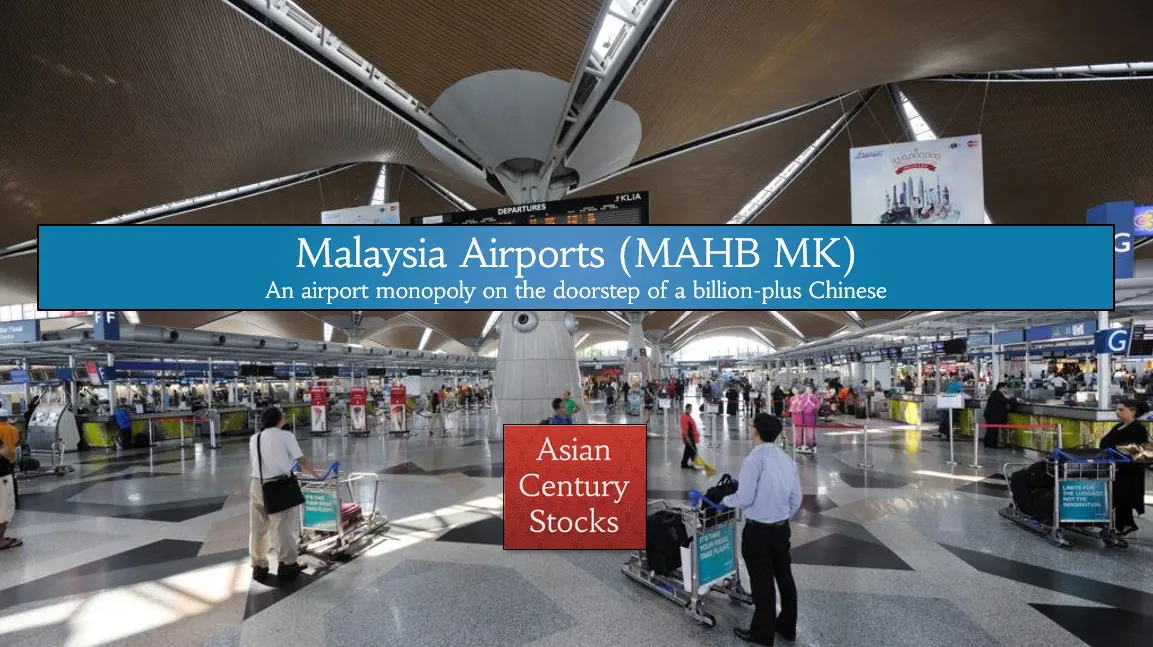
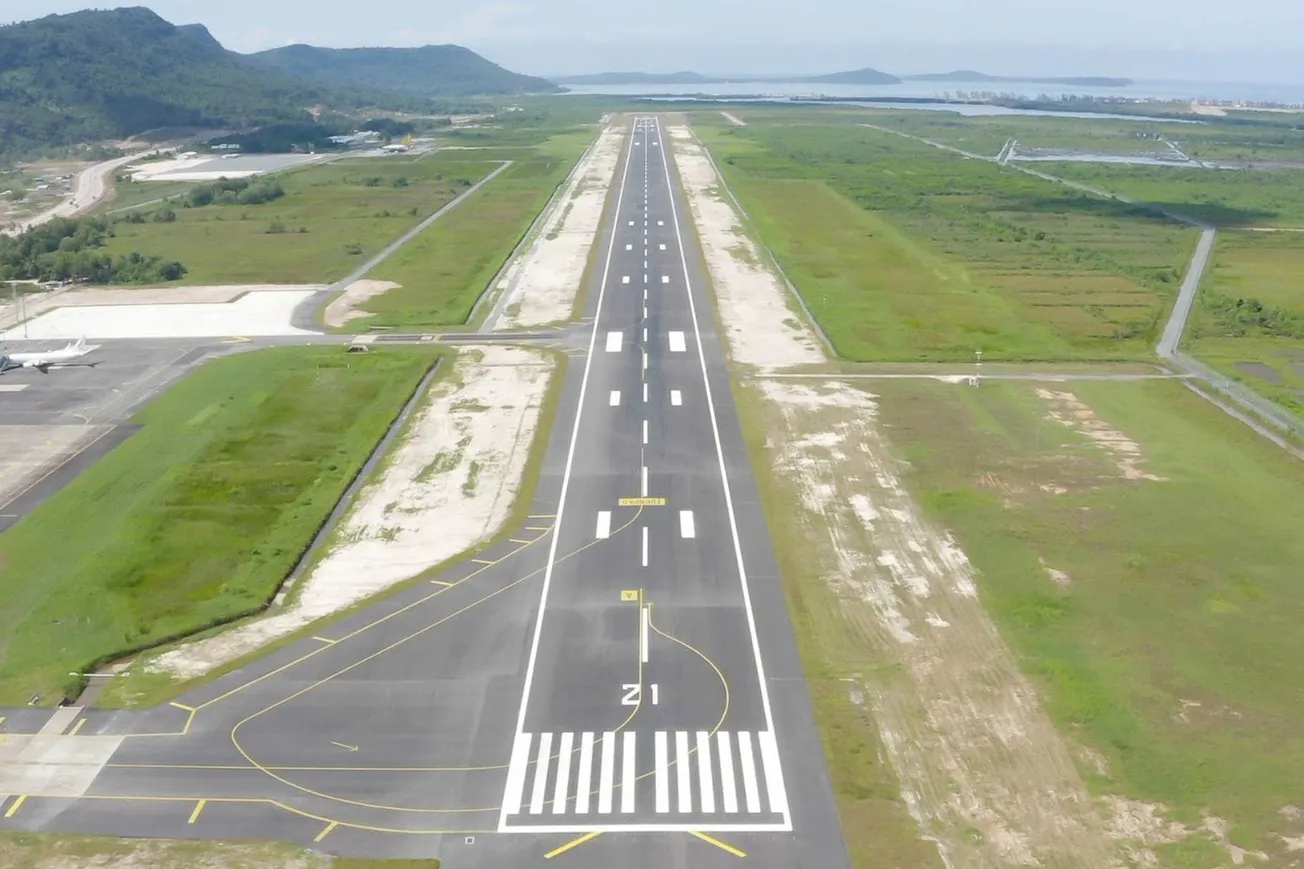
Malaysia Airports Holdings Berhad (MAHB MK) is the monopoly airport operator of Malaysia.
It was privatised in the early 1990s from the Department of Civil Aviation and is now run as a state-owned enterprise controlled by sovereign wealth fund Khazanah. Today, the company operates 39 out of the 42 airports in Malaysia. It also has interests in airports in Turkey, Qatar and Hyderabad.
What's attractive about Malaysian tourism is the potential for inbound Chinese tourism. Malaysia has spectacular beaches, food and welcoming culture. It's also a relatively small country in relation to China, whose outbound tourism has yet to take off in a major way. Only about 10% of Chinese own a passport, a number that could double, triple or even quadruple if and when China becomes a wealthier country. Since China has a population of almost 1.4 billion, that could lead to a major uplift in passenger traffic to Malaysia.
The company has a market cap of US$2.2 billion. As a comparison, Airports of Thailand's US$31 billion market cap is 15x bigger, despite handling the same number of passengers every year. Why?
- First, Thailand has a greater share of foreign travellers, who tend to spend more on duty-free and whose passenger service charges are higher.
- Second, AOT enjoys a more favourable regulatory regime that enables it to earn higher aeronautical fees and higher margins.
- Third, AOT's PE multiple is far higher.
The new regulatory framework that might be signed in mid-2021 will give a fair return on reinvested capital. Loss-making airports in the portfolio will become more profitable. And more investments could also increase the attractiveness of Malaysia as a tourist destination. If a dual- or hybrid till framework is adopted, return on equity might eventually reach Airport of Thailand's levels of 15-20%.
Passenger traffic has fallen sharply due to COVID-19, with an initial shutdown of air travel and later, mandatory quarantine requirements. Early data seems to suggest that COVID-19 vaccines are effective at lowering hospitalisation rates. Air travel will most likely recover in the next 1-2 years as individuals in Malaysia and across the world get vaccinated. The company has enough liquidity and government support to survive until that day.
The valuation multiple is low at less than 1.2x book value. With certain assumptions about a full recovery into 2023 and a future PE multiple of 19x, a theoretical upside to intrinsic value would then reach +51%.
Near-term catalysts to keep track of are a recovery in air travel following COVID-19 and the launch of a new regulatory framework in mid-2021. The major risks to look out for are a delay in the recovery from COVID-19 and worse-than-expected changes to the regulatory framework.
Please click the picture below to access the full PowerPoint presentation. And follow us on Twitter @AsianCenturyStx.
Disclaimer: Asian Century Stocks uses information sources believed to be reliable, but their accuracy cannot be guaranteed. The information contained in this publication is not intended to constitute individual investment advice and is not designed to meet your personal financial situation. The opinions expressed in such publications are those of the publisher and are subject to change without notice. You are advised to discuss your investment options with your financial advisers. Consult your financial adviser to understand whether any investment is suitable for your specific needs. I may from time to time have positions in the securities covered in the articles on this website. Full disclosure: I do not hold a position in Malaysia Airports at the time of publishing this article. This is disclosure and not a recommendation to buy or sell.
If you would like to support me and get 20x high-quality Asian investment ideas per year, thematic reports and catalyst-specific ideas, try out the Asian Century Stocks subscription service - for the price of a few weekly cappuccinos. Check out my previous ideas here.



)